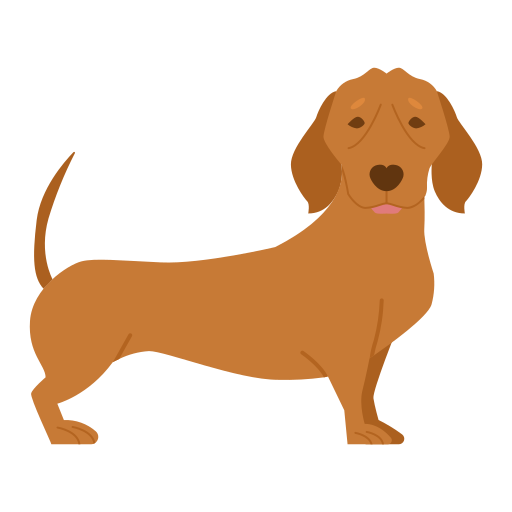
 Dachshund
 Walking a dachshund farther is not the same as exercising one better, and plenty of devoted owners learn that the expensive way, usually in a vet’s exam room.
The instinct makes perfect sense. Dog has energy, dog gets zoomies at 9pm, dog clearly needs more miles.
But a dachshund is not a border collie in a costume. That long spine changes the math entirely, and a dog who logs five flat miles a day can end up stiffer, sorer, and no calmer than the one who covers a single mile and gets to investigate every fence post along the way.
Here is the part that catches people off guard: exhaustion was never the target. A strong, satisfied dog whose back still works at age eleven is the target, and those two things are not the same project.
Start With a Baseline, Then Adjust It Immediately
Adult dachshunds generally do well on 30 to 60 minutes of activity per day, broken into two or three sessions rather than one heroic march.
That range is deliberately wide. A three year old standard with hunting drive in his bloodline is a completely different animal from a seven year old mini who treats the arrival of the mail carrier as a full cardio event.
Puppies Need Far Less Than You Think
The classic guideline is five minutes of formal walking per month of age, twice daily. A four month old puppy, then, gets roughly twenty minutes at a stretch.
Growth plates are still open. Cartilage is still soft. Loose play in a fenced yard, where the puppy decides when to flop down, is far kinder to a developing body than a structured walk that continues after the puppy has quietly checked out.
Puppies are also excellent liars. They will keep trotting cheerfully at your side long past their limit, simply because you are the most fascinating creature on earth, which is exactly why the clock should outrank their enthusiasm.
Adults Thrive on Rhythm, Not Volume
Two moderate outings beat one long slog nearly every time.
Morning and evening works beautifully for most households. The dog gets a predictable outlet, the muscles warm up twice instead of once, and nobody is dragging a wilted sausage home in the last quarter mile.
A tired dachshund and a well exercised dachshund are not always the same dog. Only one of them wakes up feeling good.
Seniors Still Want a Job
Cutting an older dachshund’s activity to almost nothing is a kindness that backfires.
Muscle mass protects the spine, and muscle disappears fast when a dog spends fourteen hours a day on a heated blanket. Shorter, gentler, more frequent outings keep the machinery running without demanding much from aging joints.
Intensity Matters More Than Mileage
Two dogs can walk the identical route and finish in completely different physical condition, depending on how they moved through it.
The Spine Deserves a Paragraph of Honesty
Intervertebral disc disease affects a striking share of the breed, with commonly cited estimates landing somewhere near a quarter of all dachshunds at some point in life.
That statistic is not meant to frighten anyone into bubble wrapping their dog. Movement is genuinely protective, and inactive dachshunds carry more risk, not less.
What matters is which movements you allow to become daily habits.
Motions Worth Rethinking
Launching off the couch. Sprinting down a full flight of stairs. Twisting hard at speed to chase a ball you just fired across a slick kitchen floor.
None of these will injure a healthy dog on a single occasion. Repeated four thousand times over six years, they compress discs that were already a little unlucky by design.
Ramps and pet steps solve most of this for about the price of a nice dinner.
Ramps are not coddling. They are the cheapest spinal insurance available, and the dog stops noticing them within a week.
Sniffing Counts, and It Counts More Than You Would Guess
Scent work drains a dachshund in a way that pure walking does not even approach.
These dogs were bred to follow a badger underground using their nose, their stubbornness, and very little supervision. That hardware is still installed.
The Decompression Walk
Pick a quiet route. Use a longer lead if the area is safe. Then let the dog steer.
Twenty minutes of genuine nose work will produce a calmer evening than forty minutes of heeling briskly past everything interesting. Owners who try this for a week are usually a little annoyed by how well it works.
Backyard Games That Burn Real Fuel
Scatter a portion of dinner across the lawn and let your dog hunt it down.
Hide a favorite toy in another room and send them after it with an excited "find it." Roll a snuffle mat out on a rainy afternoon and buy yourself fifteen quiet minutes.
Puzzle feeders count too, though they work best as a supplement rather than the whole plan.
Build the Muscle That Holds Everything Together
Cardio keeps the weight down. Strength keeps the back supported. Both deserve room in the week.
Three Moves That Pay Off
Sit to stand repetitions build the rear end and the core. Ask for eight or ten in a row, slowly, with a treat lured upward so the dog rises straight rather than swinging sideways.
Ground poles are the second one. Lay a couple of broom handles flat on the grass, spaced out, and walk your dog over them at a slow pace so each leg has to lift with intention.
Gentle hill work rounds it out. A gradual slope, walked at a relaxed pace, recruits muscles that flat sidewalks let sleep.
Swimming, With Supervision
Water removes the load from the joints entirely, which makes it excellent for recovering or arthritic dogs.
Not every dachshund is a natural swimmer, though. A life vest and a shallow entry point turn a risky novelty into a genuinely useful tool.
Read the Dog in Front of You
Published numbers are a starting point. Your specific dachshund is the actual authority.
Signals of Too Little
Chewing furniture. Barking at absolutely nothing. Weight creeping up while the food bowl stays the same size.
Restlessness at night is another reliable tell, particularly the kind where the dog paces, resettles, then paces again around ten o’clock.
Signals of Too Much
Lagging behind on the return leg of a familiar walk. Reluctance at the door. Stiffness the following morning, especially in the first few steps.
Sitting down mid outing is the loudest signal a dachshund can send, and it deserves an immediate response rather than encouragement to push on.
Dachshunds will absolutely overdo it to keep you happy. That loyalty is charming until it costs them a disc.
Weather Rewrites the Whole Plan
Bellies ride low to the ground, which means pavement heat reaches your dog long before it reaches your ankles.
Press the back of your hand to the sidewalk for seven seconds. If you want to pull away, the walk moves to dawn or after sunset, no negotiation.
Cold matters just as much for the short coated crowd. A sweater is practical equipment, not a fashion statement, and shivering muscles are tight muscles.
A Week That Actually Holds Up
Monday through Friday: two walks of fifteen to twenty five minutes, one of them slow and sniff heavy.
Add two short training sessions of five minutes each, scattered wherever they fit. Tricks, recall practice, or plain old sit to stand work all qualify.
Twice a week, swap one walk for a scent game indoors or in the yard.
Once a week, do something novel: a new trail, a different park, a friend’s fenced yard. Novelty does something for a dachshund’s brain that repetition simply cannot replicate.
Then watch what happens over the following month. Adjust up if the mischief increases, adjust down if the stiffness does, and trust the dog to tell you which way to go.