Walking on hot or rough ground can hurt paws. Learn the best ways to keep your Schnauzer’s feet safe.
Your Schnauzer’s adorable bearded face isn’t the only thing that deserves attention during your daily adventures. Those four fuzzy paws are working overtime, tackling everything from scorching sidewalks to icy trails, and they need some serious TLC. Think about it: while we humans get to swap our shoes based on the weather, your pup is stuck with the same set of paw pads for life.
Here’s the thing most Schnauzer parents don’t realize until it’s too late. Those compact, sturdy paws that make your dog look so distinguished are actually pretty vulnerable to the world beneath them. Paw protection isn’t just about comfort; it’s about keeping your four-legged companion healthy and happy for the long haul.
The Anatomy Behind Schnauzer Paws
Before we dive into protection strategies, let’s talk anatomy. Schnauzer paws are comprised of thick, fatty tissue that acts as a natural shock absorber. These pads are tougher than most of your dog’s skin, but they’re far from invincible. The spaces between the pads are particularly vulnerable, and the webbing can tear easily if your pup steps on something sharp.
Your Schnauzer’s paw health directly impacts their quality of life. A dog with sore, injured, or uncomfortable paws will naturally become less active, which can lead to weight gain, behavioral issues, and a general decline in wellbeing.
The breed’s characteristic beard and leg furnishings mean that Schnauzers also collect more debris between their toes than smooth-coated breeds. This makes regular paw checks absolutely essential for preventing issues before they become serious problems.
The Temperature Test
Here’s a rule that every Schnauzer owner should memorize: if the pavement is too hot or cold for your bare hand, it’s too extreme for your dog’s paws. Before heading out on any walk, place your palm flat against the ground for seven seconds. Can’t make it that long? Your pup shouldn’t be walking on that surface either.
Summer pavement can reach temperatures exceeding 140°F on a sunny day, hot enough to fry an egg (or seriously burn a paw pad). Winter surfaces pose different risks, with ice and salt creating a painful combination that can crack and irritate sensitive skin. Year-round awareness of ground temperature is non-negotiable for responsible Schnauzer parents.
Consider adjusting your walking schedule based on seasons. Early morning and evening walks work best in summer, while midday strolls might be ideal during winter months. Your Schnauzer’s enthusiasm might not change with the weather, but your timing should.
Protective Gear That Actually Works
| Product Type | Best For | Pros | Cons |
|---|---|---|---|
| Dog Boots | Extreme temperatures, rough terrain, salt exposure | Maximum protection, durable, keeps paws completely clean | Adjustment period needed, can be expensive, sizing challenges |
| Paw Wax | Mild to moderate conditions, daily protection | Easy application, natural barrier, affordable | Needs frequent reapplication, not suitable for severe conditions |
| Protective Socks | Indoor recovery, light outdoor use | Comfortable, breathable, good for healing paws | Less durable, can slip off, minimal protection from temperature |
| Paw Balms | Maintenance and healing, post-walk care | Moisturizing, promotes healing, easy to apply | Preventive rather than protective, dogs may lick off |
Dog boots get a bad rap because, let’s face it, most Schnauzers will give you the stink eye when you first try to put them on. They’ll prance around like they’re walking on the moon, lifting their legs in exaggerated steps that would make a show pony jealous. But here’s the secret: give your Schnauzer time to adjust, and boots become their best friend on challenging terrain.
Start by having your dog wear boots inside for short periods. Pair the experience with treats and praise, gradually increasing the duration. Most Schnauzers adapt within a week or two, and many actually get excited when they see their boots come out because it means adventure time.
Paw wax serves as an invisible barrier between your dog’s pads and harsh surfaces. Apply it before walks by rubbing a small amount between the pads and on the bottom of each paw. The wax creates a protective layer that shields against hot pavement, ice, salt, and rough terrain without the bulk of boots.
The Ground Rules for Different Surfaces
Not all walking surfaces are created equal, and your Schnauzer’s paws respond differently to various terrains. Grass and dirt trails are generally the safest options, providing natural cushioning and temperature regulation. These surfaces also allow paws to flex naturally, promoting better foot health overall.
Concrete and asphalt require extra caution. These surfaces retain heat in summer and freeze solid in winter, plus they’re abrasive enough to wear down paw pads over time. Frequent walks on pavement can toughen pads slightly, but this “natural protection” comes at a cost, potentially making paws more prone to cracking.
Gravel and rocky terrain might seem harmless, but sharp edges can slice paw pads or become lodged between toes. If you live in an area with lots of gravel paths, boots aren’t optional; they’re essential. Check your Schnauzer’s paws thoroughly after every gravel walk, even when they’re wearing protective gear.
Chemical Hazards Lurking on Your Route
Winter salt is one of the biggest threats to Schnauzer paws during cold months. Road salt (sodium chloride) and ice melts contain chemicals that irritate, dry out, and even burn sensitive paw pads. What’s worse, dogs lick their paws after walks, ingesting these toxic substances. Always rinse your Schnauzer’s paws with warm water after walking on salted surfaces, or better yet, use dog boots to avoid contact entirely.
Lawn chemicals present a year-round danger that many owners overlook. Fertilizers, pesticides, and herbicides can cause chemical burns, allergic reactions, and serious illness if ingested. Those pristine green lawns in your neighborhood might look inviting, but they could be coated in substances that are harmful to your curious Schnauzer.
Watch for oil spots, antifreeze puddles, and other automotive fluids during walks. Antifreeze is particularly dangerous because it tastes sweet to dogs, making them more likely to lick contaminated paws. Steer clear of parking lots and driveways where these hazards accumulate.
Daily Paw Maintenance Rituals
Making paw care part of your regular routine prevents minor issues from becoming major problems. After every walk, take two minutes to inspect each paw thoroughly. Look for cuts, cracks, splinters, or foreign objects lodged between pads. Run your fingers through the fur between toes, checking for matted hair, ice balls (in winter), or sticky substances.
Regular paw maintenance isn’t about being obsessive; it’s about catching problems when they’re still easy to fix.
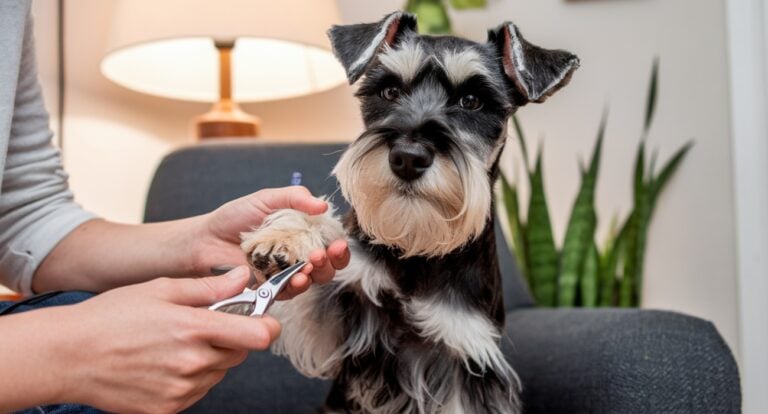
Trim the fur between your Schnauzer’s paw pads monthly using blunt-tipped scissors or clippers. Overgrown fur collects debris, causes matting, and can make walking uncomfortable. This is especially important for Schnauzers with their abundant furnishings. If you’re not comfortable doing this yourself, groomers and vets can handle it quickly.
Keep nails trimmed to an appropriate length. Overgrown nails force your dog’s weight distribution to shift unnaturally, putting extra stress on paw pads and joints. You should hear minimal clicking when your Schnauzer walks on hard floors. If the clicking is loud, it’s time for a trim.
Conditioning Paws Gradually
If your Schnauzer is new to walking or you’re introducing them to a new type of terrain, start slowly. Paw pads need time to toughen up and adapt to different surfaces. Begin with short walks (10 to 15 minutes) and gradually increase duration over several weeks.
Think of it like building calluses on your own hands. Sudden, intense activity causes blisters and injury, but gradual exposure creates protective toughening. The same principle applies to your dog’s paws. This conditioning process is particularly important before hiking trips or if you’re moving from a predominantly indoor lifestyle to more outdoor activity.
Pay attention to your Schnauzer’s signals during walks. Limping, frequent paw lifting, reluctance to continue, or stopping to lick paws are all signs that something’s wrong. Never push through these warning signs; they’re your dog’s way of saying their paws need a break.
Healing Injured Paws
Despite your best prevention efforts, injuries can still happen. Minor cuts and scrapes can be treated at home with thorough cleaning, antibiotic ointment, and protective bandaging. However, deep cuts, persistent limping, swelling, or signs of infection require veterinary attention.
Create a paw first aid kit for your home that includes antiseptic wipes, antibiotic ointment, non-stick gauze pads, self-adhesive bandage wrap, and tweezers for removing splinters or debris. Keep it easily accessible so you’re prepared when accidents happen.
For cracked or dry paw pads, apply a pet-safe moisturizing balm daily until the condition improves. Avoid human lotions, which often contain ingredients toxic to dogs. During the healing process, limit walks to soft surfaces and consider using protective boots to prevent further damage.
Seasonal Considerations
Each season brings unique paw challenges that require different strategies. Spring walks mean dealing with mud, which isn’t necessarily harmful but can hide sharp objects and makes post-walk cleanup essential. Watch for seasonal allergies that might cause paw licking and inflammation.
Summer demands vigilance about hot surfaces, increased hydration, and potential encounters with bees or stinging insects that can target paws. Carry water not just for drinking but for cooling down overheated paw pads if needed.
Fall introduces dry leaves that can conceal hazards, plus the return of cooler temperatures that might lull you into forgetting about paw protection. This is actually an excellent time to condition paws before winter’s harsh conditions arrive.
Winter is perhaps the most challenging season for Schnauzer paws, combining cold temperatures, ice, snow, and road salt into a perfect storm of paw problems. Boots become practically mandatory for extended outdoor time, and post-walk paw rinsing should be automatic.
Building Long-Term Paw Health
Your Schnauzer’s diet plays a surprising role in paw pad health. Adequate protein, essential fatty acids (especially omega-3s), and proper hydration all contribute to maintaining tough, supple paw pads. Some owners supplement with vitamin E or coconut oil specifically for skin and paw health, though you should consult your vet before adding supplements.
Regular exercise on varied terrain actually strengthens paws over time, as long as you’re building up gradually and using appropriate protection. A Schnauzer who only walks on carpet and never experiences different surfaces will have weaker paws than one who regularly encounters grass, dirt, and gentle trails.
Remember that paw care is an investment in your Schnauzer’s future. Dogs with healthy paws remain active longer, experience fewer mobility issues as they age, and simply enjoy life more. Those daily paw checks and protective measures you’re taking now are setting your companion up for years of comfortable, pain-free adventures.