Leash pulling isn’t inevitable. Learn practical steps that turn chaotic walks into calm, enjoyable outings.
Walking your German Shepherd shouldn’t feel like you’re water skiing behind a furry locomotive. Yet here you are, shoulder socket screaming, wondering if your dog thinks “heel” is just a fun noise you make. The good news? That pulling habit isn’t permanent, and you’re definitely not alone in this struggle.
German Shepherds are incredible dogs with enough energy to power a small city and intelligence that would make most honor students jealous. But that powerful combination means they need proper leash training, or your daily walks will continue resembling a competitive sport you never signed up for.
Why German Shepherds Pull
Before you can fix the pulling problem, you need to understand what’s actually happening in your dog’s mind. German Shepherds weren’t bred to walk politely beside humans at a leisurely pace. They were developed as working dogs with jobs that required independence, quick decision making, and lots of physical energy. Your GSD isn’t being stubborn when they pull; they’re just doing what comes naturally.
Dogs also experience the world primarily through their nose. While you’re thinking about getting some exercise and maybe listening to a podcast, your German Shepherd is processing approximately forty times more scent information than you can even perceive. That fascinating smell three houses down? To your dog, it’s basically a full sensory movie, and they want to get there now.
Additionally, if pulling has worked before (meaning your dog pulled and eventually got where they wanted to go), you’ve accidentally trained them that pulling is effective. Dogs repeat behaviors that get rewarded, and reaching that interesting tree counts as a reward.
The Foundation: Equipment Matters
You can’t build a house without the right tools, and you can’t train loose leash walking without proper equipment. The gear you choose makes an enormous difference in your success rate.
| Equipment Type | Pros | Cons | Best For |
|---|---|---|---|
| Front Clip Harness | Redirects pulling force, discourages pulling naturally | Can shift or rub if fitted poorly | Strong pullers, training beginners |
| Back Clip Harness | Comfortable, doesn’t restrict movement | Actually encourages pulling, works against you | Dogs who already walk well |
| Head Halter | Excellent control, works on the same principle as horse halters | Requires gradual introduction, some dogs hate it | Very strong pullers, reactive dogs |
| Flat Collar | Simple, traditional | Puts pressure on throat when pulling, can cause injury | Only for dogs who don’t pull |
| Martingale Collar | Provides more control than flat collar, won’t slip off | Still applies throat pressure | Light to moderate pullers |
The front clip harness is usually your best friend when dealing with a pulling German Shepherd. When your dog pulls forward, the front attachment point turns them back toward you, which naturally discourages the pulling behavior without any pain or discomfort.
Whatever you choose, make absolutely sure it fits correctly. A poorly fitted harness can cause rubbing, sores, or simply won’t work as intended. You should be able to fit two fingers comfortably under any strap, but it shouldn’t be loose enough to shift around constantly.
The Stop and Go Method
This technique is beautifully simple and maddeningly effective. Here’s how it works: the moment your German Shepherd puts tension on the leash, you become a tree. You stop moving completely. You don’t pull back, you don’t say anything dramatic, you just stop.
When your dog makes the leash tight, all forward progress ends immediately. When the leash is loose, the adventure continues. This is the fundamental equation your German Shepherd needs to learn.
At first, this will feel ridiculous. You might stop every three steps. Your neighbors might wonder if you’re okay. A ten minute walk might take forty minutes. This is normal and temporary. Your German Shepherd is learning that pulling doesn’t work anymore, and that takes repetition.
The key is consistency. Every single person who walks your dog must follow the same rule. If you stop when the leash gets tight, but your partner lets the dog pull sometimes, you’re teaching your GSD that pulling is a gamble worth taking. Inconsistency is your enemy here.
Once your dog looks back at you or creates slack in the leash, immediately praise them and start moving again. You’re teaching them that a loose leash makes you move, and tension makes you stop. Simple cause and effect.
The Direction Change Technique
This method keeps your German Shepherd mentally engaged and paying attention to you. Whenever your dog starts pulling ahead, immediately turn and walk in a different direction. Don’t announce it, don’t warn them, just pivot and go.
This does two important things. First, it reinforces that you decide where the walk goes, not your dog. Second, it teaches your GSD that they need to pay attention to you because you might change direction at any moment. Dogs who are watching their handler aren’t usually pulling away from them.
Mix up your patterns so your dog can’t predict you. Turn right, then left, then do a complete 180. Walk in a figure eight in your driveway. The more unpredictable you are, the more your dog has to focus on you to keep up.
Reward Based Training: Make Loose Leash Walking Worth It
German Shepherds are smart enough to ask themselves, “What’s in it for me?” If pulling is exciting and gets them to interesting places faster, but walking nicely is boring and gets them nowhere, which behavior do you think they’ll choose?
Make loose leash walking extremely rewarding. Carry high value treats (real meat, cheese, or whatever your dog finds irresistible) and reward your GSD frequently when they’re walking nicely beside you. At first, this might mean treating every few steps. That’s fine.
Your German Shepherd should think that walking politely next to you is the most rewarding position in the universe. Make it rain treats, praise, and attention when they get it right.
As your dog improves, you can gradually reduce the frequency of treats, but never eliminate rewards completely. Variable reinforcement (rewarding sometimes but not always) actually creates stronger behavior than constant reinforcement once a behavior is established.
Mental Stimulation Before Physical Exercise
Here’s something many German Shepherd owners miss: a tired mind is just as important as a tired body. If your dog is mentally understimulated and physically bursting with energy, no amount of leash training will make walks peaceful.
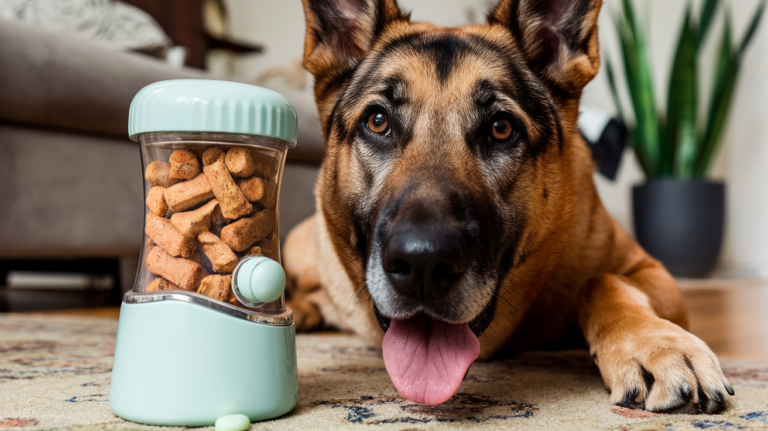
Before your walk, spend five to ten minutes doing training exercises, puzzle games, or scent work. Make your dog work for their breakfast by hiding kibble around the house. Practice obedience commands. Play find the toy. Get that powerful brain engaged before you clip on the leash.
Mental exercise tires dogs out more efficiently than physical exercise alone. A German Shepherd who has done fifteen minutes of problem solving and training will be calmer and more focused on a walk than one who just woke up from a nap.
Practice in Low Distraction Environments First
You wouldn’t take a driving test in downtown Manhattan during rush hour on your first day behind the wheel. Don’t expect your German Shepherd to walk perfectly in the most distracting environment possible when they’re just learning.
Start in your backyard or driveway. Master loose leash walking where there are minimal distractions. Then gradually increase difficulty: quiet street, slightly busier street, near a park, eventually in highly stimulating environments.
This incremental approach sets your dog up for success. Every successful repetition strengthens the behavior you want. Every time your dog pulls and gets where they wanted to go, you’ve reinforced pulling. Training in easier environments first means more success and faster overall progress.
The Power of “Let’s Go” and Position Rewards
Teach your German Shepherd a specific cue that means “walk beside me nicely now.” Many trainers use “let’s go” or “with me” rather than the formal “heel” command, which traditionally means something very specific in competition obedience.
When your dog is in the correct position beside you (generally with their shoulder roughly aligned with your leg), say your cue word and immediately reward. You’re labeling the position you want. Over time, your dog will understand that “let’s go” means “stay in this spot beside me and good things happen.”
You can also use environmental rewards, not just treats. When your dog is walking nicely, allow them to sniff that interesting spot. Use sniffing opportunities as a reward for good leash manners. “Walk nicely to the tree, then you get to investigate it.” This makes the walk itself reinforcing for appropriate behavior.
Addressing the Prey Drive Factor
German Shepherds have a notable prey drive, which means squirrels, cats, birds, and even blowing leaves can trigger an intense chase instinct. When that drive kicks in, your dog isn’t thinking rationally; they’re operating on instinct.
You can’t eliminate prey drive, but you can manage it. Work on a solid “look at me” or “watch me” command that redirects your dog’s attention before they’ve fully locked onto the target. The key is catching them before they’re completely focused on the squirrel, because once they’re in full prey mode, their brain basically goes offline for rational commands.
Practice impulse control games at home. Put a treat on the floor and reward your dog for looking at you instead of the treat. Play “it’s your choice” games where your dog learns that self control gets rewarded. These exercises build the mental muscles your GSD needs to resist pulling toward exciting triggers.
Consistency Across All Handlers
This cannot be emphasized enough: everyone in your household must follow the same rules. If you’re stopping every time the leash gets tight, but your teenager lets the dog pull them down the street, you’re working against yourself.
Have a family meeting. Explain the techniques you’re using. Make sure everyone understands that inconsistency will extend the training timeline significantly. It’s not about one person being the “bad guy” who enforces rules while others are permissive; it’s about being a unified team teaching your dog a new skill.
If professional dog walkers or friends sometimes walk your German Shepherd, brief them on your training approach. Provide written instructions if necessary. A few weeks of inconsistent walking can undo months of careful training.
Patience and Realistic Expectations
German Shepherds are highly trainable, but that doesn’t mean your pulling problem will disappear in three days. Depending on how long your dog has been practicing the pulling behavior, how consistent you can be, and your dog’s individual personality, you might see significant improvement in two to three weeks, or it might take several months.
Progress isn’t always linear. You’ll have great days and frustrating days. Your dog might walk beautifully in your neighborhood but pull intensely in new environments. This is normal. Keep training, stay consistent, and celebrate small victories.
Every walk where your German Shepherd pulls less than the previous week is a win. Every moment of loose leash walking is proof that your training is working. Focus on progress, not perfection.
The investment you make now in training will pay dividends for the next decade or more of walks with your dog. A German Shepherd who walks politely on leash is a joy to exercise, easier to manage in public, and safer in unpredictable situations. Your future self will thank your present self for putting in this work.
Remember that your German Shepherd isn’t trying to frustrate you. They’re a powerful, intelligent, energetic dog who simply needs to learn what you want from them. With the right equipment, consistent training techniques, and patience, you absolutely can transform your walks from exhausting struggles into the enjoyable outings they should be.