Well-meaning grooming mistakes can cause discomfort or injury. These common errors explain itching, stress, and coat problems owners often miss.
You come home to find your German Shepherd has reorganized your living room. The throw pillows are now in the backyard, there’s a mysterious hole in the drywall, and your houseplant has been “relocated” across three different rooms. Congratulations! You have a bored German Shepherd.
These dogs are basically the valedictorians of the canine world. They’re whip smart, endlessly energetic, and absolutely terrible at doing nothing. Originally bred to herd sheep across German countryside for hours on end, modern German Shepherds still carry those same drive and intelligence genes. The problem is most of them now live in suburbs with zero sheep and lots of free time. Let’s fix that boredom problem before your furniture pays the price.
1. Advanced Obedience Training Sessions
Your German Shepherd’s brain is a supercomputer running on dog food. Basic commands like “sit” and “stay”? Please. That’s kindergarten stuff. Challenge them with advanced obedience training that actually makes them think.
Teach complex command chains where they have to remember multiple steps in sequence. “Go to your bed, bring me the blue toy, then sit” is the kind of mental gymnastics that’ll tire out even the most energetic GSD. The beautiful part is you can practice these sessions indoors during bad weather, making them perfect for those rainy afternoons when outdoor exercise isn’t happening.
The key to successful training sessions is keeping them short but frequent. Three 10-minute sessions spread throughout the day works better than one exhausting hour. German Shepherds have impressive focus, but even they appreciate variety. Mix up the commands, change the locations, and always end on a high note with something they’ve already mastered.
2. Interactive Puzzle Toys and Food Dispensers
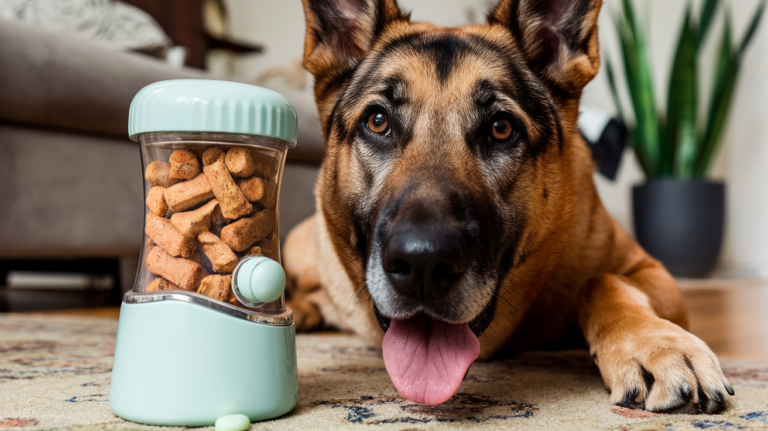
Let’s talk about making mealtime an Olympic event. Instead of dumping kibble in a bowl (boring!), turn breakfast and dinner into problem solving challenges. Puzzle toys come in various difficulty levels, from beginner to “is my dog secretly a genius?”
| Puzzle Toy Type | Difficulty Level | Average Time to Solve | Best For |
|---|---|---|---|
| Sliding compartments | Beginner | 5-10 minutes | New puzzle solvers |
| Flip boards | Intermediate | 10-15 minutes | Dogs with some experience |
| Multi-step puzzles | Advanced | 15-30 minutes | Puzzle veterans |
| Snuffle mats | Beginner | 10-20 minutes | Scent work enthusiasts |
Start with easier puzzles and gradually increase difficulty as your shepherd masters each level. Some German Shepherds become so good at these that you’ll need to rotate toys to keep them challenging. Pro tip: Freeze puzzle toys with wet food or peanut butter for an extended challenge that also provides cooling relief on hot days.
3. Scent Work and Nose Games
Your German Shepherd’s nose contains about 225 million scent receptors. For context, humans have a measly 5 million. That schnoz is a precision instrument, and using it provides incredible mental stimulation.
Create simple scent games by hiding treats around your house or yard. Start obvious (behind a chair leg) and progress to devious (inside a closed cardboard box, tucked in a rolled towel, buried under blanket layers). The searching, sniffing, and problem solving will exhaust them mentally far more than physical exercise alone.
Consider formal nose work classes where dogs learn to detect specific scents. It’s like creating a search and rescue dog, except they’re finding birch oil instead of missing hikers. Many German Shepherds absolutely thrive in these environments because they tap into their natural tracking and detection abilities.
4. Regular Structured Exercise Routines
Yes, I know this seems obvious, but there’s a difference between exercise and purposeful, structured exercise. A leisurely stroll around the block isn’t going to cut it for a breed developed to work all day.
Your German Shepherd needs cardiovascular workouts that actually elevate their heart rate. Running, hiking steep trails, swimming, or playing intense fetch sessions should be daily occurrences, not occasional treats. Aim for at least 60 to 90 minutes of solid physical activity each day, split into multiple sessions.
A tired German Shepherd is a well-behaved German Shepherd. Mental and physical exhaustion is your secret weapon against destructive boredom.
Mix up the exercise routines to prevent boredom. Monday might be a long trail hike, Tuesday could be swimming at the dog park, Wednesday brings agility practice, and so on. Variety keeps their bodies challenged and their minds engaged with new environments and experiences.
5. Agility Training and Obstacle Courses
Watching a German Shepherd navigate an agility course is like watching an athlete in their prime. These dogs are built for this stuff: athletic, coordinated, and eager to please. You don’t need fancy equipment to start, either.
Create a backyard obstacle course using household items. Broomsticks become jump bars, cardboard boxes turn into tunnels, and a ladder laid flat makes excellent paw work training. As your dog’s skills improve, invest in proper agility equipment or join a local agility club.
The mental focus required to navigate obstacles while following your commands provides dual stimulation. They’re thinking about where to place their paws, which obstacle comes next, and listening for your directions all simultaneously. It’s the ultimate brain and body workout rolled into one activity.
6. Playdates with Other Dogs
German Shepherds can be selective about their canine friends, but when they find compatible playmates, the results are magical. Wrestling, chasing, and playing with other dogs provides social stimulation that humans simply cannot replicate.
Quality matters more than quantity here. One well matched play buddy beats ten random dogs at the park. Look for dogs with similar play styles and energy levels. A Labrador who loves to chase might be perfect, while a tiny Chihuahua probably isn’t the ideal wrestling partner (for safety reasons).
Supervise playdates, especially initially, to ensure play stays friendly. German Shepherds can sometimes play rough, and their intensity might overwhelm more laid back breeds. Reading dog body language helps you recognize when everyone’s having fun versus when someone needs a break.
7. Job Training and Tasks
Here’s a revolutionary concept: Give your German Shepherd an actual job. These dogs were literally bred to work, so putting them to work just makes sense.
Teach them useful household tasks like fetching the newspaper (yes, some people still get those), bringing you specific items by name, or carrying in light groceries. Some German Shepherds learn to close doors, turn off lights, or retrieve the remote control. The tasks themselves matter less than the mental engagement of having purpose and responsibility.
German Shepherds don’t want to be pets; they want to be partners. Give them responsibilities, and watch their entire demeanor transform.
Start simple and build complexity. “Fetch my shoes” becomes “fetch my brown shoes” which evolves into “fetch my brown shoes from the bedroom closet.” The progression keeps them learning and engaged indefinitely.
8. Rotating Toy Selection
Twenty toys scattered across your floor? Your German Shepherd is bored with all of them. Constant availability equals lost interest. The solution is strategic toy rotation that creates novelty and excitement.
Divide toys into three or four groups. Each week, put away the current group and bring out a different set. When those “new” toys appear, your dog experiences the same excitement they felt when you first brought them home. Old becomes new again through absence.
This approach also helps you identify which toys genuinely engage your shepherd versus which ones were expensive mistakes gathering dust. Keep the winners in rotation and donate the losers to shelters where they might find more appreciative recipients.
9. Training for Dog Sports
German Shepherds excel at virtually every dog sport ever invented. Schutzhund (now called IGP), dock diving, flyball, herding trials, tracking competitions… pick your poison. These organized sports provide structure, goals, and community.
The commitment level varies widely. Some people compete seriously while others just enjoy the training aspects. Either approach works for keeping your German Shepherd engaged. The key benefit is having expert instruction and a progressive training program that continuously challenges your dog.
Plus, dog sports communities are incredibly welcoming. You’ll meet other German Shepherd enthusiasts who understand exactly why your dog needs seventeen different types of mental stimulation. These are your people.
10. Interactive Play and Tug Games
Never underestimate the power of quality one on one playtime. Tug games, in particular, offer incredible physical and mental benefits when played correctly. Despite old myths, tug doesn’t make dogs aggressive; it builds confidence and provides an excellent outlet for energy.
Establish clear rules: The game starts when you say, stops when you say, and if teeth touch skin (even accidentally), game over. This structure teaches impulse control while allowing vigorous play. Many German Shepherds love tug so much that it becomes a high value reward for training.
Flirt poles take the tug concept mobile, letting your shepherd chase and catch a toy on a rope. It’s essentially a giant cat toy for dogs, and German Shepherds go absolutely bonkers for them. Short sessions (5 to 10 minutes) provide intense exercise without risking joint damage from repetitive jumping.
Final Thoughts
The common thread through all these activities? Engagement. Your German Shepherd doesn’t need expensive gadgets or elaborate setups. They need you, your creativity, and your commitment to keeping their remarkable minds and bodies active. Mix and match these strategies, discover what makes your specific dog light up, and say goodbye to boredom related destruction. Your furniture will thank you.