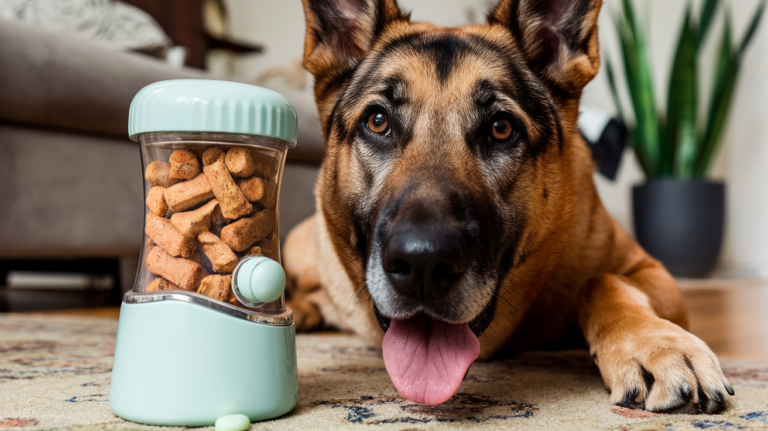
Mental workouts matter just as much as walks. These clever brain games challenge intelligence, reduce boredom, and leave your German Shepherd happily tired.
Watch a German Shepherd solve a problem, and you’ll see wheels turning behind those alert eyes. These dogs don’t just follow commands; they analyze, strategize, and sometimes even outsmart their humans. It’s no wonder they excel as police dogs, service animals, and search and rescue heroes. That same intelligence that makes them phenomenal working dogs also means they need serious mental engagement at home.
Think of your German Shepherd’s brain like a high performance engine: it runs best when you actually use it. Without regular mental workouts, all that cognitive horsepower turns into frustration, anxiety, and those infamous “zoomies” at three in the morning. The solution isn’t complicated or time consuming. These eight brain games tap into your GSD’s natural instincts while providing the mental challenge they crave, transforming everyday moments into engaging training opportunities.
1. The Muffin Tin Treasure Hunt
Transform a simple muffin tin into an exciting puzzle that’ll have your German Shepherd’s nose working overtime. Place treats in several cups of a 12 cup muffin tin, then cover all the cups with tennis balls. Your clever canine has to figure out how to remove the balls to access the hidden treasures underneath.
This game engages multiple senses simultaneously. Your GSD must use their incredible sense of smell to identify which cups contain treats, then employ problem solving skills to remove the obstacles. Start easy by only covering the treat filled cups, then gradually increase difficulty as your dog masters the concept.
The beauty of this game lies in its versatility. You can make it harder by using different sized balls, switching to smaller treats that are harder to smell, or even placing the tin on an elevated surface. Most German Shepherds crack the basic version within minutes, which is exactly why the progressive difficulty keeps them coming back for more.
| Difficulty Level | Setup | Approximate Time to Master |
|---|---|---|
| Beginner | 3 treats, only those cups covered | 2-5 minutes |
| Intermediate | 6 treats, all cups covered | 5-10 minutes |
| Advanced | 3 treats, all cups covered, smaller treats | 10-20 minutes |
| Expert | Elevated tin, mix of ball sizes, minimal scent treats | 20+ minutes |
2. The Name Game Challenge
German Shepherds can learn an impressive vocabulary, often understanding 200 words or more. Put that linguistic genius to work by teaching your dog the names of their toys. Start with two distinctly different toys: perhaps a rope and a ball. Use one name consistently while playing with each toy.
Practice by asking your dog to bring you specific toys by name. “Bring me rope!” should result in your GSD searching through their toy box and proudly delivering the correct item. This isn’t just a party trick; it’s genuine cognitive exercise that reinforces word association and memory.
Once your shepherd masters two toys, gradually expand their vocabulary. Some German Shepherds have learned the names of 50 or more objects, turning cleanup time into an engaging game. “Put ball in the basket” becomes a multi step command that requires understanding multiple words and concepts.
Mental exercise through vocabulary building creates neural pathways that keep your German Shepherd’s mind sharp well into their senior years. Every new word learned is another connection formed, another puzzle solved.
3. The Shell Game Shuffle
Remember those street corner shell games? Your German Shepherd will love a canine version. Use three cups or containers and let your dog watch as you place a treat under one. Slowly shuffle the cups around, then encourage your pup to indicate which cup hides the prize.
This game develops focus, tracking skills, and patience. German Shepherds excel at this because of their natural ability to concentrate intensely on tasks. Start with slow, obvious movements and just two cups. As your dog improves, speed up your shuffling and add a third cup for increased difficulty.
The real magic happens when your GSD starts anticipating your movements. You’ll notice them tracking not just the cup but your hand movements and body language. They’re not just playing; they’re studying you, learning to read subtle cues and predict outcomes.
4. Hide and Seek: Canine Edition
Your German Shepherd’s ancestral job involved tracking and finding, making hide and seek a natural fit for their skill set. Start simple: have your dog sit and stay in one room while you hide in an obvious spot nearby. Call them and celebrate enthusiastically when they find you.
Gradually increase the challenge by hiding in more creative locations. Behind doors, in closets, even under blankets (though your GSD will probably spot that human shaped lump immediately). The seeking behavior engages their natural tracking instincts while the successful “find” provides a dopamine rush that keeps them motivated.
Take this game further by hiding treats or toys instead of yourself. German Shepherds have up to 225 million scent receptors (compared to our measly 5 million), making them exceptional at scent work. A treat hidden under a couch cushion becomes an engaging puzzle that exercises both body and mind.
5. The Bottle Spin Puzzle
Create a DIY puzzle feeder using a plastic bottle suspended on a rod or rope. Cut holes just large enough for treats to fall through when the bottle rotates. Your German Shepherd must figure out that spinning or tipping the bottle releases the goodies inside.
This game teaches cause and effect while providing physical and mental stimulation. Watch as your clever canine experiments with different approaches: nosing it, pawing it, or grabbing it with their mouth. Each attempt is a hypothesis being tested, a strategy being evaluated.
The bottle puzzle is especially brilliant because it self regulates difficulty. As treats decrease, the bottle becomes lighter and easier to spin but provides less frequent rewards. This variable reward schedule is incredibly engaging for dogs, keeping them interested even after the obvious treats are gone.
Problem solving games tap into your German Shepherd’s working dog heritage, satisfying the same mental drives that make them exceptional at police work, search and rescue, and service tasks.
6. Scent Discrimination Training
Leverage your GSD’s phenomenal nose by teaching them to identify specific scents. Start with something simple: your scent on a cloth versus a neutral cloth. Reward your dog for choosing the cloth with your scent. This foundational skill can evolve into incredibly complex scent work.
Progress to essential oils (dog safe varieties only), teaching your shepherd to identify lavender versus peppermint, for example. Place scented cotton balls in small containers and reward correct identifications. This isn’t just a game; it’s the same foundational training used for detection dogs.
Advanced scent work can include finding specific scented objects hidden throughout your house or yard. German Shepherds often become obsessed with this game because it aligns perfectly with their biological design. The concentration required provides deep mental exhaustion that physical exercise alone cannot achieve.
7. The Cleanup Crew Challenge
Turn tidying up into a brain boosting game by teaching your German Shepherd to put their toys away. This multi step task requires understanding object permanence, spatial awareness, and following complex commands. Start by rewarding your dog for simply touching a toy, then for picking it up, then for moving it toward the toy box.
| Training Stage | Command | Success Criteria | Typical Timeline |
|---|---|---|---|
| Stage 1 | “Touch toy” | Nose touches toy | 1-2 sessions |
| Stage 2 | “Take it” | Picks up toy in mouth | 2-4 sessions |
| Stage 3 | “Bring it” | Carries toy toward you | 3-5 sessions |
| Stage 4 | “Drop it” (over box) | Releases toy near/in box | 4-6 sessions |
| Stage 5 | “Clean up” (full chain) | Complete sequence | 2-3 weeks |
Eventually, “clean up” becomes a single command that initiates an entire sequence of behaviors. Your German Shepherd must remember the steps, execute them in order, and repeat the process for multiple toys. It’s like a canine version of a complex workflow, engaging executive function and sequential processing.
The satisfaction your GSD experiences from completing this task taps into their desire to work and please. Plus, you get a cleaner living room. Win, win!
8. The Which Hand Game
Simple yet effective, this classic game never gets old for German Shepherds. Hold a treat in one closed fist, present both fists to your dog, and reward them for indicating the correct hand. This game teaches probability, decision making, and reading human body language.
Smart German Shepherds quickly learn to watch for subtle cues. They’ll notice which hand moves to pick up the treat, track your eye movements, or detect microscopic scent particles escaping your closed fist. Some dogs develop strategies like always choosing left first, then switching if wrong.
Increase complexity by adding a third option (two hands plus a cup on the floor) or by making the choice purely scent based by keeping both hands perfectly still. Watch your shepherd’s problem solving process evolve as they adapt their strategy to new rule sets.
The mental fatigue from brain games often surpasses physical tiredness. A German Shepherd who has spent twenty minutes puzzle solving will often nap more contentedly than after a forty minute walk.
Remember, the goal isn’t perfection or speed. The goal is engagement. Your German Shepherd’s brain needs these challenges the same way their body needs exercise. Rotate through different games to prevent boredom, adjust difficulty to maintain that sweet spot between too easy and frustratingly hard, and most importantly, celebrate the process.
These eight games represent just the beginning of what your intelligent companion can achieve. Every game strengthens your bond, builds confidence, and channels that brilliant mind into positive outlets. Your German Shepherd isn’t just a pet; they’re a thinking, learning partner who thrives on mental challenges. Give them the puzzles they crave, and watch that magnificent brain shine.