Protect your home and your GSD. These 5 steps prevent chaos, accidents, and stress while keeping your German Shepherd safe.
Every German Shepherd owner has a story. Maybe it’s about the time their pup ate an entire couch cushion, or perhaps it’s the legendary tale of how their dog somehow opened a “childproof” cabinet and helped themselves to a feast. These stories are funny later, sure, but they’re considerably less amusing when you’re standing in a pile of shredded belongings wondering where you went wrong.
The truth is, German Shepherds are exceptional dogs with exceptional needs. They’re working breeds with powerful jaws, sharp minds, and an intense desire to explore everything around them. Setting them up for success means transforming your home from a hazard zone into a safe, engaging space where they can be their best selves.
1. Secure All Potential Chewing Hazards
German Shepherds have an incredible bite force, averaging between 238 and 291 pounds per square inch. That’s enough power to turn your favorite belongings into unrecognizable scraps in minutes. The first step in preparing your home is identifying and securing anything your dog might mistake for a chew toy.
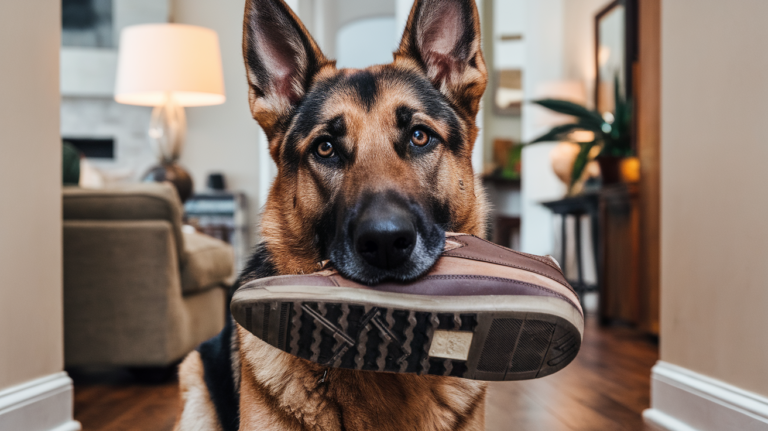
Start with the obvious culprits: shoes, remote controls, children’s toys, and books. These should all be stored well out of reach, preferably in closed cabinets or on high shelves. But don’t stop there. German Shepherds are surprisingly creative problem solvers who can reach higher than you’d expect, especially when standing on their hind legs.
Your German Shepherd doesn’t understand the difference between a $200 pair of designer shoes and a $5 rope toy. To them, everything is fair game unless you teach them otherwise.
Pay special attention to electrical cords and cables. These pose both a destruction risk and a serious safety hazard. Use cord protectors, tape cords flat against walls, or route them through PVC pipes. For exposed cords that can’t be hidden, bitter apple spray can be a helpful deterrent (though some determined dogs develop a taste for it, so test first).
Consider creating a checklist of items to secure:
| Room | Items to Secure | Storage Solution |
|---|---|---|
| Living Room | Remote controls, magazines, throw pillows, charger cables | Closed storage ottomans, wall mounted shelves |
| Kitchen | Dish towels, wooden spoons, food items, trash | Locking cabinets, secured trash cans with lids |
| Bedroom | Shoes, laundry, jewelry, books | Closets with doors, hampers with lids |
| Bathroom | Toilet paper, towels, toiletries, medications | Medicine cabinets, closed linen closets |
| Home Office | Papers, pens, headphones, electronics | Desk drawers, cable management systems |
Don’t forget about less obvious items like houseplants, decorative objects, and holiday decorations. Many common houseplants are toxic to dogs, including pothos, philodendron, and peace lilies. Either remove these entirely or place them in areas your German Shepherd absolutely cannot access.
2. Create a Safe, Dedicated Space
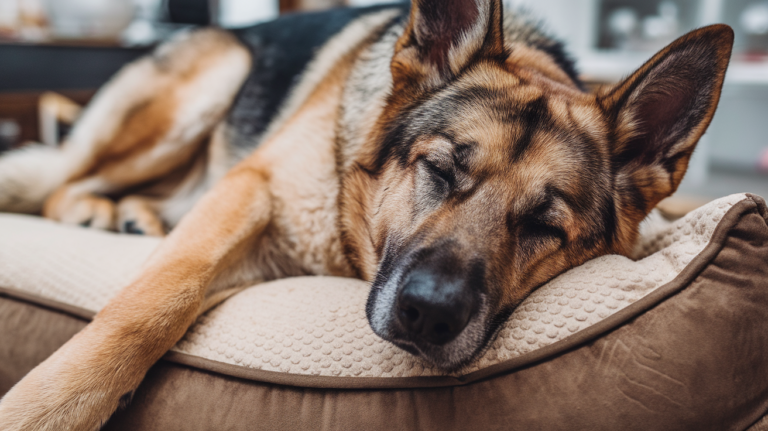
Every German Shepherd needs a space they can call their own, somewhere they feel secure and comfortable. This isn’t about punishment or isolation; it’s about giving your dog a designated area where they can relax, especially when you can’t supervise them directly.
For many owners, this means setting up a crate or gated area. Choose a spot away from high traffic areas but still within the general living space, so your dog doesn’t feel completely isolated. The crate should be large enough for your German Shepherd to stand up, turn around, and lie down comfortably. For adult German Shepherds, this typically means a crate that’s at least 42 to 48 inches long.
Make this space inviting by adding comfortable bedding, a few safe toys, and maybe an item that smells like you (an old t-shirt works perfectly). Some German Shepherds appreciate having a blanket draped over part of the crate to create a more den-like atmosphere, though others prefer being able to see out completely.
If you’re using a gated area instead of a crate, ensure the gates are tall enough (at least 36 inches) and securely fastened. German Shepherds are athletic dogs capable of impressive jumps, and they’re surprisingly good at figuring out how to open simple latches.
A properly introduced safe space becomes your German Shepherd’s sanctuary, not a prison. They’ll voluntarily retreat there when they need downtime, making your life and theirs significantly easier.
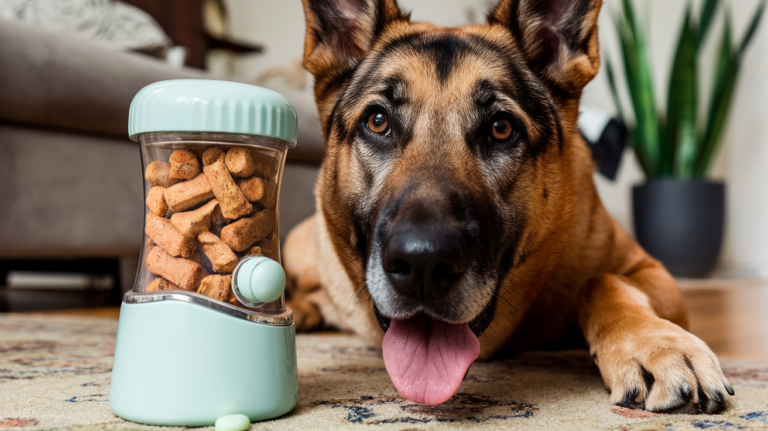
Stock this area with appropriate chew toys and puzzle feeders. German Shepherds are intelligent dogs who need mental stimulation, and providing engaging toys in their safe space helps prevent boredom-driven destructive behavior. Rotate toys regularly to keep things interesting.
3. Eliminate Toxic Substances and Dangerous Items
German Shepherds explore their world with their mouths, which means they’re at high risk of ingesting dangerous substances. Your home contains numerous items that are perfectly safe for humans but potentially lethal for dogs, and identifying these hazards is crucial.
Start in the kitchen. Common foods that are toxic to dogs include chocolate, grapes, raisins, onions, garlic, xylitol (found in sugar-free gum and peanut butter), and macadamia nuts. Store these items in cabinets with childproof latches or on high shelves. Don’t assume your dog won’t figure out how to open a standard cabinet; many German Shepherds possess alarming problem-solving abilities.
Move to the garage and storage areas, where antifreeze, pesticides, fertilizers, paint, and cleaning supplies lurk. Antifreeze is particularly dangerous because it tastes sweet to dogs but causes fatal kidney failure. Store all chemicals in locked cabinets or on high, secure shelving.
Bathrooms contain their own hazards: medications, vitamins, cosmetics, and cleaning products. Even items you might think are harmless, like dental floss or cotton swabs, can cause intestinal blockages if ingested. Keep all bathroom items in closed cabinets or drawers.
Important toxic items to secure:
- Human medications (especially pain relievers, antidepressants, and ADHD medications)
- Rat poison and rodenticides
- Insecticides and herbicides
- Essential oils (many are toxic to dogs when ingested or even inhaled in concentration)
- Certain houseplants (sago palm, azalea, oleander, tulip bulbs)
- Heavy metals (paint chips, batteries)
- Alcohol and raw bread dough
Consider installing childproof latches on lower cabinets throughout your home. Yes, they’re mildly annoying for you, but they’re far less annoying than an emergency vet visit at 2 AM because your German Shepherd got into something they shouldn’t have.
4. Reinforce Boundaries and Block Off Danger Zones
Not every area of your home needs to be accessible to your German Shepherd. In fact, restricting access to certain spaces makes everyone’s life easier and safer. Baby gates are your best friend here, allowing you to control which rooms your dog can enter while still maintaining visibility and connection.
Stairs present a particular concern, especially for puppies whose joints are still developing. Repeated stair climbing can contribute to hip dysplasia, a condition German Shepherds are already genetically predisposed to developing. Block off staircases with sturdy gates until your puppy is at least six months old, and even then, monitor stair usage.
Some rooms might be off limits entirely. Home offices often contain expensive electronics, important papers, and other items that aren’t dog-friendly. Guest rooms might have delicate furnishings you’d prefer to keep pristine. Craft rooms or workshops contain countless small items and potentially dangerous tools.
Setting clear boundaries from day one is far easier than trying to retrain a German Shepherd who’s had free rein of the house. Consistency is everything.
For areas where you can’t install gates, consider using exercise pens or room dividers. These create flexible barriers that can be moved or reconfigured as needed. Some owners successfully use motion-activated deterrents that emit a harmless spray of air when the dog approaches a forbidden zone, though these work better for some dogs than others.
Don’t forget about outdoor access points. Balconies, decks, and pools all pose potential dangers. Ensure your German Shepherd can’t slip through railing gaps (they can squeeze through surprisingly small openings) and that pools are either fenced or covered. Pool covers should be specifically designed for safety; decorative covers can trap a dog underneath.
5. Establish a Routine and Enrichment Strategy
Here’s the secret that many new German Shepherd owners miss: a tired dog is a well-behaved dog, and a bored German Shepherd is a destructive German Shepherd. Physical and mental exercise are non-negotiable for this breed, and building these into your daily routine is perhaps the most important “proofing” you can do.
German Shepherds were bred to work all day, every day. That drive doesn’t disappear just because your dog lives in a suburban home instead of herding sheep. An adult German Shepherd needs at least 90 minutes of exercise daily, split between walks, play sessions, and training time. Puppies need shorter but more frequent activity sessions.
But here’s what surprises people: physical exercise alone isn’t enough. German Shepherds are highly intelligent dogs who need mental challenges to truly thrive. A 30-minute training session can tire your dog as much as an hour-long walk because it engages their brain in ways that simple physical activity doesn’t.
Incorporate puzzle toys, snuffle mats, and food-dispensing toys into your dog’s daily routine. Hide treats around the house for them to find. Teach new tricks regularly. Set up obstacle courses in your backyard. The goal is to keep your German Shepherd’s brilliant mind engaged so they’re not inventing their own “games” that involve redecorating your home.
Create a consistent daily schedule that includes:
- Morning walk and bathroom break
- Training session or puzzle toy time
- Midday play or enrichment activity
- Afternoon walk or exercise
- Evening training and bonding time
- Pre-bedtime bathroom break and quiet settling
Consistency helps German Shepherds understand what’s expected and when. When they know a walk is coming at 6 PM, they’re less likely to bounce off the walls at 5:30 PM. When they’ve had adequate physical and mental stimulation, they’re content to relax in their safe space rather than seeking entertainment through destructive behaviors.
Remember that proofing your home is an ongoing process, not a one-time event. As your German Shepherd grows and their abilities change, you’ll need to reassess and adjust your strategies. That low shelf that was safe when they were a puppy? Not so much when they’re a 70-pound adult who can reach the countertops. Stay vigilant, stay consistent, and you’ll create a home where both you and your German Shepherd can thrive together.