Eye gunk happens often. Here’s how to manage it and keep your Schnauzer’s eyes healthy and clear.
What’s worse than stepping on a Lego barefoot at 3 AM? Waking up to find your Schnauzer’s eyes sealed shut with crusty discharge. Okay, maybe that’s a tie, but the point stands: eye gunk is gross, concerning, and surprisingly common in our favorite salt and pepper pups.
Before you spiral into a panic spiral (been there, done that), take a breath. Most of the time, eye discharge in Schnauzers is manageable and treatable. Your dog isn’t going blind, they probably don’t have some exotic disease, and yes, you can figure this out.
Why Schnauzers Are Eye Gunk Magnets
Schnauzers didn’t ask for this life, but their adorable facial structure kind of set them up. These dogs have what we call a “bearded breed” profile, meaning all that luxurious facial hair is basically a magnet for dirt, debris, and yes, eye discharge. Think of it like having permanent bangs that constantly poke you in the eyeball. Not fun.
But it goes deeper than just the beard. Schnauzers, particularly Miniature Schnauzers, have relatively prominent eyes that sit closer to the surface than some other breeds. This anatomical feature makes their eyes more exposed to environmental irritants like dust, pollen, and that random leaf that flew into their face during this morning’s walk.
Their hair growth pattern doesn’t help either. Those magnificent eyebrows? Adorable, yes. But they also grow inward sometimes, causing hairs to irritate the eyeball throughout the day. It’s like having a tiny eyelash stuck in your eye constantly, except it’s attached to your face and keeps growing back.
The Different Types of Eye Gunk (Yes, There Are Types)
Not all eye discharge is created equal, friends. Learning to identify what’s coming out of your Schnauzer’s eyes can help you figure out whether you’re dealing with something minor or if it’s time to call the vet.
Clear or White Discharge
This is usually the “good” kind of eye gunk, if we can call any eye gunk good. Clear or slightly white discharge is often just normal tear production doing its job. Your Schnauzer’s eyes are cleaning themselves naturally, washing away dust and keeping everything lubricated.
You’ll typically see this first thing in the morning, kind of like how humans wake up with sleep in their eyes. If it’s minimal, not accompanied by redness or squinting, and easily wipes away, you’re probably in the clear. However, if there’s a lot of it or it’s happening constantly throughout the day, keep reading.
Yellow or Green Discharge
Now we’re entering the “time to pay attention” zone. Yellow or green gunk usually means there’s an infection brewing. Bacteria love warm, moist environments (your dog’s eye corners are basically a bacterial spa), and when they set up shop, they produce pus. Gross, I know.
This type of discharge often comes with other symptoms: redness, swelling, your Schnauzer pawing at their face like they’re trying to remove their own eye, or excessive blinking. If you’re seeing green goop, don’t wait around hoping it’ll resolve itself. Bacterial infections need treatment, usually in the form of antibiotic eye drops.
Thick, Crusty Buildup
This is the stuff that basically glues your dog’s eyelids together overnight. Thick, crusty discharge can be either a sign of chronic dry eye (yes, dogs get that too) or a more serious infection that’s been going on for a while. The crustiness happens when discharge dries out, cementing itself to the fur around the eyes.
Common Causes Behind the Gunk
| Cause | Symptoms | Severity Level | Treatment Needed |
|---|---|---|---|
| Allergies | Clear/white discharge, redness, itching | Mild to Moderate | Antihistamines, environmental changes |
| Dry Eye | Thick, sticky discharge, frequent blinking | Moderate | Artificial tears, prescription drops |
| Conjunctivitis | Red eyes, yellow/green discharge, swelling | Moderate to Severe | Antibiotic drops, vet visit |
| Hair Irritation | Watery eyes, clear discharge, squinting | Mild | Grooming, hair trimming |
| Blocked Tear Ducts | Excessive tearing, staining, overflow | Moderate | Massage, possible surgical intervention |
Allergies Are Sneakier Than You Think
Just like humans, Schnauzers can be allergic to pretty much anything: pollen, grass, dust mites, certain foods, or even your new laundry detergent. When allergens irritate their eyes, the body responds by producing more tears to flush out the offending substance. This creates a cycle where the eyes are constantly watery, which leads to more gunk accumulation.
Seasonal allergies are particularly notorious. If you notice your Schnauzer’s eye gunk gets worse during spring or fall, you’re probably dealing with environmental allergies. The discharge will typically be clear or white, and you might notice your pup rubbing their face on the carpet or pawing at their eyes more than usual.
Dry Eye (Keratoconjunctivitis Sicca)
Here’s a fun paradox: sometimes excessive eye gunk actually means your dog’s eyes are too dry. Dry eye, or KCS if we’re getting technical, happens when the tear glands don’t produce enough tears to keep the eyes properly lubricated. To compensate, the eyes produce a thick, sticky mucus that’s supposed to help, but really just makes everything worse.
Schnauzers are one of the breeds more prone to developing dry eye, especially as they age. If left untreated, dry eye can lead to serious problems like corneal ulcers or even vision loss. The good news is that once diagnosed, it’s usually manageable with lifelong medication.
If your Schnauzer’s eyes look dull, have a thick ropy discharge, or if they’re squinting constantly, dry eye should be at the top of your suspect list. This condition won’t resolve on its own and requires veterinary intervention.
Infections Love a Good Beard
Remember all that facial hair we talked about earlier? It’s not just cute; it’s also a breeding ground for bacteria. When discharge accumulates in the fur around your Schnauzer’s eyes, it creates the perfect environment for bacterial growth. Before you know it, what started as mild irritation has turned into a full blown eye infection.
Conjunctivitis (pink eye, but for dogs) is the most common type of eye infection in Schnauzers. It can be caused by bacteria, viruses, or even irritants like shampoo that got in their eyes during bath time. The telltale sign is that goopy yellow or green discharge, often accompanied by red, angry looking conjunctiva (the pink tissue around the eye).
Those Pesky Ingrown Hairs
Schnauzers have an impressive amount of hair growing in all directions around their eyes. Sometimes, these hairs grow inward instead of outward, constantly poking and irritating the eyeball. It’s called distichiasis when it happens with eyelashes, or trichiasis when regular facial hair rubs against the eye.
This constant irritation triggers tear production, which leads to discharge, which mats in the hair, which causes more irritation. It’s a vicious cycle that won’t stop until you address the hair problem directly.
The Fix: Getting Rid of Eye Gunk
Daily Cleaning Is Your New Best Friend
The single most important thing you can do for your Schnauzer’s gunky eyes is to clean them daily. I know, I know, it’s another thing on your already packed to do list. But trust me, spending two minutes each morning wiping your dog’s eyes will save you from much bigger problems down the road.
Here’s the technique: Use a clean, damp cloth or an eye wipe specifically made for dogs (you can find these at any pet store). Gently wipe from the inner corner of the eye outward, removing any crusty buildup. Use a different section of the cloth for each eye to avoid spreading any potential infection. If the gunk is really crusted on, hold the damp cloth against it for a few seconds to soften it up before wiping.
Pro tip: Keep a container of dog eye wipes next to wherever you normally sit with your pup in the morning. Making it convenient makes it more likely you’ll actually do it consistently.
Grooming Matters More Than You Realize
Regular grooming appointments are essential for managing eye gunk in Schnauzers. A good groomer will trim the hair around your dog’s eyes, keeping those irritating strands from constantly poking the eyeball. They’ll also trim the eyebrows to a manageable length while maintaining that classic Schnauzer look.
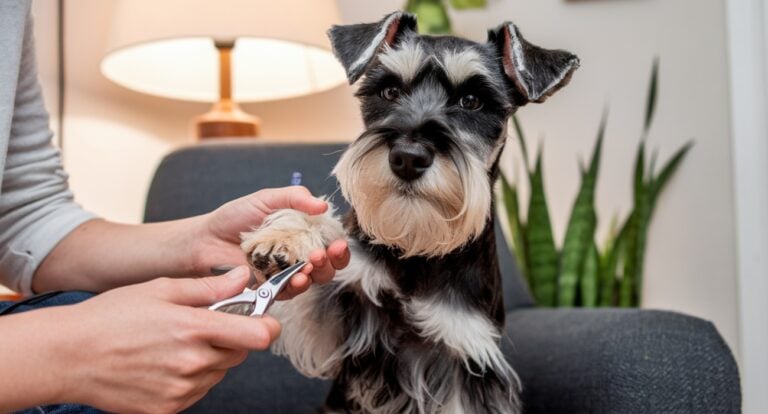
Between professional grooming sessions, you can do some maintenance at home. Invest in a pair of blunt tipped grooming scissors (seriously, get the blunt tipped ones; regular scissors are an eye injury waiting to happen) and carefully trim any long hairs that are obviously touching the eyeball. If you’re nervous about this, ask your groomer to show you the proper technique during your next visit.
Regular facial grooming isn’t just about aesthetics. For Schnauzers, it’s a legitimate health maintenance task that directly impacts eye comfort and reduces the risk of infections.
When to Use Eye Drops
There are dozens of over the counter eye drops marketed for dogs, and they can be helpful in certain situations. Artificial tears or lubricating eye drops can soothe minor irritation and help flush out debris. They’re particularly useful if your Schnauzer has been exposed to something irritating like smoke or dust.
However, not all eye gunk should be treated with OTC drops. If you’re seeing yellow or green discharge, or if your dog’s eyes look red and painful, skip the over the counter stuff and head to the vet. Using the wrong type of eye drops can actually make infections worse or mask symptoms of a more serious problem.
Address the Underlying Cause
Here’s the thing about eye gunk: cleaning it up addresses the symptom, but you need to figure out why it’s happening in the first place. If allergies are the culprit, you might need antihistamines or changes to your dog’s environment. If it’s dry eye, you’ll need prescription medication. If there’s an infection, antibiotics are necessary.
Keep a log of when the eye gunk is worst, what it looks like, and any other symptoms you notice. This information is incredibly valuable when you visit the vet and can help them diagnose the problem more quickly. Note things like: Does it get worse after walks? Is it seasonal? Does one eye produce more gunk than the other? Does your dog seem uncomfortable?
The Dietary Connection
Sometimes, eye discharge is connected to what your Schnauzer is eating. Food allergies can manifest as eye irritation and increased discharge. If you suspect this might be the case, talk to your vet about trying an elimination diet to identify potential food triggers.
Additionally, omega 3 fatty acids (found in fish oil supplements) can help reduce inflammation throughout the body, including in the eyes. Some Schnauzer owners report improvement in eye gunk after adding omega 3s to their dog’s diet. Always check with your vet before adding any supplements, though.
When to Actually Worry
Most eye gunk is annoying but not dangerous. However, there are some red flags that mean you need to stop reading this article and call your vet right now:
Your Schnauzer’s eye looks cloudy or has changed color. Any sudden change in eye appearance is a potential emergency. Cloudiness can indicate corneal ulcers, glaucoma, or cataracts, all of which require immediate treatment.
The discharge is accompanied by obvious pain. If your dog is squinting, pawing desperately at their eye, or won’t let you touch their face, something is seriously wrong. Pain indicates either a foreign object in the eye, a scratch on the cornea, or a severe infection.
There’s swelling around the eye. Puffy, swollen tissue around the eye can indicate anything from a severe allergic reaction to an abscess. Either way, it needs veterinary attention.
The gunk appeared suddenly and is excessive. A sudden increase in eye discharge, especially if it’s thick and colored, usually means an infection or injury has occurred. Don’t wait to see if it gets better on its own.
Trust your gut. You know your Schnauzer better than anyone. If something seems off, even if you can’t quite put your finger on what it is, it’s always better to err on the side of caution and check with your vet.
Prevention Strategies That Actually Work
The best way to deal with eye gunk is to prevent it in the first place. While you can’t completely eliminate all eye discharge (it’s a normal bodily function, after all), you can definitely minimize it.
Keep your Schnauzer’s face clean and dry. After they drink water or eat food, wipe their beard and face. Moisture trapped in facial hair creates the perfect breeding ground for bacteria, which can then migrate to the eyes.
Avoid irritants when possible. Don’t let your Schnauzer stick their head out the car window (I know, it’s adorable, but flying debris can seriously damage their eyes). Be cautious with household cleaners and air fresheners, which can irritate sensitive eyes. If you’re using flea or tick prevention products, apply them carefully to avoid getting any near the face.
Consider a higher quality diet. Better nutrition supports overall health, including eye health. Dogs eating high quality food with proper nutrients often have fewer allergy symptoms and less inflammation throughout their body.
Stay on top of regular vet checkups. Annual exams give your vet the chance to catch potential eye problems before they become serious. Many eye conditions are much easier to treat when caught early.
Living With a Gunky-Eyed Schnauzer
Look, your Schnauzer might always be a little prone to eye gunk. That’s just part of the deal when you sign up for a bearded breed. But with consistent care and attention, you can keep those crusty corners to a minimum and ensure your pup’s eyes stay healthy and comfortable.
Think of daily eye cleaning the same way you think about brushing your dog’s teeth: it’s just part of responsible pet ownership. It takes two minutes, it prevents bigger problems, and honestly, it becomes second nature pretty quickly. Plus, it’s a nice bonding moment where your Schnauzer gets some gentle face pets while you make sure everything looks good.
Most importantly, don’t beat yourself up if your Schnauzer has eye gunk. It doesn’t mean you’re a bad dog parent or that you’re doing something wrong. Some dogs are just more prone to it than others, and Schnauzers happen to be one of those breeds. Armed with the right information and a consistent cleaning routine, you’ve got this handled.