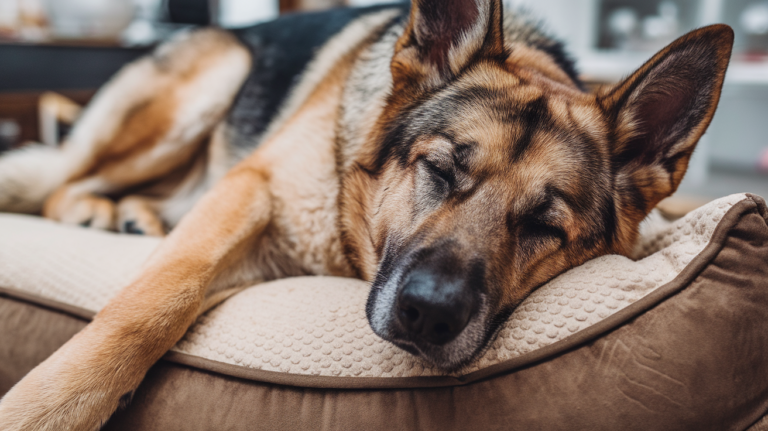
Those twitching paws aren’t random. Peek into what German Shepherd dreams might reveal about their daily lives.
You’re settled on the couch with a good book when you notice it: your German Shepherd’s legs are twitching like they’re running a marathon in their sleep. Their ears flick back and forth, and suddenly a muffled “woof” escapes their snoozing snout. What’s going on in that furry head? Are they chasing squirrels through an infinite park, or maybe they’re reliving that glorious moment when they caught the neighbor’s frisbee mid-air?
The truth is, your dog’s dream world is more fascinating than you might imagine. Scientists have actually studied canine sleep patterns, and what they’ve discovered will make you look at naptime in a whole new light.
The Science Behind Dog Dreams
Let’s get nerdy for a minute (but in a fun way, promise). Dogs experience sleep cycles remarkably similar to humans. They go through different stages, including the famous REM (Rapid Eye Movement) sleep, which is when the magic happens. During REM sleep, your German Shepherd’s brain becomes almost as active as when they’re awake, creating the perfect conditions for dreaming.
Research conducted at MIT back in 2001 showed that rats (and by extension, other mammals) replay their daily experiences during sleep. Scientists monitored brain activity and found that the same neural patterns that fired when rats ran through mazes during the day fired again during REM sleep. The logical conclusion? They were dreaming about their daytime activities. Dogs, being far more complex and emotionally connected creatures than rats, likely experience even richer dream scenarios.
Your German Shepherd’s brain doesn’t just randomly generate images while they sleep. Instead, they’re processing information, consolidating memories, and quite possibly practicing skills they learned during waking hours. That new “sit, stay” command you’ve been working on? Your pup might be acing it in dreamland before they perfect it in real life.
Dreams aren’t just mental movies for entertainment; they’re your dog’s brain organizing, filing, and making sense of everything they experienced while awake.
What Do German Shepherds Actually Dream About?
Now for the million-dollar question: what exactly is playing out in your GSD’s dream theater? While we can’t exactly ask them (wouldn’t that be amazing?), we can make some pretty educated guesses based on their behavior and what we know about how mammalian brains work.
Reliving Daily Adventures
Most experts agree that dogs primarily dream about their everyday experiences. That epic game of fetch at the park? Definitely dream material. The suspicious squirrel they spotted through the living room window? Oh, you better believe they’re catching it in their dreams. German Shepherds, being particularly active and intelligent dogs, likely have especially vivid replays of their daily activities.
Think about what your dog loves most:
- Playing with their favorite toys
- Going for walks or runs
- Interacting with you and other family members
- Eating (let’s be honest, always eating)
- Exploring new smells and environments
These experiences probably form the backbone of their dream content. When you see those paws twitching and that tail wagging ever so slightly, your pup is probably sprinting through a field of tennis balls or finally catching that neighborhood cat that always struts just out of reach.
Social Interactions and Bonding
German Shepherds are incredibly social and loyal dogs. They form deep bonds with their humans and often with other pets in the household. It’s highly likely that you feature prominently in your dog’s dreams. That look of pure joy when you come home from work? They might be experiencing that same rush of happiness while they snooze.
Your dog could be dreaming about:
- Cuddle sessions on the couch
- Training time together
- Road trips in the car (if they’re one of those dogs who loves car rides)
- Protecting you from that “dangerous” mailman
Processing Training and Learning
Here’s where it gets really interesting for German Shepherds specifically. This breed is renowned for intelligence and trainability, which means they’re constantly learning new things. Dreams play a crucial role in memory consolidation, essentially helping your dog’s brain transfer information from short-term to long-term storage.
If you’ve been working on agility training, scent work, or obedience commands, don’t be surprised if your sleeping shepherd is practicing these skills in their dreams. Those little leg movements might actually be them navigating an imaginary obstacle course or tracking a scent trail through dreamland.
How Dog Dreams Differ by Size and Age
Not all dogs dream the same way, and size actually matters when it comes to dream frequency and duration. Smaller dogs tend to dream more frequently but for shorter periods, while larger dogs like German Shepherds have longer but less frequent dream cycles.
| Dog Size | Dream Frequency | Dream Duration |
|---|---|---|
| Small (under 20 lbs) | Every 10 minutes | About 1 minute |
| Medium (20-50 lbs) | Every 20-30 minutes | 2-3 minutes |
| Large (over 50 lbs) | Every 45-90 minutes | 5-10 minutes |
Your adult German Shepherd probably enters REM sleep roughly once an hour and stays there for several minutes at a time. Puppies, on the other hand, dream much more frequently. Scientists believe this increased dream activity helps developing brains process the overwhelming amount of new information they encounter daily.
Senior dogs also tend to dream more than middle-aged adults, possibly because they sleep more overall or because their brains are working harder to maintain cognitive function.
Watch a sleeping puppy for proof that young dogs dream intensely; their bodies are in constant motion, processing every new sight, sound, smell, and experience from their day.
The Physical Signs Your German Shepherd is Dreaming
You don’t need fancy lab equipment to know when your dog is dreaming. The signs are usually pretty obvious once you know what to look for:
Classic Dream Behaviors
Twitching and paddling are the most common indicators. Your German Shepherd’s legs might move as if they’re running, their paws might flex and extend, and their toes might even wiggle. This is totally normal and actually kind of adorable.
Vocalization happens too. Some dogs whimper, whine, growl, or even bark softly in their sleep. Your usually dignified German Shepherd might make the silliest sounds while dreaming. These noises often correspond with whatever action they’re performing in the dream (barking at dream intruders, perhaps?).
Facial movements are another giveaway. Watch for twitching whiskers, moving lips, ear flicks, and yes, rapid eye movement beneath closed lids. Sometimes you might even see your dog’s eyes partially open during REM sleep, which can look a bit creepy but is perfectly normal.
Tail wagging during sleep usually indicates a happy dream. If your GSD’s tail is gently swishing back and forth while they snooze, they’re probably experiencing something pleasant in dreamland.
When to Be Concerned
Most dream activity is completely harmless and healthy. However, there are times when you might want to pay closer attention:
If your dog seems to be having a nightmare (whimpering fearfully, showing signs of distress), you might be tempted to wake them. Resist this urge. Just like humans, dogs need to complete their sleep cycles. Instead, try softly calling their name from a distance or gently placing your hand near them without touching. This allows them to wake naturally without being startled.
Excessive dream activity combined with other symptoms like confusion upon waking, unusual aggression, or changes in sleep patterns could indicate neurological issues and warrant a vet visit.
Do German Shepherds Have Nightmares?
Just as dogs can have pleasant dreams, they can also experience nightmares. If your German Shepherd has had a traumatic experience (a scary vet visit, a run-in with an aggressive dog, fireworks, thunderstorms), they may indeed relive these events during sleep.
Signs your dog might be having a nightmare include:
- Distressed whimpering or crying
- Tense body language even while asleep
- Sudden jerking awake looking frightened
- Reluctance to go back to sleep
Fortunately, nightmares seem to be less common in dogs who live in stable, loving environments. Your job as a pet parent is to provide positive experiences that give your German Shepherd plenty of happy content to fill their dream library.
Breed-Specific Dream Content
German Shepherds were originally bred for herding and guarding work, and these instincts are still very much alive in the breed today. Even if your GSD has never seen a sheep in their life, they might still dream about herding behaviors like circling, nipping at heels (gently, we hope), and keeping a flock together.
Modern German Shepherds often work as police dogs, service dogs, search and rescue dogs, and protection animals. These working dogs likely have incredibly complex dreams that incorporate their training and job-related experiences. A police dog might dream about tracking suspects or searching for contraband, while a service dog might dream about performing tasks for their handler.
Even pet German Shepherds who don’t have formal jobs still have their breed instincts. Your couch potato GSD might dream about:
- Patrolling the perimeter of your property
- Alerting you to suspicious sounds
- Investigating interesting scents
- Playing games that involve chasing and catching
Your German Shepherd’s dreams are likely influenced by thousands of years of breeding, mixing ancient herding instincts with their modern experiences in your home.
The Dream-Sleep Connection to Health
Quality sleep (including dream-rich REM sleep) is crucial for your German Shepherd’s physical and mental health. During sleep, your dog’s body repairs tissues, consolidates memories, and processes emotions. Dreams are an integral part of this restorative process.
Dogs who don’t get enough REM sleep may experience:
- Behavioral issues
- Learning difficulties
- Weakened immune function
- Increased anxiety or stress
Creating an environment conducive to good sleep helps ensure your German Shepherd gets those important dream cycles. Provide a comfortable bed, maintain a consistent routine, ensure they get plenty of physical exercise and mental stimulation during the day, and create a quiet, safe sleeping space.
How Much Do German Shepherds Sleep?
Adult German Shepherds typically sleep between 12 to 14 hours per day, though this can vary based on age, activity level, and individual personality. Puppies can sleep up to 20 hours daily, while senior dogs often return to higher sleep totals as they age.
This might seem like a lot, but remember that dogs don’t sleep in one long stretch like humans typically do. Instead, they’re polyphasic sleepers, meaning they take multiple naps throughout the day and night. Each sleep session gives them another opportunity to dream and process their experiences.
Making the Most of Dream Time
While you can’t control what your German Shepherd dreams about (wouldn’t it be fun if you could?), you can influence the content by providing enriching experiences during waking hours:
Vary activities to give your dog diverse content for their dream mixtape. Mix physical exercise with training sessions, socialization opportunities, and sensory experiences.
Practice positive training methods so your dog’s learning experiences are associated with rewards and success rather than fear or stress.
Provide mental stimulation through puzzle toys, scent work, and new environments. A mentally tired dog is a happy dog, and happy dogs probably have better dreams.
Create positive associations with potentially scary things when possible. If your GSD has to go to the vet, bring special treats and make it as pleasant as possible. Better vet dreams mean better sleep overall.
The Fascinating World Inside Your Dog’s Head
Next time you see your German Shepherd twitching and making those adorable sleep sounds, you’ll know there’s a whole adventure unfolding in their mind. They’re not just sleeping; they’re running, playing, learning, and yes, probably spending quality dream time with you.
The fact that our dogs dream makes them even more relatable and endearing. It’s one more way they’re similar to us, one more bridge between human and canine consciousness. While we may never know exactly what that dream squirrel looks like from your dog’s perspective or precisely how victorious they feel when they finally catch it, we can appreciate that their inner world is rich, complex, and worthy of wonder.
So go ahead, watch your sleeping German Shepherd with new appreciation. Those twitching paws are taking them somewhere special, and honestly? That’s pretty magical.