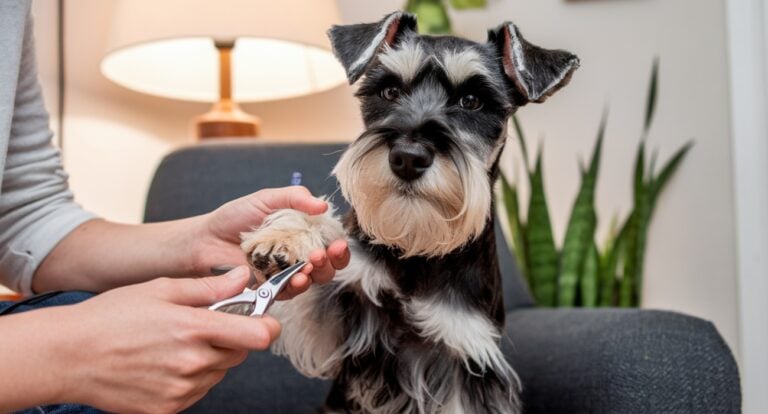
Early signs of common health issues can be subtle. Recognize what to watch for so your Schnauzer stays healthy and thriving year-round.
Here’s something that might surprise you: your Schnauzer probably won’t limp dramatically or yelp in pain when something’s wrong. Instead, they might just sleep on a different side of their bed. Or drink water slightly more often. Or seem a little less enthusiastic about their favorite squeaky toy.
Dogs evolved to hide weakness, and Schnauzers took that lesson to heart. But here’s the good news: once you know what subtle signs to look for, you become a detective in your own home. Your daily observations become the most powerful diagnostic tool in your pet care arsenal.
Understanding Your Schnauzer’s Baseline Behavior
Before you can spot the subtle stuff, you need to know what’s normal for your specific dog. Yes, breed tendencies exist, but every Schnauzer has their own quirky baseline. Maybe yours always drinks exactly three times after dinner, or perhaps they have a particular spot on the couch they claim as their throne.
Start paying attention to patterns now, while your dog is healthy. How much do they typically eat? What does their coat feel like when you run your fingers through it? How many times do they usually scratch during a normal day? These details become your reference points.
Think of yourself as a Schnauzer anthropologist. The more data you collect during healthy times, the faster you’ll notice when something shifts. And in the world of dog health, early detection is absolutely everything.
Skin and Coat Changes That Whisper Trouble
Schnauzers have that iconic wiry double coat that feels amazing when properly maintained. But that coat is also a billboard for health issues. Start with the obvious: is your dog scratching more than usual? But don’t stop there.
Run your hands over their body regularly. You’re feeling for lumps, bumps, or areas that feel warmer than others. Hot spots can indicate localized infections or allergic reactions brewing beneath the surface. Dry, flaky skin might signal thyroid problems or nutritional deficiencies.
Pay special attention to changes in coat texture or unusual hair loss patterns. Your Schnauzer’s fur should feel resilient and springy, not brittle or excessively soft.
Watch for these specific warning signs:
- Excessive dandruff or oily patches
- Redness between the toes or under the legs
- A musty or yeasty smell coming from the skin
- Small crusty patches that appear and reappear
- Areas where your dog suddenly becomes sensitive to touch
Color changes matter too. If your Schnauzer’s beautiful beard starts looking stained or discolored around the mouth (beyond normal food staining), it could indicate excessive drooling from nausea or dental issues.
Eye Problems Hiding in Plain Sight
Schnauzer eyes are expressive and soulful, which makes them wonderful for guilt tripping you into extra treats. But those same eyes need careful monitoring. Eye issues in this breed can escalate quickly if left unchecked.
You might notice your dog squinting in bright light when they never did before. Or maybe they’re bumping into furniture on one side. These aren’t just signs of aging; they could indicate developing cataracts, progressive retinal atrophy, or even increased eye pressure.
Check for discharge. A tiny bit of sleepy gunk in the morning is normal, but persistent goopy discharge, especially if it’s yellow or green, signals infection or blocked tear ducts. Does your Schnauzer’s eye look cloudier than it used to? Cloudiness isn’t always just “old age”; it requires veterinary evaluation.
Here’s something many owners miss: excessive tearing that leaves reddish brown stains on the fur near the eyes. While tear staining itself isn’t dangerous, it can indicate underlying issues like eye irritation, allergies, or anatomical problems with tear drainage.
The Silent Signals of Joint and Mobility Issues
Schnauzers are active, energetic dogs who love to bounce around like they’re on springs. When that bounce starts to fade, owners often blame it on laziness or “slowing down with age.” But subtle mobility changes often point to developing joint problems, including hip dysplasia or arthritis.
Your dog probably won’t yelp or cry. Instead, watch for these sneaky indicators:
| Subtle Sign | What It Might Mean |
|---|---|
| Hesitating before jumping into the car | Early hip or knee discomfort |
| Taking stairs more slowly or one at a time | Joint pain or muscle weakness |
| Shifting weight when standing | Trying to relieve pressure on painful joints |
| Difficulty getting up after lying down | Stiffness or arthritis |
| Licking one specific joint repeatedly | Localized pain or inflammation |
Notice if your Schnauzer starts choosing soft surfaces to lie on when they previously preferred the cool floor. Or if they’re suddenly sitting down more often during walks. These aren’t personality changes; they’re pain management strategies.
Stiffness after rest is particularly telling. If your dog seems creaky when they first wake up but loosens up after moving around, that’s classic arthritis behavior. Don’t write it off as inevitable aging. Modern veterinary medicine offers numerous interventions that can dramatically improve quality of life.
Dental Disease: The Sneaky Health Destroyer
Here’s a sobering fact: by age three, most dogs show some signs of dental disease. Schnauzers are no exception, and the beard can actually hide problems by catching food particles and masking bad breath.
You’re looking for subtle shifts here. Does your dog suddenly prefer soft foods or treats? Are they chewing on only one side of their mouth? Do they drop food while eating or eat more slowly than before?
Dental disease isn’t just about teeth. Bacteria from infected gums can enter the bloodstream and damage the heart, liver, and kidneys. What starts in the mouth can become a whole body problem.
Lift that adorable lip and actually look at the teeth and gums regularly. Healthy gums should be pink (or pigmented black in some Schnauzers), not red or swollen. The teeth shouldn’t have visible brown or yellow tartar buildup. And yes, your dog’s breath should be relatively neutral, not knock you over foul.
Watch for pawing at the face or rubbing the muzzle on the ground. These behaviors often indicate oral pain. Some dogs become head shy, pulling away when you try to pet their face, because their mouth hurts.
Digestive Issues That Masquerade as Pickiness
Schnauzers can develop sensitive stomachs, and the signs aren’t always as obvious as vomiting or diarrhea. Sometimes digestive distress shows up as decreased appetite, increased grass eating, or subtle changes in stool quality.
Is your enthusiastic eater suddenly taking longer to finish meals? Are they interested in food but then walking away after a few bites? This could indicate nausea, acid reflux, or developing pancreatitis (which Schnauzers are prone to).
Pay attention to your dog’s relationship with grass. All dogs occasionally munch grass, but if your Schnauzer suddenly becomes a grazing machine, their stomach is probably bothering them. Similarly, excessive lip licking or swallowing when no food is present often signals nausea.
Stool changes deserve attention even when they’re not dramatic. Is the poop a different color or consistency than usual? More or less frequent? Does your dog seem to strain even slightly? These details matter more than most owners realize.
Behavioral Changes as Health Indicators
Personality shifts in dogs rarely happen without reason. If your social butterfly Schnauzer suddenly wants to be left alone, or your independent pup becomes clingy, something’s up. Pain and discomfort manifest as behavioral changes more often than we realize.
Increased irritability is a huge red flag. A dog who snaps when touched in certain areas, or who becomes grumpy about things they previously tolerated, is often communicating pain. Schnauzers are generally sociable and confident, so withdrawal from family activities deserves investigation.
Sleep pattern changes matter too. Is your dog sleeping significantly more or less than usual? Are they restless at night when they previously slept soundly? Discomfort keeps dogs awake just like it does humans.
Watch for anxiety that appears out of nowhere. A dog who suddenly develops separation anxiety or becomes nervous in previously comfortable situations might be dealing with vision problems, hearing loss, or cognitive decline.
Respiratory Red Flags You Might Miss
Breathing is something we take for granted until it becomes difficult. Schnauzers don’t have the extreme brachycephalic (flat faced) issues of some breeds, but they can still develop respiratory problems that start subtly.
Listen to your dog’s breathing during rest. It should be quiet and effortless. Heavy panting when the house is cool and your dog hasn’t been exercising might indicate heart problems, pain, or respiratory disease. Count the breaths: a resting dog should take around 10 to 30 breaths per minute.
Does your Schnauzer make weird noises sometimes? A occasional reverse sneeze is normal and harmless, but persistent coughing (especially after exercise or at night), wheezing, or honking sounds need veterinary attention. These could indicate collapsing trachea, heart disease, or lung problems.
Take videos of unusual breathing patterns or sounds to show your vet. These symptoms often don’t happen conveniently during office visits, and video evidence is incredibly helpful for diagnosis.
Notice if your dog’s exercise tolerance suddenly decreases. A Schnauzer who used to hike for miles but now wants to turn back after twenty minutes might not be lazy; they might be struggling to breathe efficiently.
When to Actually Worry and Take Action
The challenge with subtle signs is knowing when they cross from “keep monitoring” to “call the vet now.” Here’s a practical framework: any single subtle sign that persists for more than three days deserves attention. Multiple subtle signs happening simultaneously? Don’t wait.
Trust your gut. You know your dog better than anyone. If something feels off, even if you can’t quite put your finger on what, that intuition is valuable. Veterinarians would rather you bring your dog in for something minor than wait until a treatable problem becomes a crisis.
Create a simple health log for your Schnauzer. When you notice something unusual, write it down with the date. Patterns emerge more clearly when you document them. This log also becomes incredibly useful during vet visits when you’re trying to remember exactly when symptoms started.
Remember that subtle doesn’t mean unimportant. Some of the most serious canine health conditions start with barely noticeable changes. Your Schnauzer is counting on you to be observant, proactive, and willing to advocate for their wellbeing. Those whiskers, that personality, that complete devotion they show you? They deserve your attention to the little things that keep them healthy and thriving.
Being a great Schnauzer owner isn’t about being paranoid; it’s about being present and observant. Now that you know what to look for, you’re equipped to catch problems while they’re still manageable. Your bearded companion will thank you with many more years of spirited, healthy adventures together.