Do Schnauzers crave cuddles or just put up with them? Uncover what science and behavior experts say about your dog’s love language.
Your Schnauzer sits perfectly still while you squeeze them tight, their wiry beard pressed against your cheek. But here’s the million dollar question: are they actually enjoying this moment of affection, or are they just being polite? The truth might surprise you. These intelligent, expressive dogs have their own complicated relationship with physical affection, and understanding it could transform how you show love to your bearded companion.
The Uncomfortable Truth About Dog Hugs
Here’s something that might sting a little: dogs don’t naturally hug. In the wild world of canine communication, draping your body over another dog is actually a dominance move or a prelude to play fighting. It’s not the warm, fuzzy gesture of love that we humans consider it to be.
When you hug your Schnauzer, you’re essentially speaking a foreign language they never signed up to learn. Imagine if someone from another culture kept greeting you by grabbing your ears. You might tolerate it because you like the person, but you’d probably never think, “Wow, I really hope they do that again tomorrow!”
Schnauzers, being the intelligent and adaptable dogs they are, often learn to accept hugs as part of living with humans. But acceptance and enjoyment? Those are two completely different things.
Reading Your Schnauzer’s Body Language
The secret to understanding whether your Schnauzer loves or merely tolerates your hugs lies in becoming fluent in dog body language. And trust me, your Schnauzer is always communicating with you.
Signs your Schnauzer is uncomfortable:
- Whale eye: When you can see the whites of their eyes, they’re stressed
- Lip licking or yawning: These aren’t signs of tiredness; they’re stress signals
- Pinned back ears: A tense Schnauzer is not a happy Schnauzer
- Stiff body: If they feel like a furry statue, they’re tolerating, not enjoying
- Turning their head away: The polite canine version of “please stop”
- Trying to back away: This one’s pretty self explanatory
Signs your Schnauzer might actually enjoy it:
- Leaning into you: They’re actively participating in the cuddle
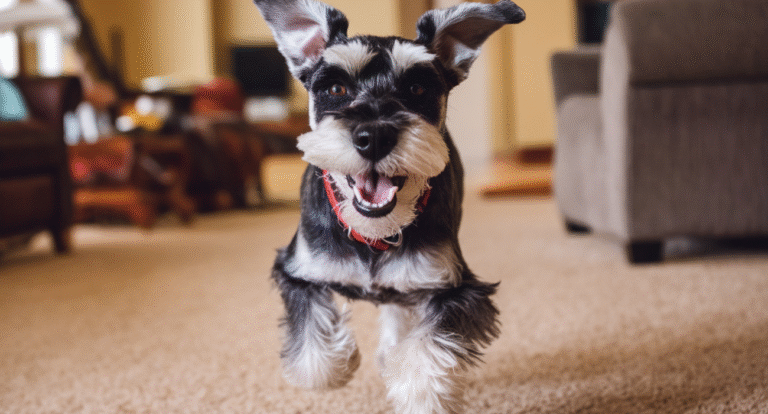
- Relaxed facial expression: Soft eyes, slightly open mouth
- Staying put when released: If they had the option to leave but don’t, that’s telling
- Tail wagging: Context matters, but a loose, happy wag is a good sign
Understanding the difference between tolerance and genuine affection isn’t about making you feel guilty. It’s about respecting your dog’s preferences and building a relationship based on what makes both of you happy.
The Schnauzer Personality Factor
Now, let’s talk about what makes Schnauzers unique. These dogs were originally bred as ratters and guard dogs, which means they’re naturally alert, protective, and somewhat independent. They’re not typically the “lap dog” types who live for constant physical contact.
Schnauzers form incredibly strong bonds with their families, but they express love differently than, say, a Golden Retriever who treats every human like a long lost soulmate. Your Schnauzer might show affection by following you from room to room, bringing you toys, or simply sitting near (not necessarily on) you.
The Three Types of Schnauzers
Different Schnauzer sizes can have slightly different temperaments when it comes to physical affection:
| Schnauzer Type | Typical Size | Affection Style |
|---|---|---|
| Miniature Schnauzer | 11 to 20 pounds | Often more tolerant of handling; bred as companions; may be more receptive to hugs with proper socialization |
| Standard Schnauzer | 30 to 50 pounds | Moderate affection; loyal but values personal space; prefers being near you rather than on you |
| Giant Schnauzer | 55 to 85 pounds | Confident and reserved; strong bonding but on their own terms; typically prefer other forms of interaction |
Why Some Schnauzers Tolerate Hugs Better Than Others
Early socialization matters tremendously. A Schnauzer puppy who gets accustomed to gentle handling, including brief hugs, from an early age will likely be more accepting as an adult. It becomes part of their normal experience with beloved humans.
Individual personality trumps breed tendencies. Just like people, dogs have unique personalities. Some Schnauzers are naturally more physically affectionate, while others prefer to show love through different means. Neither is wrong; they’re just different.
Your approach makes all the difference. A quick, gentle squeeze is vastly different from a tight, prolonged bear hug. The former might be perfectly acceptable to your Schnauzer, while the latter could trigger their “get me out of here” instinct.
Teaching Your Schnauzer to Accept (Maybe Even Enjoy) Hugs
If you absolutely must hug your Schnauzer, and you want them to have positive associations with it, here’s the game plan:
Start small and reward generously. Begin with just putting your arm gently around them for a second or two, then immediately give them their favorite treat. Do this repeatedly over days and weeks, gradually increasing duration.
Watch for stress signals constantly. The moment you see discomfort, stop immediately. Pushing through will only make things worse and could damage your relationship.
Make it predictable. Dogs feel more comfortable when they can anticipate what’s coming. Use a verbal cue before hugging, so they know what to expect.
The Better Alternatives
Here’s a radical idea: what if you showed your Schnauzer affection in ways they actually prefer? Revolutionary, I know.
Most Schnauzers absolutely love:
- Vigorous scratching behind the ears or at the base of the tail
- Chest rubs (many dogs find this less threatening than full body hugs)
- Playing interactive games like fetch or tug
- Training sessions with positive reinforcement
- Simply sitting together while you read or watch TV
The deepest form of love isn’t forcing physical affection on someone who doesn’t enjoy it. It’s learning their language and showing love in ways that resonate with them, not just with you.
When Hugs Become Problematic
Let’s get serious for a moment. Forcing hugs on an unwilling Schnauzer isn’t just uncomfortable for them; it can actually be dangerous, especially with children involved.
Statistics paint a sobering picture. Many dog bites occur when children hug dogs who are showing clear signs of stress. The dog feels trapped, and when their subtle communication is ignored, they may resort to more obvious methods (read: teeth) to create space.
Schnauzers aren’t typically aggressive dogs, but they’re also not pushovers. A stressed Schnauzer who feels cornered might snap or bite, even if they’ve never done so before. And honestly? Can you blame them?
Teaching Children Appropriate Interaction
If you have kids, teaching them to respect your Schnauzer’s boundaries is crucial:
- No surprise hugs from behind: Always approach from the front where the dog can see
- Watch the dog, not just your desire to hug: If the dog moves away, let them go
- Offer alternatives: Show kids how to pet gently on the chest or sides instead
- Supervise always: Even the most tolerant dog has limits
The Science Behind Canine Stress and Hugging
Research has shown some fascinating (and slightly depressing, if you’re a serial dog hugger) findings about dogs and hugs. Studies analyzing photographs of dogs being hugged revealed that a significant majority showed visible signs of stress or anxiety.
Cortisol levels tell the story. When researchers measured stress hormones in dogs during various interactions, prolonged hugging often triggered elevated cortisol, similar to other stressful situations.
But here’s where it gets interesting: dogs who were gradually conditioned to accept hugs, and whose owners were sensitive to their communication signals, showed much lower stress responses. The key wasn’t the hug itself but the context, duration, and the dog’s sense of control.
Your Schnauzer’s Love Language
Think about this from your Schnauzer’s perspective. They love you fiercely. They’d probably take a bullet for you (or at least bark very aggressively at it). They just might not want to be squeezed like a stuffed animal.
And that’s perfectly okay.
Your Schnauzer shows love by:
- Greeting you enthusiastically when you come home
- Bringing you toys or checking on you throughout the day
- Sleeping in the same room as you
- Following you around the house
- Making eye contact and holding your gaze
- Resting their head on your leg
Love isn’t measured by how much physical contact someone tolerates. It’s measured by trust, loyalty, and the countless small ways they choose to be present in your life.
Making Peace with Reality
So, do Schnauzers love hugs or just tolerate them? For most Schnauzers, the honest answer is tolerance at best. Some individual dogs, with the right socialization and personality, might genuinely enjoy brief, gentle hugs. But they’re the exception, not the rule.
This doesn’t mean your Schnauzer doesn’t love you. It means they love you in their way, using their language. And the most loving thing you can do? Learn to speak it.
Pay attention to what makes your specific Schnauzer’s tail wag genuinely. Maybe it’s a good game of fetch. Maybe it’s training time. Maybe it’s just sitting near each other, parallel but connected. Whatever it is, that’s your Schnauzer’s love language.
The beautiful thing about dogs is their honesty. They can’t fake enthusiasm the way humans can. When your Schnauzer chooses to be near you, to seek you out, to engage with you on their terms, that’s real. That’s authentic affection, unforced and true.
So maybe put down the bear hug mentality and pick up some ear scratches instead. Your Schnauzer will thank you, probably by actually wanting to be close to you more often. And isn’t that what you wanted all along?