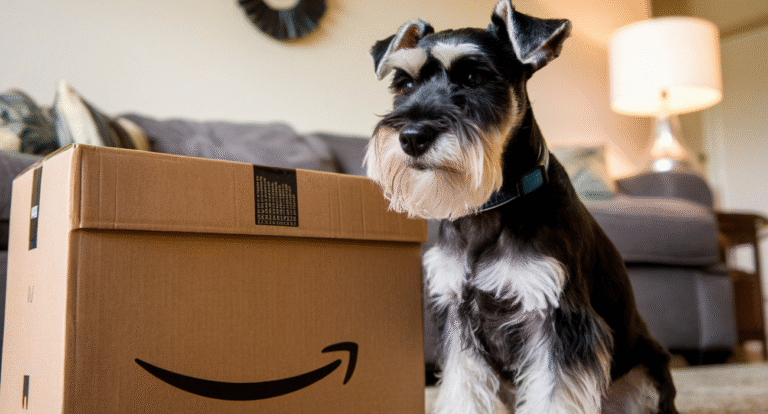
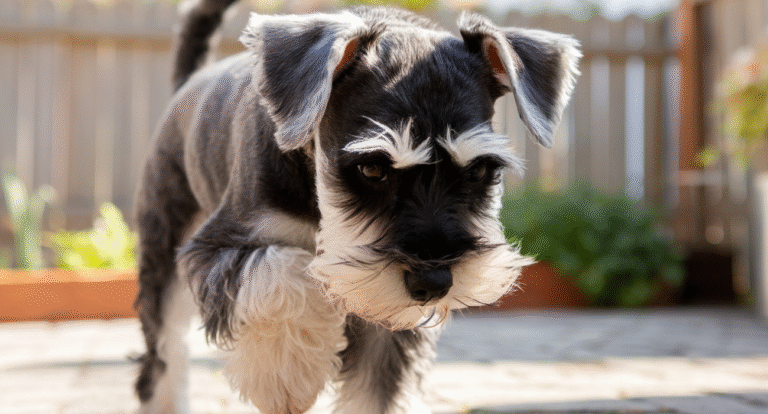
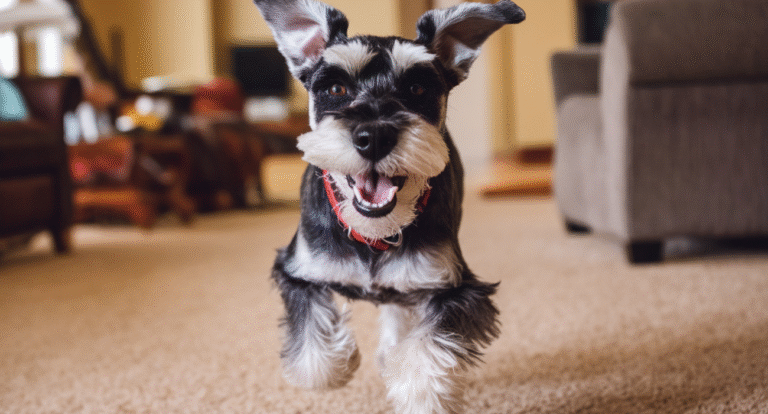
Do people-herding antics sound familiar? Learn what’s behind this common Schnauzer behavior and how to manage it.
Anyone who’s lived with a Schnauzer knows the drill. These bearded dynamos have opinions about where you should stand, when you should move, and exactly how close family members should be to one another. They’ll use their bodies like furry bumpers, physically redirecting people with surprising determination. But is this actually herding behavior?
Technically speaking, no. But that doesn’t make the behavior any less real or intense. Schnauzers engage in what behaviorists call “space management,” and understanding why they do this reveals everything about their personality, their history, and their unshakeable belief that you desperately need supervision.
The Herding Breed Mix-Up
Let’s clear something up immediately: Schnauzers are not herding dogs. They were never bred to move livestock from point A to point B. That job belonged to breeds like Border Collies, Australian Shepherds, and German Shepherds, whose entire genetic makeup screams “must organize things with four legs.”
Schnauzers, both Standard and Miniature varieties, were developed in Germany as ratters and guard dogs. Their original job description included pest control, property protection, and serving as alert systems for farms and homes. They were the security detail, not the livestock managers.
But here’s where it gets interesting. Just because a dog wasn’t bred for herding doesn’t mean they can’t develop behaviors that superficially resemble it. The key difference lies in the underlying motivation.
What Herding Actually Looks Like
True herding behavior is incredibly specific. Herding dogs use something called “eye,” where they lock onto their target with an intense, unblinking stare. They exhibit stalking behaviors borrowed from their wolf ancestors’ hunting sequences, but with the crucial final steps (the catch and kill) bred out.
Real herding dogs work with incredible precision:
- They respond to directional commands from handlers
- They use “pressure” to move livestock by positioning themselves strategically
- They display something called “balance,” always positioning themselves opposite the handler
- They instinctively understand the “bubble” or flight zone around animals
When a Border Collie stares at sheep, she’s accessing thousands of years of genetic programming. Her body goes low, her focus narrows, and she becomes a living, breathing movement tool.
Your Schnauzer? She’s playing a completely different game.
The Schnauzer’s Real Agenda: Patrol and Protect
What Schnauzers are actually doing when they bump, circle, and nudge people falls under the umbrella of guardian and patrol behaviors. These dogs were bred to be aware of their environment, to monitor activity, and to position themselves where they could best respond to threats.
Think of it this way: A herding dog wants to move things. A Schnauzer wants to monitor and control things. Subtle difference, massive implications.
When your Schnauzer plants herself between you and the door, she’s not herding you away from exits. She’s positioning herself at a strategic control point. When she circles around your kids at the park, she’s not gathering them like sheep. She’s establishing a perimeter and keeping tabs on everyone’s location.
The behaviors that owners interpret as herding are actually territorial awareness and protective positioning. Your Schnauzer isn’t organizing your family; she’s running security detail.
This distinction matters because it affects how you should respond to and manage these behaviors. You can’t train out genuine herding instinct without giving the dog an appropriate outlet, but you can redirect guardian behaviors through proper socialization and boundary setting.
Why Schnauzers Seem So Bossy
Let’s be honest: Schnauzers have opinions. Strong ones. About everything. This assertive personality stems directly from their working background.
A dog bred to kill rats in a barn couldn’t afford to be timid or hesitant. These situations required split-second decisions and fearless action. A dog protecting a farmstead from intruders needed confidence that bordered on swagger. Natural selection favored the bold, the territorial, and the relentlessly vigilant.
Modern Schnauzers inherited this temperamental cocktail, which manifests as:
- High arousal around environmental changes
- Quick reactions to movement and noise
- Strong feelings about spatial arrangements
- Persistent attempts to control social situations
- Vocal expression of displeasure or concern
When combined with moderate to high intelligence, you get a dog who notices everything, has thoughts about everything, and feels compelled to act on those thoughts. This creates the illusion of herding behavior when, really, your Schnauzer is just being an involved (read: nosy) little guardian.
The “Space Management” Phenomenon
Behaviorists have identified what some call “space management behavior” in guardian breeds. This describes dogs who feel responsible for organizing their environment and the individuals within it.
| True Herding Behavior | Schnauzer Space Management |
|---|---|
| Motivated by instinct to gather and move livestock | Motivated by desire to monitor and control territory |
| Uses “eye” and stalking postures | Uses body blocking and positioning |
| Responds to directional commands | Makes independent decisions about positioning |
| Works cooperatively with handler | Acts as self-appointed supervisor |
| Focused on moving subjects from one location to another | Focused on maintaining awareness of everyone’s location |
Your Schnauzer’s bumping, circling, and nudging behaviors are her way of maintaining what she considers optimal spatial arrangements. She’s not moving you somewhere specific; she’s just got thoughts about where everyone should be, and she’s sharing those thoughts through physical contact.
Some Schnauzers take this further than others. Individual personality, socialization history, and anxiety levels all play roles in how intensely these behaviors manifest.
When “Herding” Becomes Problematic
While most Schnauzer space management is harmless (if occasionally annoying), some dogs take things too far. Warning signs include:
- Excessive nipping or mouthing at people’s ankles or legs goes beyond acceptable behavior, especially around children. What starts as positioning attempts can escalate into actual resource guarding or control aggression.
- High arousal or anxiety during social gatherings suggests your dog isn’t calmly monitoring; she’s stressed about the chaos she perceives. The behaviors intensify from helpful to frantic.
- Preventing movement or blocking doorways completely indicates your Schnauzer’s guardian instincts have shifted into controlling territory rather than just monitoring it. This can create safety issues during emergencies.
- Obsessive following where your dog cannot let family members out of sight suggests anxiety is driving the behavior rather than calm confidence.
If your Schnauzer’s positioning behaviors cause stress to your dog or disrupt normal household activities, you’re dealing with an anxiety issue masquerading as protective instinct. This requires professional behavioral intervention.
Managing Your Schnauzer’s Inner Security Guard
The good news? These behaviors are manageable with the right approach. You’re not fighting against thousands of years of herding genetics; you’re redirecting guardian energy and establishing clear household rules.
Establish Calm Leadership.
Schnauzers respect consistency and confidence. When you provide clear rules about acceptable behavior, most Schnauzers will fall in line. Wishy-washy boundaries create anxious, pushy dogs who feel they must take charge.
Create Designated Spaces
Teaching your Schnauzer to “go to place” during gatherings gives her a job (monitoring from a specific location) while preventing intrusive circling and nudging. She’s still on duty, just from her assigned post.
Provide Adequate Mental Stimulation
A bored Schnauzer invents jobs for herself, usually involving “fixing” problems you didn’t know existed. Puzzle toys, scent work, and training sessions channel that working dog energy productively.
Socialize Consistently
Expose your Schnauzer to various people, environments, and situations from puppyhood onward. Well-socialized Schnauzers can distinguish between normal activity and actual threats, reducing unnecessary “interventions.”
Practice Impulse Control
Games like “wait” before going through doors or “leave it” with treats teach your Schnauzer that she doesn’t need to react to every environmental change. This builds the ability to observe without immediately acting.
Your Individual Dog Matters
At the end of the day, you’re not living with a breed standard; you’re living with an individual dog who happens to be a Schnauzer. Some Schnauzers couldn’t care less about family positioning and spend their days napping on forbidden furniture. Others appoint themselves Family Logistics Coordinator and take the job very seriously.
Pay attention to when your Schnauzer displays these behaviors. Is it during high-activity periods? When strangers visit? When children are playing? The context tells you whether you’re dealing with appropriate monitoring or anxiety-driven control attempts.
Watch your dog’s body language. A confident Schnauzer checking on family members looks relaxed between ears, carries her tail naturally, and moves with purpose but not franticness. An anxious Schnauzer might show whale eye, pinned ears, a low or tucked tail, or obsessive, repetitive movement patterns.
The goal isn’t to eliminate your Schnauzer’s natural vigilance (good luck with that anyway). The goal is ensuring these instincts express themselves in ways that enhance rather than disrupt your household harmony. Your Schnauzer can absolutely be an excellent little guardian without physically managing every person who walks through your door.
So no, your Schnauzer isn’t trying to herd you. She’s doing something arguably more complex: running security, monitoring activity, and making executive decisions about household management. Whether you asked for this supervision is irrelevant. She’s a Schnauzer. It’s what she does.