Healthy ears mean a happy Schnauzer. Try these simple at-home tips to keep your pup’s ears clean and problem-free.
If you’ve ever watched your Schnauzer shake their head repeatedly or scratch at their ears with concern, you know how quickly ear problems can affect their happiness. These spunky, bearded companions are wonderful in so many ways, but their ear anatomy means they need a little extra TLC in the ear department.
Here’s the thing: prevention is always easier than treatment. Instead of waiting for infections or irritation to crop up, why not get ahead of the game? The seven tips you’re about to discover are simple enough to weave into your weekly routine, yet powerful enough to make a real difference in your dog’s comfort and health.
1. Master the Weekly Ear Check Routine
Think of your weekly ear inspection as a mini wellness exam you can do right at home. Set aside just five minutes once a week to really examine your Schnauzer’s ears, and you’ll catch potential problems before they escalate into painful infections or expensive veterinary emergencies.
Start by gently lifting the ear flap (if your Schnauzer has natural ears) or carefully examining cropped ears. Look for redness, swelling, discharge, or any crusty buildup. A healthy ear should be a pale pink color and relatively clean. Take a sniff too; yes, really! Healthy ears have minimal odor, while infected ears often smell yeasty or downright foul.
During your inspection, watch your dog’s body language. Do they pull away when you touch certain spots? That sensitivity could signal an underlying issue. Some Schnauzers are naturally more sensitive than others, but sudden changes in reaction warrant attention.
Make it a bonding experience, not a battle. Pair ear checks with treats and praise so your Schnauzer learns to tolerate (or even enjoy) this weekly ritual.
2. Keep Those Ear Hairs Trimmed
Here’s something that surprises many new Schnauzer owners: hair grows inside their ear canals. Unlike breeds with bare ear canals, Schnauzers grow hair in places that can trap moisture, dirt, and debris. This creates the perfect environment for bacteria and yeast to throw a party you definitely don’t want happening.
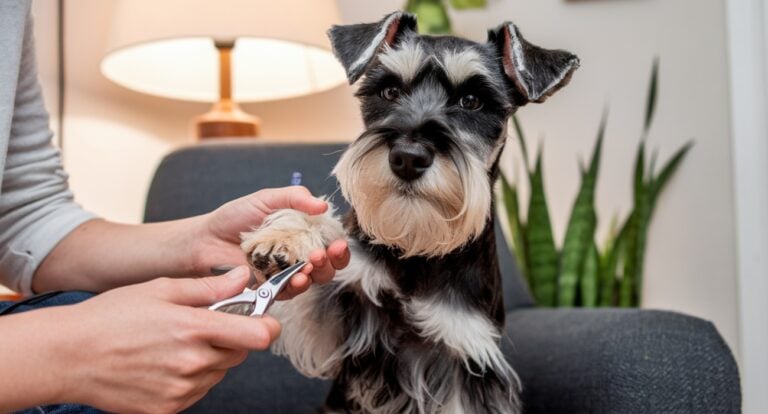
Your groomer typically handles ear hair plucking during regular appointments, but between visits, you can maintain things at home. You have two options: plucking or trimming. Plucking removes hair from the root using your fingers or hemostats (specially designed tweezers), while trimming simply cuts the visible hair shorter.
For most pet parents, trimming is the safer DIY option. Use small, blunt-tipped scissors specifically designed for pet grooming. Focus on the hair you can see at the ear opening rather than going deep into the canal. If you’re nervous about this task, there’s absolutely no shame in leaving it to the professionals. But removing excess hair, however you choose to do it, dramatically improves air circulation.
| Method | Pros | Cons | Best For |
|---|---|---|---|
| Plucking | Longer lasting results; removes hair from root | Can irritate sensitive ears; requires technique | Dogs without ear sensitivity; experienced owners |
| Trimming | Safer for beginners; less irritating | Needs more frequent maintenance | First-time owners; dogs with sensitive ears |
| Professional Grooming | Expert technique; comprehensive care | Costs money; less frequent | Busy owners; dogs who resist home care |
3. Clean Strategically (Not Obsessively)
There’s a sweet spot when it comes to ear cleaning, and finding it is crucial. Clean too rarely, and you risk buildup and infection. Clean too often, and you’ll irritate the delicate skin inside the ear canal and disrupt the natural protective barriers. For most Schnauzers, cleaning every two to three weeks is the magic number, though individual dogs may need adjustments.
Always use a veterinary-approved ear cleaning solution; never water, hydrogen peroxide, or alcohol, which can cause irritation or damage. Squeeze the solution into the ear canal (don’t be shy; you need enough to really flush things out), then massage the base of the ear for about 30 seconds. You’ll hear a satisfying squishing sound.
Now comes the fun part: let your Schnauzer shake! They’ll naturally want to, and this head shake is actually beneficial because it brings debris up and out of the canal. After the shake, use cotton balls or gauze to gently wipe away any visible gunk from the outer ear. Never stick cotton swabs deep into the ear canal, as you risk pushing debris further in or damaging the eardrum.
4. Manage Moisture Like a Pro
Moisture is enemy number one when it comes to Schnauzer ear health. Those adorable floppy ears (in naturally-eared Schnauzers) or the cropped varieties can both trap moisture, creating a warm, damp environment where bacteria and yeast absolutely thrive.
Bath time is a prime opportunity for water to sneak into ear canals. Before bathing, place a cotton ball gently in each ear opening to act as a barrier. Not stuffed in deeply; just nestled at the entrance. After the bath, remove the cotton balls and use a dry cloth or cotton ball to gently absorb any moisture from the outer ear.
Swimming and rainy walks present similar challenges. If your Schnauzer loves water activities, consider using a drying ear solution afterward (your vet can recommend one). These solutions help evaporate residual moisture and maintain the proper pH balance inside the ear canal.
Think of your Schnauzer’s ears like your smartphone: a little moisture exposure is fine, but prolonged wetness spells trouble. Dry them promptly and thoroughly.
5. Watch the Diet Connection
You might be wondering what your Schnauzer’s meals have to do with their ears, but the connection is stronger than you’d think. Food allergies and sensitivities are surprisingly common in Schnauzers, and guess where they often show up first? That’s right… the ears.
When dogs react to ingredients in their food, the inflammation can manifest as chronic ear infections that just won’t quit, no matter how diligently you clean. Common culprits include chicken, beef, dairy, wheat, and soy. If your Schnauzer experiences frequent ear issues despite good hygiene practices, it might be time to evaluate their diet with your veterinarian.
Some Schnauzers benefit from limited-ingredient diets or novel protein sources they haven’t eaten before (think duck, venison, or kangaroo). Others do well on grain-free formulas, though this approach should be discussed with your vet given recent concerns about certain grain-free foods and heart health. Adding omega-3 fatty acids through fish oil supplements can also support skin and ear health by reducing overall inflammation.
6. Control the Environment
Your home environment plays a sneaky role in your Schnauzer’s ear health. Dust, pollen, mold spores, and other airborne allergens can settle in and around the ears, triggering irritation and inflammation. While you can’t create a completely allergen-free bubble, you can take practical steps to minimize exposure.
Regular vacuuming and dusting reduce the overall allergen load in your home. Pay special attention to areas where your Schnauzer spends most of their time. Wash their bedding weekly in hot water to kill dust mites and remove accumulated allergens. During high pollen seasons, consider wiping down your Schnauzer’s coat (including around the ears) after outdoor adventures to remove clinging particles.
Air purifiers with HEPA filters can make a noticeable difference for allergy-prone Schnauzers. Place one in the room where your dog sleeps for maximum benefit. Some owners even find that slightly elevating their dog’s bed helps, since allergens tend to settle closer to the floor.
7. Know When to Call the Professionals
All the at-home care in the world won’t replace veterinary expertise when something goes wrong. Recognizing when your Schnauzer needs professional help is just as important as preventing problems in the first place.
Red flags that warrant a vet visit include persistent head shaking or ear scratching, visible swelling or redness, dark or bloody discharge, a strong odor that doesn’t improve with cleaning, loss of balance or circling, and hearing loss. These symptoms could indicate infections, ear mites, foreign objects lodged in the canal, or even polyps or tumors.
Don’t fall into the trap of repeatedly treating suspected infections with leftover medication from previous episodes. What worked before might not address the current problem, and you could be masking symptoms of something more serious. Your vet has tools like otoscopes to see deep into the ear canal and can culture any discharge to identify exactly which bacteria or yeast is causing trouble, allowing for targeted treatment.
Building a relationship with a veterinarian you trust means you’ll feel comfortable reaching out when questions arise. Some clinics even offer “recheck” appointments specifically for ear issues, allowing the vet to monitor progress without the full cost of a comprehensive exam.
Your intuition as a pet parent matters. If something seems off with your Schnauzer’s ears, trust that instinct and seek professional guidance. It’s always better to be overcautious than to let a minor issue become a major problem.
The combination of these seven strategies creates a comprehensive approach to Schnauzer ear health. None of them are particularly difficult or time consuming, yet together they form a powerful defense against the ear problems that commonly plague this breed. Your Schnauzer’s comfort and wellbeing are worth those few extra minutes each week, and the reward is a happier, healthier companion with ears that feel as good as they look.