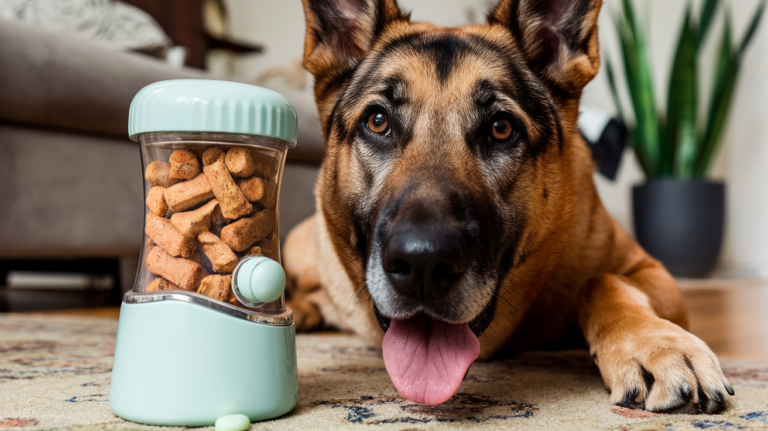
Food isn’t the only motivator. These unexpected rewards send excitement soaring without relying on treats.
You’ve been using treats to train your German Shepherd since day one, and sure, it works. Kind of. But have you noticed how your brilliant, athletic, working breed dog seems to lose interest after a few repetitions? Or how they’ll ignore you completely when something really interesting happens?
That’s because you’re speaking the wrong language. German Shepherds aren’t motivated by treats alone; they’re motivated by purpose, by play, by partnership. Once you unlock the rewards that truly light up your GSD’s brain, training transforms from a chore into the highlight of both your days.
1. Tug Toys: The Ultimate Power Reward
Let’s start with the big one: tug of war. For many German Shepherds, a vigorous game of tug beats treats hands down. This isn’t just play; it’s tapping into your dog’s prey drive and natural instincts.
Here’s what makes tug so powerful: it’s interactive, it’s exciting, and it lets your GSD win something. When you use a special tug toy that only comes out during training sessions, it becomes incredibly valuable. Your dog learns that excellent behavior equals epic playtime with you.
The key to using tug as a reward is making it exclusive. The more rare and special the opportunity, the harder your German Shepherd will work to earn it.
Start by keeping a dedicated training tug toy separate from regular toys. When your dog nails a challenging command or shows exceptional focus, whip it out and engage in 15 to 30 seconds of enthusiastic tugging. Let them win sometimes! The satisfaction of “capturing” the toy creates a powerful positive association.
Pro tip: Use a verbal cue like “get it!” when releasing the toy for tugging, and “drop” or “out” when ending the game. This teaches impulse control while maintaining the reward’s value.
2. Chase Games and Sprinting Together
German Shepherds were bred to move. They’re athletic powerhouses who find sheer joy in running, and you can harness this into an incredible training reward.
After your dog performs well, release them with an excited “let’s go!” and sprint away from them. Most GSDs will explode into a chase, caught up in the thrill of pursuing their favorite person. This works especially well for recalls; your dog comes running, and instead of just getting a treat, they get to participate in an exhilarating chase sequence.
You can also incorporate this into fetch variations. Instead of just throwing a ball (which we’ll get to), try this: command, reward with praise, then race your dog to a designated spot. The competition and movement become the prize.
| Movement Based Rewards | Best For | Energy Level Required |
|---|---|---|
| Chase games | Recalls, coming when called | High |
| Sprinting together | Building engagement, relationship strengthening | High |
| Fast paced heel work | Loose leash walking, attention | Medium to High |
| Agility obstacles | Advanced training, trick work | Medium |
3. Ball and Fetch Obsession
If your German Shepherd is ball motivated (and many are obsessed), you’re sitting on a goldmine of training potential. A tennis ball or favorite fetch toy can be worth more than an entire rotisserie chicken to some GSDs.
The strategy here is similar to tug: make the ball a training exclusive item. It doesn’t live in the toy basket for casual play. Instead, it’s the special reward that appears when your dog demonstrates focus, obedience, or masters a new skill.
Try this progression: Ask for a sit, mark the correct behavior with “yes!” or a clicker, then immediately throw the ball. Your dog learns that good choices lead to their favorite activity. For dogs who live to fetch, this creates incredibly strong, reliable behaviors.
Important note: Always bring your dog back to you between throws. Don’t just repeatedly hurl the ball; require a sit, a down, eye contact, or whatever skill you’re working on. This prevents the frantic, out of control fetch monster scenario and keeps training productive.
4. Exploration and Sniffing Time
Here’s one that surprises people: freedom to sniff is an extremely high value reward for German Shepherds. Their noses are powerful tools, and denying them the opportunity to use those tools is like asking you to walk around with your eyes closed.
When your GSD demonstrates excellent leash manners or focuses on you despite distractions, reward them with a release cue like “go sniff” or “free time.” Let them explore that fascinating smell, that interesting tree, that mysterious bush. You’ve just told them that polite walking and attention to you earns the privilege of being a dog.
This works brilliantly during walks. Instead of constantly correcting pulling, use the environment itself as the reward system. Nice loose leash equals permission to investigate. Pulling equals stopping and waiting. Your dog quickly learns that staying connected to you is the fastest route to all the good stuff.
Never underestimate the power of simply letting your German Shepherd be a dog. The freedom to use their natural abilities and instincts can be more motivating than any treat you could offer.
5. Training New Skills and Mental Challenges
German Shepherds are working dogs through and through. They were bred to have jobs, solve problems, and use their considerable intelligence. For many GSDs, the opportunity to learn something new is itself a reward.
Does this sound crazy? Think about it: when your dog successfully figures out a puzzle toy, don’t they look thrilled? That’s the satisfaction of mental accomplishment. You can create the same feeling during training.
Try using training sessions themselves as rewards. Your dog performs a basic known behavior well, and instead of a treat, you introduce a fun new trick or challenge. “Great sit! Now let’s learn to spin!” The novelty and engagement of learning becomes the prize for doing the basics correctly.
This is especially effective with German Shepherds who get bored with repetition. Varying what you ask for and constantly introducing new elements keeps their brilliant minds engaged and eager.
6. Access to Favorite Activities
Think about what your individual German Shepherd loves most. Going outside? Car rides? Playing with other dogs? Swimming? These aren’t just fun activities; they’re premium rewards waiting to be leveraged.
The Premack Principle states that more probable behaviors will reinforce less probable behaviors. Translation: you can use the things your dog wants to do to reward the things you need them to do.
Want a reliable recall from the yard? Your dog comes when called, and the reward is getting to go back to playing. Need your GSD to settle calmly before dinner? Calm behavior earns the release to the food bowl. Struggling with door manners? Sitting politely earns the privilege of going outside for a walk.
Examples of activity based rewards:
- Getting into the car for rides
- Access to the backyard or favorite play area
- Permission to greet another dog
- Going for a swim or water play
- Starting a favorite game
- Entering a room where family is gathered
The beauty of this approach is that these rewards are free, they’re always available, and they’re often more powerful than treats because they’re what your dog genuinely wants in that moment.
7. Praise, Touch, and Your Attention
Never, ever underestimate the power of you. German Shepherds are velcro dogs who bond intensely with their people. Your attention, enthusiasm, and physical affection can be extraordinarily rewarding.
But here’s the catch: it has to be genuine and enthusiastic. A monotone “good boy” while scrolling your phone? Your smart GSD sees right through that. But dropping to your knees, ruffling their fur, using a happy excited voice, making eye contact, and telling them they’re the best dog in the universe? That hits differently.
Some German Shepherds absolutely melt for specific types of touch. Maybe yours loves chest scratches, ear rubs, or vigorous body pats. Figure out what makes your individual dog’s eyes go soft and their tail wag, then use it strategically as a reward.
Your German Shepherd doesn’t just want food from you. They want connection, engagement, and partnership. Sometimes the most powerful reward you can offer is your undivided, enthusiastic attention.
The key is timing and enthusiasm. The praise and physical affection need to happen immediately after the desired behavior, and they need to be delivered with energy that matches the accomplishment. Big achievement? Big celebration!
8. Food Toys and Puzzle Feeders
Okay, this one technically involves food, but it’s completely different from handing over a treat. Instead of just giving your German Shepherd something to eat, you’re giving them a job.
After your dog performs well in training, reward them by producing a filled Kong, a puzzle feeder, or a snuffle mat. They have to work for the food, which satisfies their problem solving instincts while also providing sustenance. It’s a two for one reward that appeals to both their stomachs and their brains.
This is particularly useful for calming behaviors. Your GSD demonstrates a relaxed down stay? They earn a frozen Kong to work on quietly. This reinforces calmness while giving them an appropriate outlet for their mental energy.
You can even make this part of your training routine’s structure. A successful training session earns the dog their meal served in a puzzle toy rather than a bowl. They learn that working with you leads to more engaging experiences overall.
9. Personal Play Styles and Weird Obsessions
Here’s where you get to be a dog behavior detective. Every German Shepherd has their own quirks, preferences, and obsessions. Maybe yours goes absolutely bonkers for a specific squeaky toy. Perhaps they have a bizarre fascination with empty cardboard boxes. Some GSDs lose their minds over flirt poles, while others prefer wrestling games.
Pay attention to what makes your individual dog light up, then incorporate it into your reward system. The more personalized the reward, the more effective it becomes.
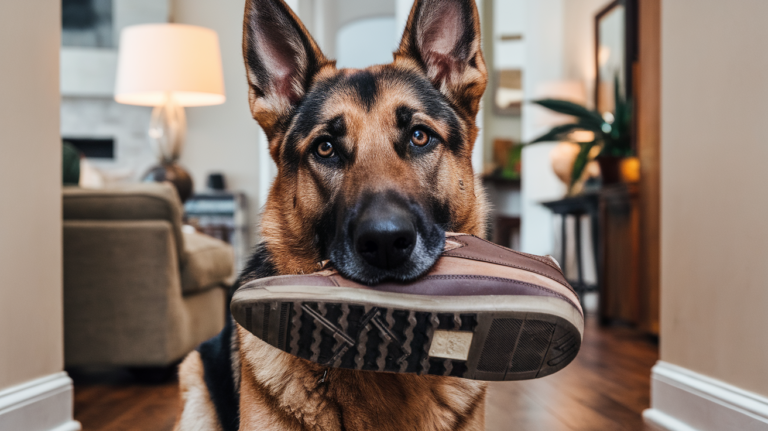
One German Shepherd I knew was utterly obsessed with stealing and parading around with socks (clean ones, thankfully). Her owner bought special “training socks” that the dog only got to carry as a reward for excellent recall and stay behaviors. It worked brilliantly because it tapped into this dog’s specific, weird joy.
Your GSD might have similar peculiarities. Embrace them! Use them! The goal is finding what genuinely motivates your dog, not what works for dogs in general.
10. Real Work and Purpose Driven Activities
Finally, let’s talk about giving your German Shepherd what they were bred for: actual work. These dogs descended from herding and working lines. They’re happiest when they have purpose and jobs to do.
Consider rewarding training success with opportunities to engage in work like activities:
- Nosework or scent detection games
- Carrying a backpack on walks (appropriately weighted)
- Learning to find hidden objects or people
- Practicing protection sports or bite work (with professional guidance)
- Herding activities if available
- Agility or obstacle courses
When your German Shepherd successfully completes basic obedience, reward them by setting up a scent work puzzle or letting them navigate an agility course. You’re telling them, “Good job on the boring stuff! Now here’s something that uses your real talents.”
This approach creates dogs who are eager to get through foundation behaviors because they know meaningful, engaging work is coming. It transforms obedience from something they tolerate into the gateway to activities they genuinely love.
The bottom line? Your German Shepherd is a complex, intelligent, athletic working dog. They deserve a reward system as sophisticated as they are. Treats have their place, absolutely, but when you expand your reward toolkit to include play, work, freedom, and connection, you’ll discover a whole new level of enthusiasm and partnership with your incredible dog. Stop limiting yourself to the treat pouch and start speaking your German Shepherd’s real language.