Your German Shepherd might be saying “I love you” in surprising ways. Learn the subtle signals most owners miss and why they matter.
Your German Shepherd just stared at you for three solid minutes. Was it judgment? Hunger? A telepathic message about the mailman’s suspicious behavior? Actually, it might be their version of saying “I love you.”
These magnificent dogs communicate in ways that most owners completely miss, using a sophisticated system of signals that would make a cryptographer jealous. While we’re busy interpreting tail wags and ear positions, there’s an entire secret language happening right under our noses.
The Foundation: Why German Shepherds Communicate Differently
German Shepherds weren’t bred to be lap dogs. These working dogs were developed in Germany in the late 1800s with a specific purpose: intelligence, loyalty, and an almost supernatural ability to understand human needs. This heritage means their communication style is purposeful and nuanced in ways that might surprise you.
Unlike breeds that wear their hearts on their sleeves (looking at you, Golden Retrievers), German Shepherds tend to be more reserved with strangers and selective about who receives their affection. This doesn’t mean they love any less; it means their expressions of love carry more weight and intention. When a German Shepherd chooses to show you affection, it’s deliberate.
Their wolf ancestry also plays a role here. Wolves communicate through subtle body language, eye contact, and positioning within the pack. Your German Shepherd has retained many of these instincts, which means understanding their love language requires you to think like a pack member, not just a pet owner.
Decoding the “Lean In” Philosophy
The Full Body Press
If your German Shepherd leans their entire body weight against your legs, congratulations! You’ve just received one of the highest compliments in the canine world. This behavior, which can sometimes feel like being slowly toppled by a furry avalanche, is actually a profound statement of trust and affection.
The lean serves multiple purposes. First, it’s a way for your dog to seek comfort and security from you. Second, it’s their method of offering you comfort (yes, they think you need it). Third, it’s a physical manifestation of the bond between you. When your German Shepherd leans, they’re essentially saying, “You are my safe space, my anchor, my person.”
This isn’t just casual contact. This is a dog saying, “I trust you with my balance, my safety, and my vulnerable side.” It’s the equivalent of a human putting their arm around someone they deeply care about.
The Strategic Position
Pay attention to where your German Shepherd chooses to sit or lie down. Do they position themselves between you and the door? Do they sit with their back to you while watching the room? These aren’t random choices; they’re tactical decisions rooted in protection and love.
When a German Shepherd places themselves as a barrier between you and potential threats (even if that “threat” is just the pizza delivery person), they’re performing an ancient duty. This protective positioning is their way of saying, “I’ve got you covered.” It’s love expressed through vigilance.
The Eyes Have It: Understanding the German Shepherd Gaze
The Soft Stare of Devotion
There’s regular eye contact, and then there’s the German Shepherd Gaze. You know the one: those deep, soulful brown eyes locked onto yours with an intensity that could melt steel. Scientists have actually studied this phenomenon, discovering that when dogs and humans make eye contact, both parties release oxytocin, the same bonding hormone released between mothers and babies.
But German Shepherds take this to another level. Their gaze isn’t just looking; it’s communicating. A soft, relaxed stare with slightly squinted eyes and a calm body posture is essentially your dog saying “I love you” in the most direct way possible. It’s intimate, it’s powerful, and it’s uniquely theirs.
The Importance of Eye Contact Duration
Not all stares are created equal. Here’s how to interpret different types of German Shepherd eye contact:
| Type of Gaze | Duration | Meaning |
|---|---|---|
| Soft, prolonged stare | 30+ seconds | Deep affection and bonding |
| Quick glances back | 2-5 seconds, repeated | Checking in, seeking approval or guidance |
| Intense, focused stare | Variable | Alert mode, watching for threats or awaiting commands |
| Averted gaze | Brief eye contact then looking away | Respect, submission, or uncertainty |
Physical Touch: Beyond the Obvious
The Paw of Approval
When your German Shepherd places their paw on your arm, leg, or lap, they’re not just asking for attention (though they might be doing that too). This gesture is deeply rooted in puppy behavior, where young dogs paw at their mothers for food and comfort. When your adult German Shepherd does this, they’re regressing to that comfortable, safe feeling of being cared for.
The paw placement is also a form of claiming. In the nicest possible way, your dog is saying, “This is my person.” It’s possessive, yes, but in the most endearing way imaginable. They’re literally reaching out to maintain physical contact with you because your presence brings them joy and security.
The Sleeping Arrangements
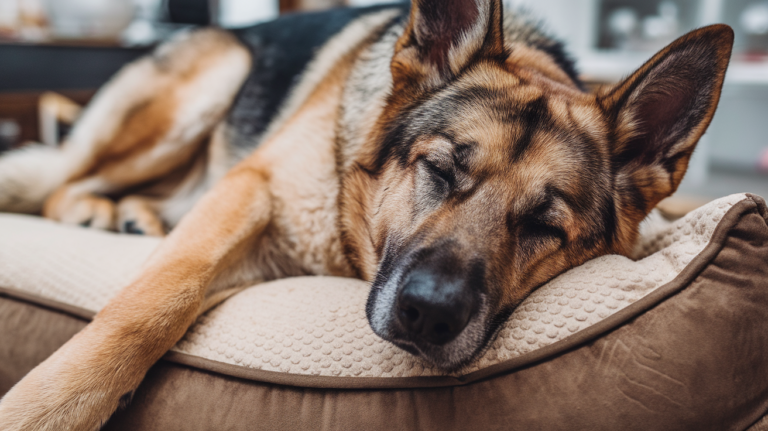
Where your German Shepherd chooses to sleep reveals volumes about their feelings toward you. Despite their size, many German Shepherds are shameless bed invaders. If your dog insists on sleeping in your bed, on your feet, or pressed against your side, this is premium love language territory.
Sleeping is when animals are most vulnerable. A German Shepherd who chooses to sleep near you is making a profound statement: “I trust you with my life, even when I’m completely defenseless.”
Some German Shepherds prefer to sleep near the bedroom door, and this shouldn’t be interpreted as distance or lack of affection. This positioning allows them to guard you while you’re vulnerable, which is another form of deep devotion.
Vocalization: The Sounds of Love
The Grumble, Growl, and Groan
German Shepherds are talkers. They have an impressive range of vocalizations that go far beyond barking. The low grumble when you scratch that perfect spot? That’s pleasure. The little growl when they’re settling down for a nap? That’s contentment. The dramatic groan when you stop petting them? That’s protest mixed with affection.
These vocalizations are part of their communication toolkit, inherited from their wolf ancestors who use varied sounds to maintain pack cohesion. When your German Shepherd “talks” to you, they’re treating you as an important pack member worthy of conversation.
The Whine of Excitement
That high pitched whine when you come home isn’t annoyance; it’s pure, unfiltered joy. German Shepherds often whine when they’re overwhelmed with positive emotion and can’t quite contain themselves. It’s the canine equivalent of happy crying. Some dogs add in little “boofs” and half barks to the mix, creating a symphony of excitement that’s specifically reserved for their favorite people.
The Bringing of Gifts
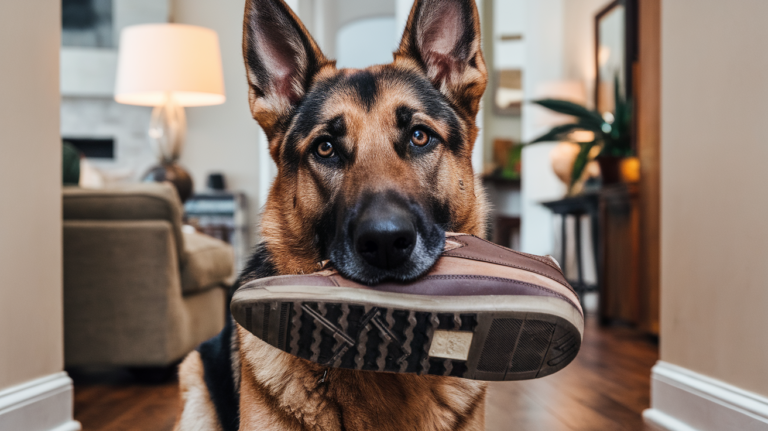
German Shepherds love to present their humans with offerings. Sometimes it’s their favorite toy. Sometimes it’s a stick from the yard. Occasionally, it’s something horrifying like a deceased rodent (the thought counts, right?). This behavior stems from their herding and retrieving instincts but has evolved into a love language all its own.
When your German Shepherd brings you something, they’re sharing their resources with you. In pack dynamics, sharing food and resources is a sign of trust and affection. Your dog might not understand that you don’t actually want their slobbery tennis ball, but the gesture itself is profound. They’re giving you what’s valuable to them, which is the ultimate compliment.
Every toy dropped at your feet, every stick presented with pride, every “gift” (no matter how questionable) is your German Shepherd saying, “I want to share my joy with you.”
The Follow Factor
Your Constant Shadow
Does your German Shepherd follow you from room to room, including into the bathroom? (Especially into the bathroom?) This isn’t clinginess; it’s devotion in motion. German Shepherds bond intensely with their humans and genuinely prefer your company to anything else, including sleep, food, or that squirrel in the backyard that definitely needs barking at.
This following behavior is rooted in their working dog heritage. Herding dogs need to keep track of their flock, and as far as your German Shepherd is concerned, you are the most important member of their flock. They’re not hovering; they’re caring.
The Reunion Ritual
Pay attention to how your German Shepherd greets you after any absence, whether you’ve been gone for five hours or five minutes. The enthusiasm level might vary, but the ritual itself speaks volumes. The wiggling, the play bows, the toy presentations, the full body wags… this is pure love on display. Some German Shepherds even develop specific greeting routines that they only perform for their special people.
Understanding the Subtleties
The secret to understanding your German Shepherd’s love language isn’t learning one or two signals; it’s recognizing that they’re communicating with you constantly through dozens of micro expressions and behaviors. The ear flick when you say their name. The slight tail wag when you walk by. The deep sigh when they finally settle next to you. These aren’t random; they’re intentional communications from a dog who loves you deeply but doesn’t speak English.
The more you tune into these subtleties, the stronger your bond becomes. Your German Shepherd will notice that you’re noticing, and they’ll likely increase these behaviors because finally, someone understands what they’ve been trying to say all along.
Learning your German Shepherd’s love language transforms your relationship from owner and pet to genuine companions who understand each other on a profound level. And really, isn’t that what every dog owner dreams of?