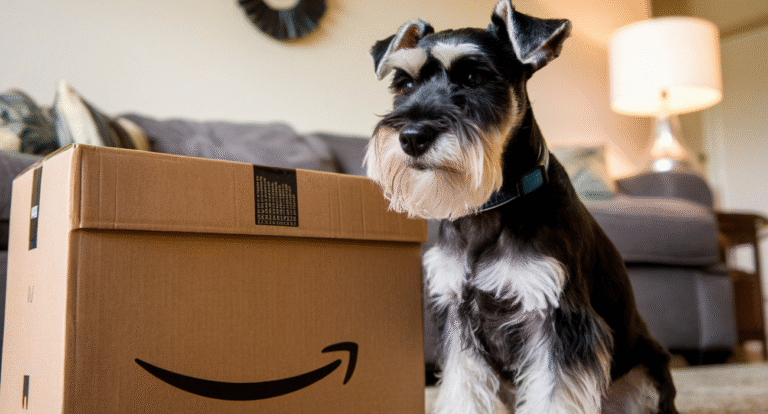
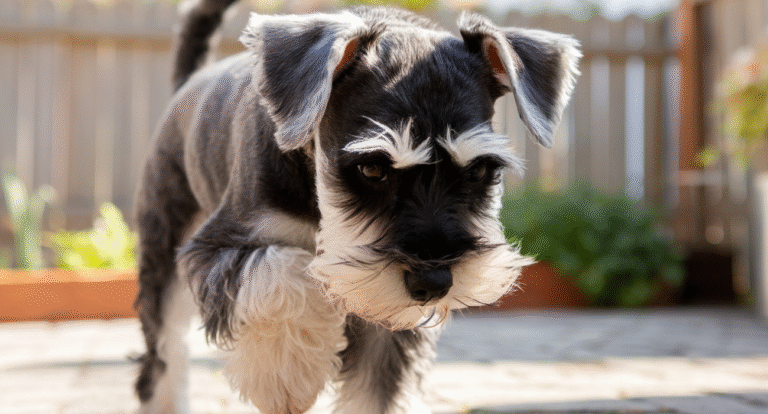
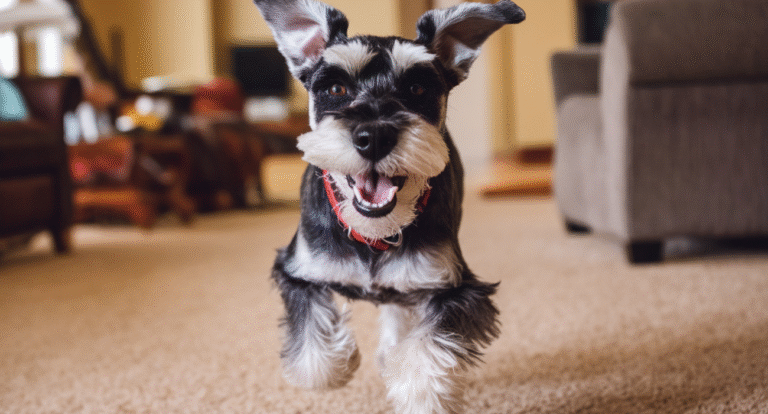
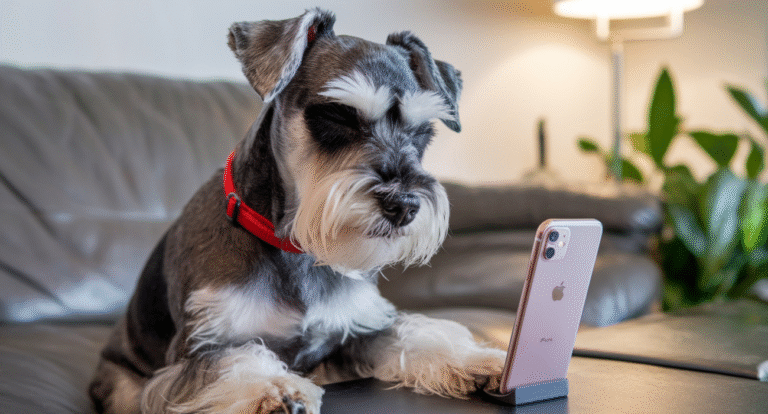
Is your Schnauzer packing on pounds? These ten easy ways will help your pup shed weight and boost energy levels.
You’re at the vet’s office for a routine checkup, and the scale delivers some unwelcome news. Your Schnauzer has officially entered the “chunky” category. Maybe you suspected it (those stairs have been getting harder for them lately), or perhaps it’s a complete shock. Either way, you’re now wondering how your perfectly proportioned pup turned into a compact canine boulder.
Weight gain in Schnauzers sneaks up gradually, often disguised by that thick, wiry coat. The path forward is surprisingly manageable. These ten methods will help you create a healthier lifestyle for your bearded buddy without making either of you miserable.
1. Get an Accurate Weight Assessment From Your Vet
Before you start any weight loss program, you need to know exactly where you’re starting from. Your bathroom scale won’t cut it here, and eyeballing it definitely won’t work through all that fur. Schedule a vet appointment specifically to discuss your Schnauzer’s weight, body condition score, and ideal target weight.
Your veterinarian will perform a thorough physical examination, checking for any underlying health conditions that might be contributing to weight gain (like hypothyroidism or Cushing’s disease). They’ll also help you determine a realistic, safe weight loss goal. Generally, dogs should lose about 1-2% of their body weight per week, which means patience is key.
Don’t skip this step! What seems like simple pudginess could actually be a medical issue requiring treatment, not just dietary changes. Plus, your vet can provide personalized recommendations based on your Schnauzer’s age, activity level, and any existing health concerns.
2. Measure Food Portions Precisely (Yes, With an Actual Measuring Cup)
Here’s where most dog owners go wrong: the casual scoop from the bag. That “cup” you’re using? It’s probably actually 1.5 cups, or you’re heaping it generously because you love your pup. This seemingly small miscalculation can add up to hundreds of extra calories per week.
Invest in a proper measuring cup or, even better, a kitchen scale. Read the feeding guidelines on your dog food bag, but remember these are just starting points. A Schnauzer who lounges on the couch all day needs significantly fewer calories than one who competes in agility trials.
The portion you’re actually feeding could be 30-50% more than you think, turning a weight maintenance plan into an accidental bulk.
Track everything for a week. Write it down. You might be surprised at how those “just a few kibbles” throughout the day accumulate into an entire extra meal’s worth of calories.
3. Switch to a Weight Management Formula
Not all dog foods are created equal, and the food that sustained your Schnauzer through puppyhood might be sabotaging their waistline now. Weight management formulas are specifically designed to be lower in calories while higher in fiber, helping your dog feel full without the caloric punch.
Look for foods where the first ingredient is a quality protein source (like chicken, fish, or lamb) and that contain plenty of vegetables for fiber. Avoid formulas heavy in fillers like corn or wheat, which provide calories without much nutritional benefit.
| Food Component | What to Look For | Why It Matters |
|---|---|---|
| Protein | At least 25-30% | Maintains muscle mass during weight loss |
| Fat | 8-12% | Provides energy without excess calories |
| Fiber | 5-10% | Promotes satiety and healthy digestion |
| Calories per cup | 300-350 kcal | Allows for adequate portions without overfeeding |
Make any food transitions gradually over 7-10 days to avoid digestive upset. Mix increasing amounts of the new food with decreasing amounts of the old until you’ve fully transitioned.
4. Implement Strategic Treat Reduction
Treats are love, right? Well, yes, but they’re also often the hidden culprit behind weight gain. Those training treats, dental chews, and “good morning” biscuits can account for 25-40% of your Schnauzer’s daily caloric intake without you even realizing it.
Here’s the rule: treats should comprise no more than 10% of your dog’s daily calories. For a 15-pound Miniature Schnauzer eating about 400 calories daily, that’s only 40 calories in treats, which might be just 3-4 small training treats.
Switch to lower calorie alternatives like small pieces of carrot, green beans, or even ice cubes (many Schnauzers find these weirdly exciting). You can also use pieces of their regular kibble as training rewards, deducted from their meal portions. Your Schnauzer doesn’t actually care what the treat is; they care about the attention and praise that comes with it.
5. Increase Daily Exercise Gradually
Schnauzers were originally bred as working dogs, which means they need physical activity. A chubby Schnauzer is often simply a bored Schnauzer who has turned to food for entertainment. The solution? Get moving, but do it smartly.
Start where your dog currently is, not where you wish they were. If your Schnauzer is significantly overweight, they can’t (and shouldn’t) suddenly start running 5K with you. Begin with two or three short walks per day, maybe 10-15 minutes each. As their stamina and weight improve, gradually increase duration and intensity.
Mix it up to keep things interesting. Try different routes, incorporate hills (excellent for burning calories), or add in some fetch sessions. Swimming is particularly excellent for overweight dogs because it’s low impact on joints while providing serious calorie burn. Many Schnauzers love water once they’re properly introduced to it.
6. Eliminate Table Scraps and Human Food
This is where things get tough because those eyes, those pleading eyes, are expertly designed to break down your willpower. But here’s the truth: human food is calorie dense, often nutritionally inappropriate for dogs, and teaches begging behavior that makes everyone’s life more difficult.
That innocent piece of pizza crust? For a small Schnauzer, that’s like you eating an entire large pizza in terms of proportional calories. The cheese from your sandwich? Loaded with fat. Even “healthy” human foods like a spoonful of peanut butter pack a surprising caloric punch for a small dog.
Every family member must be on board, because it only takes one soft touch at the dinner table to undermine weeks of progress.
If your Schnauzer currently has a table scrap habit, expect some resistance during the transition. Stay strong. They’ll adjust within a week or two, and their waistline will thank you.
7. Create a Consistent Feeding Schedule
Free feeding (leaving food out all day) is convenient but catastrophic for weight management. When food is always available, dogs often eat out of boredom rather than hunger, and you have zero ability to monitor intake accurately.
Switch to scheduled feeding times: typically twice daily for adult Schnauzers, with measured portions at each meal. Put the food down for 15-20 minutes, then pick it up regardless of whether they’ve finished. This creates a predictable routine and prevents grazing.
Scheduled feeding also allows you to better monitor your dog’s appetite and eating habits, which can be early indicators of health problems. Plus, it makes potty training and scheduling much more predictable, since what goes in on schedule tends to come out on schedule.
8. Address Emotional and Boredom Eating
Yes, dogs can absolutely eat for emotional reasons, not just physical hunger. An anxious, bored, or understimulated Schnauzer will often turn to food as a source of comfort and entertainment. Sound familiar? It should, because humans do exactly the same thing.
Enrich your Schnauzer’s environment. Puzzle feeders turn mealtime into a 20-minute mental workout instead of a 30-second inhale fest. Rotate toys to keep things novel. Spend quality time playing, training, or just hanging out together. Often, what your dog really wants isn’t more food; it’s more you.
Consider whether separation anxiety or stress might be contributing factors. Schnauzers are people dogs who can struggle when left alone for long periods. If anxiety seems to be driving eating behaviors, consult with a veterinary behaviorist for targeted strategies.
9. Get the Whole Family on the Same Page
Sabotage by well meaning family members is shockingly common. While you’re carefully measuring portions, someone else is slipping treats under the table or filling the bowl “just a little extra” because they felt sorry for the dog.
Hold a family meeting. Explain why weight loss matters for your Schnauzer’s health and longevity. Assign one person to be in charge of feeding to ensure consistency. Create a chart where treat giving is logged so everyone can see how quickly those “just one treats” accumulate.
For kids especially, help them understand that overfeeding isn’t love; it’s actually harmful. Teach them alternative ways to show affection, like grooming sessions, playtime, or training new tricks. Your Schnauzer will benefit more from a game of fetch than from another biscuit.
10. Monitor Progress and Adjust Accordingly
Weight loss isn’t linear, and what works initially might need tweaking as your Schnauzer drops pounds. Schedule weigh-ins every two weeks at your vet’s office (they won’t mind, and it’s usually free). Track the numbers so you can see trends rather than getting discouraged by weekly fluctuations.
If weight loss stalls after the first few weeks, reassess. Are portions still accurate? Has anyone gotten lax with treats? Is your Schnauzer actually eating less than you think (perhaps snacking on the cat’s food)? Sometimes you need to reduce portions slightly more or increase exercise duration.
Celebrate milestones! When your Schnauzer hits their target weight, take a victory lap around the park (literally) and maybe splurge on a new toy or special outing.
Remember, this is a lifestyle change, not a temporary diet. Once your Schnauzer reaches their ideal weight, you’ll transition to maintenance calories, but the principles of portion control, quality food, regular exercise, and limited treats remain forever. Your reward? More years of adventure with your healthier, happier Schnauzer.