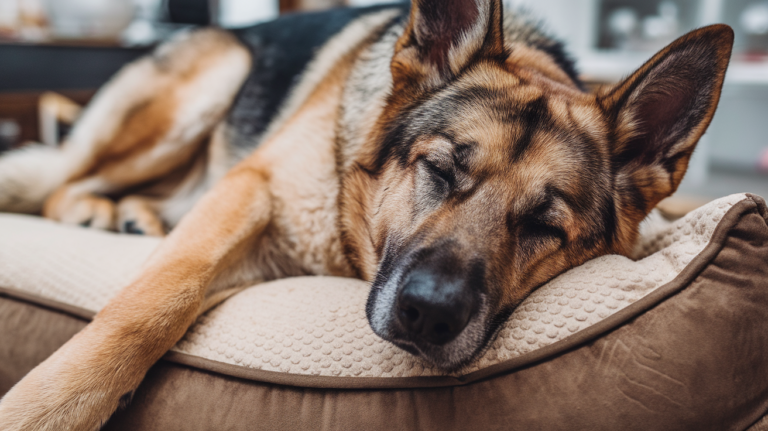
The wolf myth refuses to die. Separating fact from fiction reveals surprising truths about German Shepherd history and behavior.
You’ve probably heard the rumors at the dog park. Someone spots a majestic German Shepherd and inevitably whispers, “You know, they’re basically wolves.” Your neighbor swears their GSD howls at the moon because of its “wolf blood.” But is there any truth to this persistent myth, or is it just another internet tale that refuses to die?
The connection between German Shepherds and wolves has captivated dog lovers for generations. These powerful, intelligent dogs certainly look wolfish with their pointed ears, athletic build, and intense gaze. But looking like something and actually being something are two very different things. Let’s dig into the science, history, and genetics to finally put this question to rest.
The Scientific Truth About Dog and Wolf DNA
Here’s what science actually tells us: all domestic dogs, including your neighbor’s yappy Yorkie and the most regal German Shepherd, descended from wolves thousands of years ago. This domestication happened somewhere between 20,000 and 40,000 years ago, depending on which archaeological evidence you believe.
But here’s the crucial part that people miss: German Shepherds aren’t any more closely related to wolves than other dog breeds. They’re all the same species (Canis lupus familiaris), while wolves are Canis lupus. Notice something? Dogs are actually a subspecies of wolf, technically speaking. Every single dog breed shares this heritage.
What the Genetic Testing Shows
Modern DNA analysis has completely demolished the myth of recent wolf ancestry in German Shepherds. Studies comparing the genomes of various dog breeds to wolves reveal something fascinating:
| Dog Breed | Genetic Distance from Wolves | Domestication Timeline |
|---|---|---|
| German Shepherd | Same as most breeds | 20,000+ years ago |
| Siberian Husky | Slightly closer (ancient breed) | 20,000+ years ago |
| Basenji | Slightly closer (ancient breed) | 20,000+ years ago |
| Chihuahua | Same as most breeds | 20,000+ years ago |
| Golden Retriever | Same as most breeds | 20,000+ years ago |
The table reveals an important truth: German Shepherds sit right alongside most modern breeds in terms of their genetic distance from wolves. Some ancient breeds like Huskies, Akitas, and Basenjis show slightly closer genetic markers to wolves, but this doesn’t mean they’re “more wolf” – it just means they’re older breeds that haven’t been as heavily modified through selective breeding.
German Shepherds are no more wolf than any other domestic dog breed. The wolfish appearance comes from selective breeding for specific physical traits, not from recent wolf ancestry.
Why German Shepherds LOOK So Wolfish
So if German Shepherds aren’t part wolf, why do they look like they just walked out of the wilderness? The answer is actually a testament to human ingenuity and the power of selective breeding.
The Creation of a “Wolf-Like” Appearance
Captain Max von Stephanitz had a vision when he created the German Shepherd breed in the late 1800s. He wanted the ultimate working dog: intelligent, loyal, powerful, and yes, impressive looking. He achieved this through careful selection of existing German herding dogs, not by introducing wolf blood into the mix.
The features that make German Shepherds look wolfish are:
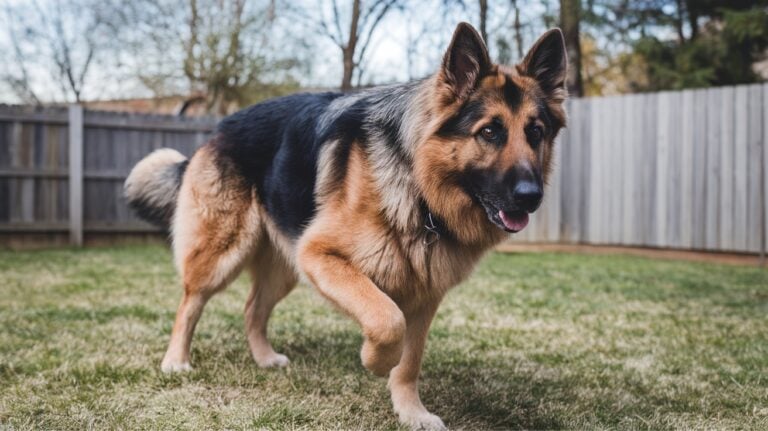
Erect, pointed ears – Many dog breeds have been selectively bred for floppy ears, but German Shepherds retained the alert, pricked ears that suggest vigilance and wildness.
Double coat with similar coloring – That classic black and tan (or sable) coloring? It’s not wolf DNA; it’s selective breeding for a color pattern that happens to resemble some wolf populations.
Athletic build and gait – German Shepherds move with purpose and power. Their structure was designed for endurance work, which coincidentally mirrors the efficient movement of wolves.
Facial structure – The longer snout and intense eyes were bred for functionality (better scenting ability, excellent vision), but they also create that wild, predatory appearance.
Hollywood’s Role in the Myth
Let’s be honest: movies and TV shows haven’t helped dispel this myth. German Shepherds have been cast as “wolf dogs” or portrayed as having special wild traits in countless productions. Rin Tin Tin, one of the most famous German Shepherds in entertainment history, was often shown doing impossibly wolf-like behaviors that real GSDs simply don’t display.
The entertainment industry has spent a century convincing audiences that German Shepherds possess mystical wolf qualities. In reality, these dogs were starring in movies precisely because they were exceptionally trainable domestic dogs.
What About Wolf-Dog Hybrids?
Now, actual wolf-dog hybrids DO exist, and this might be where some of the confusion originates. These are animals that result from breeding a domestic dog with an actual wolf. They’re controversial, often illegal, and face a host of behavioral and health issues.
The Critical Differences
Wolf-dog hybrids are completely different from German Shepherds:
Behavioral unpredictability – True wolf-dog hybrids display conflicting instincts between wild and domestic behaviors, making them extremely difficult to manage. German Shepherds are predictable, trainable, and have been selectively bred for stable temperaments for over a century.
Legal restrictions – Many jurisdictions ban or heavily restrict wolf-dog hybrids. German Shepherds are legal everywhere domestic dogs are permitted.
Breeding intentionality – Wolf-dog hybrids require someone to actually, intentionally breed a wolf with a dog (usually within a few generations). German Shepherds have been bred exclusively with other German Shepherds or similar domestic dogs for their entire history as a breed.
Physical markers – Real wolf-dog hybrids often have distinctive features like extremely long legs, massive paws, and facial structures that differ noticeably from both wolves and dogs. German Shepherds have consistent breed standards that don’t include these markers.
The Real History of German Shepherd Development
Understanding where German Shepherds actually came from destroys the wolf myth entirely. Their origin story is well-documented and contains exactly zero wolves.
From Herding Dogs to International Icons
In the 1890s, various regions of Germany had their own localized herding dogs. These weren’t standardized breeds; they were working animals selected for functionality. Captain von Stephanitz recognized the potential to create a standardized breed that could excel in multiple roles.
He founded the Verein für Deutsche Schäferhunde (Society for the German Shepherd Dog) in 1899 and began a systematic breeding program using the best herding dogs he could find. The foundation of the breed was built on dogs like:
Horand von Grafrath – The first registered German Shepherd, originally named Hektor Linksrhein. This dog came from a long line of domestic German herding dogs.
Luchs and Bella – Early breeding stock that contributed to establishing type and temperament.
Beowulf – An influential male whose genetics shaped the breed’s working ability.
Notice something about this list? Not a single wolf. Von Stephanitz was meticulous in his record keeping, and nowhere in the extensive documentation of the breed’s development is there any mention of wolf crosses.
How Breeds Actually Work
This is a good place to address a fundamental misunderstanding about dog breeds. When humans create a new breed, they’re working with the incredible genetic diversity already present in domestic dogs. Through selective breeding, we can emphasize certain traits and minimize others.
Creating a distinctive dog breed doesn’t require introducing wild animals. It requires patience, knowledge of genetics, and clear goals for appearance and temperament.
Think about how different a Bulldog is from a Greyhound, or how a St. Bernard compares to a Dachshund. All of these wildly different forms came from selective breeding of domestic dogs. The same principle applies to German Shepherds. Their wolfish appearance is just one possible expression of the genetic potential already present in domesticated canines.
Common Misconceptions Debunked
Let’s tackle some of the most persistent myths head-on:
Myth: “German Shepherds howl because they’re part wolf” – Actually, many dog breeds howl, including Beagles, Basset Hounds, and Huskies. Howling is a vocalization trait that exists in domestic dogs and isn’t exclusive to wolf ancestry. Some German Shepherds howl, others don’t; it depends on the individual dog and what behaviors have been reinforced.
Myth: “Their prey drive proves wolf genetics” – Prey drive is a trait in virtually all dogs because they’re all descended from predators (wolves, but thousands of generations ago). Border Collies have intense prey drive modified into herding behavior. Terriers were bred to have extreme prey drive for hunting vermin. This has nothing to do with being “part wolf.”
Myth: “They need raw meat because of their wolf side” – German Shepherds are omnivores like all domestic dogs. They’ve evolved alongside humans eating human food scraps for millennia. While some owners choose raw diets, this is a lifestyle choice, not a biological necessity rooted in wolf DNA.
Myth: “They’re more aggressive due to wolf blood” – German Shepherds are protective and can be territorial when trained for guard work, but this is true of many breeds and is the result of selective breeding and training, not wolf genetics. Properly socialized GSDs are stable, confident dogs. Aggression issues stem from poor breeding, lack of socialization, or inadequate training.
Why This Myth Won’t Die
So if the science is clear and the history is well-documented, why do people STILL believe German Shepherds are part wolf? Several psychological and cultural factors keep this myth alive:
The appeal of wildness – There’s something undeniably cool about owning a dog that’s supposedly part wolf. It makes the owner seem more adventurous, more connected to nature. People want to believe their pet has that wild edge.
Confirmation bias – When a German Shepherd displays any behavior that seems wild or primitive (digging, howling, strong prey drive), owners see it as evidence of wolf ancestry rather than normal dog behavior.
Marketing and media – Breeders, movie producers, and advertisers have all benefited from playing up the wolf connection. It sells puppies, movie tickets, and dog food.
Misunderstanding of evolution and breeding – Most people don’t understand how long ago domestication occurred or how selective breeding works. The timeline of “20,000 years ago” doesn’t feel real to most people, so they imagine wolf ancestry must be more recent.
What German Shepherds Actually Are
Instead of being part wolf, German Shepherds are something arguably more impressive: they’re the result of deliberate, careful human engineering to create the ultimate working dog. Their intelligence isn’t from wolves; it’s from generations of selecting the smartest, most trainable individuals. Their loyalty isn’t wild instinct; it’s a trait carefully cultivated through breeding programs that valued dogs who bonded strongly with handlers.
The True Marvel of the Breed
German Shepherds excel as:
Police and military dogs – Their trainability and work ethic make them ideal for complex tasks like detection work, patrol, and protection.
Service animals – They guide the blind, assist people with disabilities, and provide emotional support with remarkable sensitivity.
Search and rescue – Their scenting ability, endurance, and problem-solving skills save lives in disaster situations.
Family companions – Despite their working heritage, well-bred German Shepherds are gentle with children and loyal to their families.
None of these roles require wolf DNA. They require something much more valuable: centuries of selective breeding for temperament, intelligence, and versatility.
Celebrating What They Really Are
There’s no need to invent wolf ancestry to make German Shepherds impressive. They’re already incredible animals with a fascinating history rooted entirely in the human-dog partnership. The breed represents what’s possible when we work thoughtfully with the genetic potential of domestic dogs.
| Trait | Wolf Origin? | Actual Origin |
|---|---|---|
| Intelligence | ❌ No | ✅ Selective breeding for working ability |
| Loyalty | ❌ No | ✅ Bred for handler focus and bonding |
| Protective instinct | ❌ No | ✅ Generations of guarding and herding selection |
| Athletic ability | ❌ No | ✅ Breeding for endurance and strength |
| Trainability | ❌ No | ✅ Selection for dogs who work well with humans |
The next time someone tells you their German Shepherd is part wolf, you’ll know the truth. These magnificent dogs don’t need invented wild ancestry to be special. They’re special because they represent over a century of dedicated breeding, they’ve served alongside humans in countless roles, and they’ve earned their place as one of the world’s most beloved breeds through their own merit, not through mythical wolf DNA.
German Shepherds are 100% domestic dog, 100% incredible, and that’s more than enough.