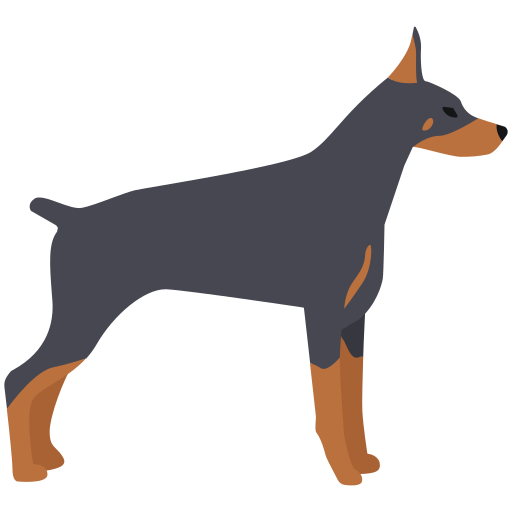
 Doberman
 Paws skidded across the wet grass as the Doberman launched herself sideways, snatched the frisbee out of mid-air, and landed like she’d rehearsed it a hundred times. Her owner just stood there laughing. A stranger nearby leaned over and asked, "Wait, is that actually a Doberman? I thought they were supposed to be scary."
That question comes up more than you’d think.
Dobermans carry a reputation that has almost nothing to do with who they actually are. Sleek, athletic, endlessly loyal, and honestly kind of goofy once you get to know them.
So let’s clear a few things up. Here are ten facts about Dobermans that even longtime dog people tend to get wrong.
1. They Were Invented by a Tax Collector
Seriously. A German tax collector named Karl Friedrich Louis Dobermann wanted a dog that could protect him on his rounds.
Collecting taxes in 1800s Germany apparently made you a lot of enemies.
So he bred a fiercely loyal, intimidating companion using a mix of breeds nobody fully agrees on today (Rottweiler, German Pinscher, and possibly Greyhound are usually in the mix). The result was exactly what he wanted: a dog that meant business.
A Job-Specific Design
This wasn’t a breed built for looks. It was built for function.
Every trait, the alertness, the drive, the physical power, existed to keep one guy safe while he did an unpopular job.
2. The Breed Is Named After Him, Not a Place
Most dog breeds get their names from regions (German Shepherd, English Bulldog, you get the idea).
Dobermans broke that pattern entirely.
"Name a dog after the man who made it, and you guarantee he’s never forgotten." That’s not a real historical quote, but it might as well be, because that’s exactly what happened here.
He passed away not long after developing the breed, and people kept calling them "Dobermann’s dogs" as a tribute. Eventually it just stuck.
3. Their Ears and Tails Are Naturally Floppy
Here’s the twist: the pointed ears and short tail people associate with Dobermans aren’t natural at all.
In their original form, Dobermans have soft, floppy ears and a long, whip-like tail.
Cropping and docking became popular decades ago for both aesthetic and (debated) health reasons, but plenty of owners today skip both procedures entirely. A natural-eared Doberman looks strikingly different, almost like a different breed altogether.
Regional Differences Matter
In many parts of Europe, cropping is banned outright.
So if you’ve traveled abroad and seen a floppy-eared Doberman and thought, that can’t be right, it absolutely was.
4. They’re One of the Smartest Dog Breeds on Earth
Canine researcher Stanley Coren’s famous intelligence rankings put Dobermans at number five out of well over a hundred breeds.
That’s not a small feat.
It means a Doberman can learn a brand-new command in five repetitions or fewer, and obey it the first time roughly 95 percent of the time. For comparison, plenty of beloved family breeds need dozens of repetitions just to get the basics down.
This intelligence is a double-edged sword, though. A bored Doberman gets creative, and creative usually means chewed furniture or an escaped backyard.
5. They Basically Become Your Shadow
Ask any Doberman owner what surprised them most, and "how clingy he is" comes up constantly.
These dogs form intense bonds with their people. Not aggressive clinginess, just a deep desire to be wherever you are, doing whatever you’re doing.
Bathroom included. No exceptions.
Some owners even joke that "Velcro dog" should be an official second name for the breed. Given how accurate it is, maybe it should be.
6. They Served as War Heroes
During World War II, the United States Marine Corps officially adopted the Doberman Pinscher as its war dog.
They earned the nickname "Devil Dogs," though that term actually predates the breed’s military service by a few decades.
Dozens of Dobermans lost their lives in combat, most famously during the Battle of Guam. A memorial statue there still honors them today, and it remains one of the most visited tributes on the island.
Not Just Muscle
These dogs weren’t just intimidating. They were used for messaging, scouting, and detecting enemy positions long before modern tech existed.
7. Four Colors Are Officially Recognized
Most people picture the classic black and rust coloring, but that’s only one of four accepted colors.
Black, red, blue, and fawn (sometimes called Isabella) all appear in official breed standards.
Blue and fawn Dobermans are rarer and often come with a genetic predisposition to a skin condition called Color Dilution Alopecia. It’s not dangerous, just something worth knowing if you’re considering one of these unique colorations.
8. Their Aggressive Reputation Is Mostly Myth
"A dog trained to intimidate strangers isn’t the same as a dog born to be vicious." Keep that distinction in mind, because it explains almost everything about this breed’s misunderstood reputation.
Modern Dobermans, especially those from reputable breeders, tend to be gentle, sensitive, and genuinely eager to please.
Temperament testing organizations consistently rank them above many breeds considered "family friendly." Their scary look did them zero favors in pop culture, but the dog underneath rarely matches the myth.
9. Their Hearts Need Special Attention
Dobermans are unfortunately prone to a heart condition called Dilated Cardiomyopathy, or DCM.
It’s serious enough that many veterinary cardiologists recommend annual heart screenings starting around age three.
They’re also known for something called Wobbler Syndrome, a spinal condition affecting coordination in the hind legs. Neither issue is guaranteed, but responsible owners stay proactive instead of reactive.
Why This Matters for Buyers
Choosing a breeder who screens for these conditions can make a real difference in a Doberman’s long-term health.
It’s one of the most important (and most overlooked) parts of bringing one home.
10. They’ve Had Their Own Hollywood Moment
Dobermans have popped up in film and television for decades, often cast as the "scary guard dog" in the background of a scene.
Magnum Force, several classic crime dramas, and even a few animated films have leaned on that intimidating silhouette.
Ironically, the real dogs used on set were almost always sweethearts, patiently waiting between takes for a treat and a belly rub. The tough-guy image was, quite literally, just for the camera.