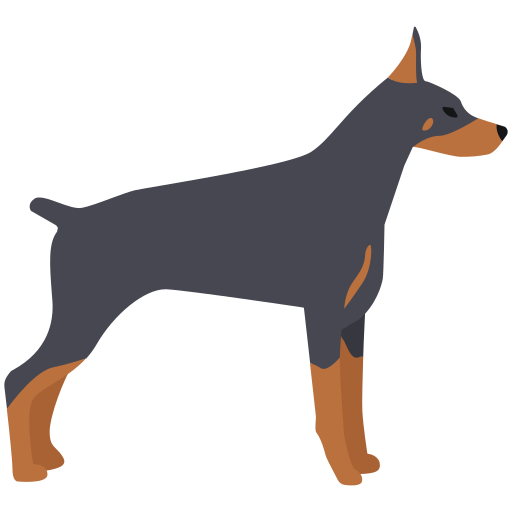
 Doberman
 Your Doberman is standing at the back door, tail stiff, ears locked forward, staring at something in the yard you can’t quite see yet.
Is that excitement? Is that a warning? Most owners freeze for a second, unsure whether to grab a leash or grab a phone to call animal control.
That split second of confusion is exactly why this article exists.
Dobermans are famous for being intelligent, loyal, and just a little bit dramatic with their body language. Once you learn to read the signals, you’ll never look at your dog the same way again.
The Tail Tells a Story (Even a Short One)
Docked or natural, a Doberman’s tail is still talking. You just have to know the dialect.
A relaxed, loose wag usually means genuine happiness. It’s the canine equivalent of a friendly wave from across the street.
Wagging Isn’t Always Happy
Here’s the twist nobody warns you about: a fast, stiff wag held high can actually signal arousal or tension, not joy.
Speed and looseness matter more than the wag itself.
A wagging tail asks a question. A stiff, high wag demands an answer.
If the wag looks tight and mechanical, pay attention to the rest of the body before assuming your pup is thrilled.
The Stiff Tail Warning
A tail held rigid and unmoving, especially paired with a forward lean, is worth noticing immediately.
That’s not neutral. That’s your dog telling you something in the environment has its full attention.
Ears Are Basically Mood Rings
Doberman ears, whether cropped or floppy, shift position constantly, and each position means something slightly different.
Pinned Back vs Perked Up
Ears pinned flat against the head often signal fear, submission, or discomfort. Sometimes it’s just a really good ear scratch, so context always matters.
Perked, forward facing ears usually mean interest or alertness. Think of it as your dog’s version of leaning in during a conversation.
The Sideways Tilt
The head tilt gets all the internet fame, but it’s not just adorable. It often means your dog is trying to locate a sound or make sense of something unfamiliar.
It’s curiosity in action, not confusion for confusion’s sake.
Eyes: The Windows to a Very Alert Soul
A Doberman’s eyes can shift from soft and affectionate to sharp and focused in under a second.
That range is part of what makes the breed so expressive.
Soft Eyes vs Hard Stares
Soft, blinking eyes usually mean your dog is relaxed and comfortable. It’s the visual version of a contented sigh.
A hard, unblinking stare is a different story entirely. That gaze often precedes a reaction, whether that’s a bark, a lunge, or simply intense focus on a squirrel that made a fatal mistake.
Whale Eye
Whale eye happens when a dog turns its head away but keeps its eyes locked on something, showing more white than usual. It’s one of the clearest stress signals in the entire canine body language toolkit.
When the whites of the eyes show more than usual, the dog is asking for space, not attention.
Give the dog room when you see this. Trust the signal instead of the cuteness.
Reading the Whole Body, Not Just One Part
No single signal tells the whole story. Tails, ears, and eyes work together, and reading them in isolation is how misunderstandings happen.
A wagging tail with pinned ears and whale eye isn’t a happy dog. It’s a conflicted one.
The Play Bow
Front legs down, rear end up, tail loose and wagging. This is the universal canine invitation to play, and Dobermans do it with theatrical flair.
It’s one of the few signals that almost never gets misread, mostly because it’s paired with an unmistakable goofy energy.
Freezing Is a Red Flag
A sudden freeze, especially with a closed mouth and stiff posture, deserves immediate attention. This is the moment right before a reaction, and it’s the single most important signal to catch early.
Movement is communication. The absence of movement is too.
Owners who miss the freeze often get surprised by what comes next.
Vocal Cues That Back Up the Body Language
Body language rarely stands alone. A low growl paired with a stiff tail means something very different from a playful bark paired with a wiggly rear end.
Dobermans aren’t a naturally noisy breed, so when the vocalizations start, they usually mean it.
The Low Grumble
A quiet, almost conversational grumble often shows up during affection, like a cat’s purr with more bass. It’s easy to mistake for aggression if you’ve never heard it before.
Context, as always, separates a happy grumble from a genuine warning growl.
Silence Before Sound
Some of the most intense moments come right before any sound at all. The stillness, the locked gaze, the stiff tail: all of it builds toward whatever comes next, whether that’s a bark, a lunge, or a full body wiggle of joy.
The quietest moment in the room is often the loudest signal your dog gives you.
Learning to notice that pause is where real fluency in Doberman body language begins.
Putting It All Together in Real Time
None of these signals exist in a vacuum, and that’s really the whole point. A relaxed tail with hard eyes still means something is off, just as pinned ears with a loose wag might mean nervous excitement rather than fear.
The more time spent simply watching, not reacting, the faster these patterns start to click. Dobermans are expressive dogs living with people who are often too busy to notice the subtlety of a half raised ear or a slightly too long stare.
Slow down for a moment the next time your dog goes still by the back door. That stillness has a whole vocabulary behind it, and now you actually speak it.