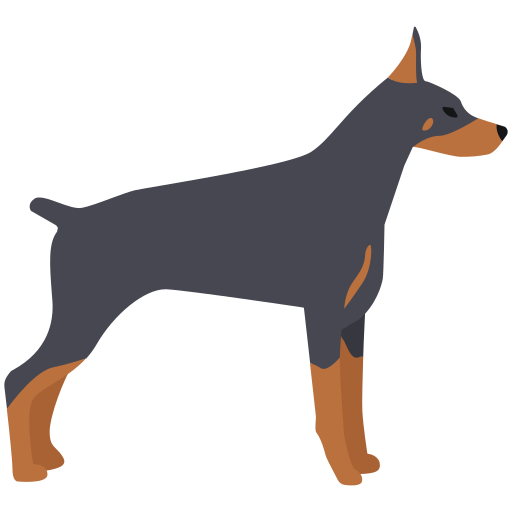
 Doberman
 Are your walks with your Doberman feeling more like a power struggle than a good time?
You head out the door with high hopes. Fresh air, some bonding, maybe a little exercise. Ten minutes later, your Dobe is dragging you toward a squirrel, you’re tangled in the leash, and nobody’s having fun.
It doesn’t have to go that way.
Walks with a Doberman can genuinely be one of the best parts of your day, for both of you. But getting there takes a little structure, a little know-how, and honestly, a shift in how you think about what a "good walk" even means.
Here’s how to make every single walk count.
Start Before You Ever Leave the House
Most people think the walk starts when you step outside. It doesn’t.
The walk starts the moment you pick up the leash.
If your Doberman is already spinning, whining, and bouncing off the walls before you’ve even opened the door, you’re already behind. That energy is going to spill out onto the sidewalk, and you’ll spend the first five minutes just trying to get things under control.
Ask for a sit before you clip the leash on. Wait for calm before you open the door. It sounds small, but it sets the tone for everything that follows.
"The energy your dog brings to the first step out the door is usually the energy they’ll carry for the whole walk."
Make your Doberman earn the walk, not just expect it.
Gear That Actually Works for a Doberman
Dobermans are strong. Really strong. And they’re smart enough to figure out exactly how to use that strength against you if your gear isn’t up to the job.
Choosing the Right Leash
Skip the retractable leash entirely. They give your Doberman too much freedom too fast, and they make it nearly impossible to communicate through the leash.
A standard 4 to 6 foot leash is your best friend. Leather or biothane holds up well and gets more comfortable over time. Nylon works fine too, just make sure it’s a heavier weight.
Harness vs. Collar: What’s the Debate?
A flat collar works well if your Doberman already walks without pulling. If pulling is a problem, a front-clip harness can be a game changer. It redirects their momentum back toward you instead of letting them just lean into it.
Prong collars and slip leads are tools some trainers swear by, but they require proper technique. If you’re not sure what you’re doing, stick to simpler gear and invest in a few training sessions first.
Mental Exercise Is Just as Important as Physical Exercise
Here’s something a lot of Doberman owners don’t realize until way too late: a tired body doesn’t always mean a tired mind.
You can walk your Dobe for an hour and come home to a dog who’s still restless, still getting into things, still looking for something to do. Dobermans are working dogs. Their brains need a job just as much as their legs do.
"A dog that’s physically tired but mentally bored is still a dog looking for trouble."
How to Add Mental Stimulation Mid-Walk
Build "sniff breaks" into the walk intentionally. Let your Doberman stop and actually smell things. It sounds like you’re losing control of the walk, but sniffing is mentally exhausting for dogs. A few good sniff breaks can take the edge off better than an extra mile of brisk walking.
Ask for obedience behaviors while you’re out. A quick sit at the corner, a "watch me" when another dog walks by, a few steps of focused heel work. Short bursts of training woven into the walk give your Doberman something to think about.
Change your route more often than feels necessary. New smells, new sights, new sounds. Variety is genuinely enriching.
Mastering the Leash: Communication, Not Control
A loose leash walk isn’t about dominance or force. It’s about communication.
Think of the leash like a conversation. When it’s slack, everything’s good. When it tightens, something needs to shift. Your job is to stay engaged enough that you’re catching problems early, before the leash ever goes tight.
The Stop-and-Wait Method
When your Doberman starts pulling, stop completely. Don’t yank back, don’t scold. Just stop and wait. The moment there’s slack in the leash and your dog looks back at you, start walking again.
It’s repetitive. It’s a little tedious at first. But Dobermans are sharp, and they catch on faster than most breeds once they realize that pulling literally gets them nowhere.
Changing Direction
Another solid technique is simply changing direction the second pulling starts. No warning, no announcement. You just turn and walk the other way. Your Doberman quickly learns that the only way to get anywhere is to pay attention to where you’re going.
Reading Your Doberman’s Body Language on Walks
Walks are actually one of the best opportunities you have to really learn how your dog communicates.
Watch the ears. Watch the tail. Watch the way their body stiffens or softens when something catches their attention. The more fluent you get in reading those signals, the better you’ll be at managing tricky situations before they escalate.
Stiff body, high tail, hard stare? That’s a dog on the edge of a reaction. Create distance, redirect their attention, and keep moving.
Loose body, wiggly tail, relaxed ears? That’s a happy dog enjoying their walk. That’s what you’re going for.
"Your dog is telling you something every single moment of the walk. The question is whether you’re paying attention."
How Long Should You Actually Walk a Doberman?
The honest answer is: it depends on your dog, your schedule, and what else they’re getting.
General Guidelines by Age
Puppies need much shorter walks than most people think. Too much pavement pounding on young joints is genuinely harmful. Short walks, several times a day, with lots of playtime at home is the right call for the first year.
Adult Dobermans generally do well with 45 minutes to 1.5 hours of exercise per day, but that doesn’t have to be all walking. Play, training sessions, and fetch all count.
Senior Dobermans still need daily movement, but you’ll want to dial back the intensity and watch for signs of joint discomfort. Shorter, slower walks are perfectly appropriate and still deeply beneficial.
Making Walks a Ritual, Not a Chore
The Dobermans who get the most out of their walks are the ones who have owners that actually enjoy going. Dogs pick up on your mood instantly.
If you dread the walk, they feel it. If you’re distracted on your phone the whole time, they feel that too.
Try leaving the headphones at home a few times a week. Actually be there for the walk, talking to your dog, praising good behavior, noticing what catches their attention. It changes the whole dynamic.
Walks are one of the most powerful bonding tools you have with your Doberman. Don’t waste them just trying to get through them.
A Simple Walk Routine to Put It All Together
Here’s a straightforward structure you can start using today:
Before leaving: Ask for a sit and a calm door exit. Set the tone from the first second.
First 5 to 10 minutes: Let your Doberman sniff and decompress. Give them freedom to take in the environment.
Middle portion: Work on leash manners. Practice direction changes, check-ins, and a few obedience cues at natural stopping points like crosswalks.
Sniff break: Find a grassy area and give them 3 to 5 minutes of pure, unstructured sniffing.
Final stretch: Calm, loose-leash walking back home. No rushing. Wind down together.
That’s it. It’s simple, it’s flexible, and it works.
The best walk you’ll ever take with your Doberman is the one where you both come home feeling good. That’s the whole goal. Start there and build from it.