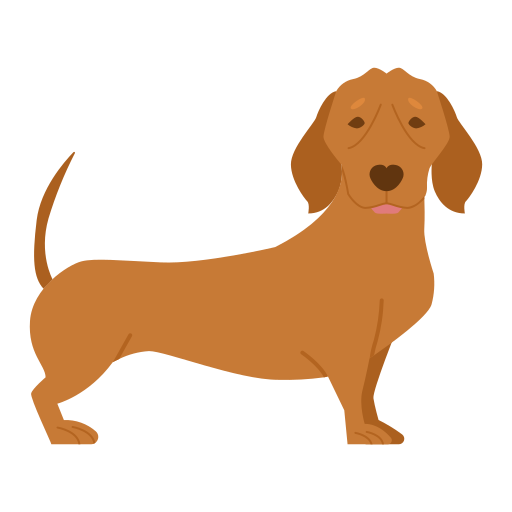
 Dachshund
 For the better part of a year, I was completely convinced that the answer to my dachshund’s behavior was more walking.
Longer walks. Second walks. A walk before work, a walk after dinner, and one more lap around the block at nine at night because he was pacing by the door again.
He got fitter. I got fitter. The barking at the mail carrier stayed exactly the same, and the corner of my rug slowly developed a hole shaped like one small, extremely determined snout.
That was the moment it clicked. A physically tired dachshund and a satisfied dachshund are not the same dog.
The Myth of the Tired Dog
Somewhere along the way, dog owners inherited a very simple equation: exercise in, calm out. Walk the dog until the legs stop working and peace shall follow.
It works reasonably well for some breeds. It works terribly for this one.
Dachshunds were never designed to be endurance athletes, and their bodies make that obvious. Those legs are short, that spine is long, and the whole structure was engineered for a very specific type of work that has almost nothing to do with distance.
What they were built for is the part most of us skip entirely.
A Job Description Written Underground
Picture the original assignment. A dachshund was sent into a badger tunnel, alone, in total darkness, to locate an animal that outweighed it and wanted it gone.
No handler. No instructions. No backup.
That dog had to track a scent, make decisions, solve problems in a tight space, and hold its nerve while doing it. The physical demand was real, but the mental demand was the actual job.
A breed built to think its way through a dark tunnel will not be satisfied by walking in a straight line on a sunny sidewalk.
So when your dachshund comes home from a forty minute walk and immediately starts excavating the couch cushions, that is not defiance. That is a highly specialized problem solver looking for a problem.
Why Walking Alone Falls Short
Here is the frustrating truth about physical exercise: dogs get better at it.
Increase the walks, and your dachshund’s stamina increases right along with them. You end up in an arms race you cannot win, because the dog has more free time than you do.
Mental work does not scale the same way. Ten focused minutes of sniffing or problem solving can leave a dachshund genuinely satisfied in a way that an hour of trotting simply does not.
There is real biology behind that. Scent work and puzzle solving engage huge portions of the canine brain, and concentration is metabolically expensive. Anyone who has ever come home from a long meeting knowing they sat in a chair all day understands this perfectly.
The Back Problem Nobody Wants to Mention
There is also a reason to be careful about the more, more, more approach.
Dachshunds carry a well documented risk of spinal issues, and repetitive high impact activity, jumping, twisting, and long forced marches can add stress to a body that was not designed to absorb much of it.
Building your entire enrichment plan around physical output means loading the one part of your dog that is most vulnerable.
Mental work costs the spine nothing. That is not a small detail; for this breed, it is one of the strongest arguments there is.
Signs You Have a Fit Dog and a Bored One
Boredom in dachshunds rarely looks like lying around looking sad. It looks busy.
Watch for the dog who paces in the evening after a full day of activity. Or the one who barks at sounds that used to be background noise.
Digging is the loudest signal of all, whether the target is your lawn, a blanket, or the crevice between two sofa cushions. That is not a bad habit; it is an unemployed tunnel specialist filing a complaint.
Some other common tells:
- Shredding paper, mail, or anything with an interesting texture
- Following you room to room and then whining about it
- Obsessive licking or chewing with no medical cause
- Selective hearing that gets noticeably worse over time
- Barking that starts at a noise and then continues long after the noise is gone
If your dachshund is getting real physical exercise and still doing three or four things on that list, the missing ingredient probably is not another mile.
The Kind of Work That Actually Satisfies Them
Good news: the fix is smaller and cheaper than most people expect, and it does not require a single piece of specialized equipment.
Let the Nose Do the Work
Scent games are the closest thing to a cheat code for this breed.
Scatter a handful of kibble across a patch of grass or a towel and let your dachshund hunt it down. Hide treats under three cups and let the dog work out which one matters. Tuck something smelly in a cardboard box stuffed with crumpled paper and step back.
Five minutes of that will produce a dog who lies down and sighs. I promise you it is stranger and more effective than it sounds.
The nose is not a feature on your dachshund. It is the main system, and everything else is supporting equipment.
Sniff walks belong in this category too. Instead of setting a pace and a distance, pick a short route and let your dog decide where to stop and for how long.
Yes, it is slow. That is the point.
Make Meals Require Thought
Feeding a dachshund out of a bowl is a wasted opportunity twice a day.
Puzzle feeders, snuffle mats, and slow feeders turn a thirty second event into a ten minute project. You can improvise the same effect with a muffin tin, some tennis balls, and dinner hidden underneath.
Portion control matters, because this is a breed that gains weight easily and carries it badly. Use their regular food rather than adding extras on top.
Train Something Genuinely Useless
Obedience training is fine, but the enrichment magic happens when you teach something with no practical purpose whatsoever.
Spin. Touch a target with the nose. Weave between your legs. Find a named toy from a pile of three.
Trick training demands focus, offers constant feedback, and gives your dachshund the thing it wants most: a job with a clear result. Keep sessions short, around five minutes, and stop while the dog still wants more.
The stubbornness this breed is famous for tends to soften considerably when the work is interesting enough.
Chewing Counts
Never underestimate a good chew.
Sustained chewing is genuinely calming for dogs, and it occupies both the jaw and the brain. Safe chews, stuffed and frozen toys, and appropriately sized natural options all buy you real quiet time.
For a breed prone to putting on weight, keep an eye on calories and choose long lasting options over rich ones.
Fitting It Into an Ordinary Week
None of this requires rearranging your life, which is the part I wish someone had told me sooner.
Swap one walk a week for a sniff walk where distance does not matter. Feed one meal a day out of something other than a bowl. Add a five minute training game while the kettle boils.
That is maybe fifteen extra minutes across a whole day, and it consistently outperforms the second walk I used to force us both through in the dark.
Stop measuring your dachshund’s day in miles. Start measuring it in decisions made.
The dog you brought home was bred to work underground, alone, using its brain. Give it something to figure out, and you will be surprised how quickly the rug stops looking like a career opportunity.