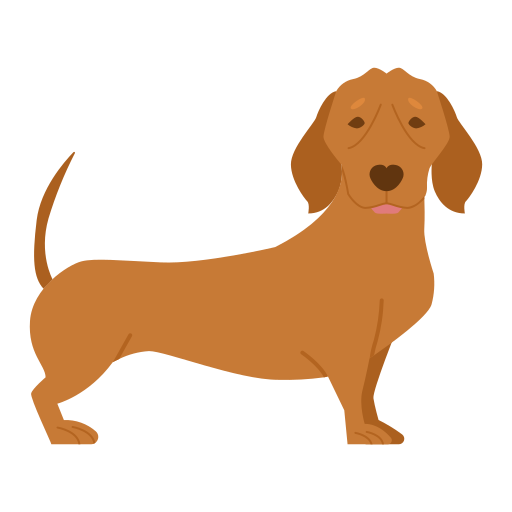
 Dachshund
 Scooping up a wiggling dachshund by grabbing under the front legs and letting the back half dangle feels like the most natural thing in the world. Millions of us do it every single day.
That habit alone puts serious pressure on a spine that was never engineered for it.
Long-bodied dogs live by different rules. The things that keep a Labrador healthy will not necessarily keep a doxie healthy, and the gap between the two shows up most clearly in the small stuff you repeat without thinking.
Here is the good news: the daily choices that add years to a dachshund’s life are almost embarrassingly simple. They just have to actually happen, day after day, on the boring Tuesdays as much as the exciting Saturdays.
1. Lift With Two Hands, Every Single Time
The dachshund spine is a suspension bridge with far too much span between the supports. Anything that lets the back half swing loose creates torque exactly where you least want it.
So the fix is mechanical. One hand supports the chest, the other supports the rump, and the whole dog moves as a single unit.
Teach the Rest of the House
Partners, kids, visiting relatives, the neighbor who watches your dog for a weekend: they all need the demo. Not a mention, an actual demonstration.
Kids in particular tend to scoop like they are picking up a stuffed animal.
Show them the two-hand hold once, then watch them do it back to you. That thirty-second correction is worth more than most of the supplements on the shelf.
A dachshund does not get injured on the day the injury happens. It gets injured on the ten thousand small days that came before.
Watch the Set-Down Too
Everyone remembers the lift and forgets the landing. Dropping the last few inches sends a jolt straight up the spine.
Lower all the way to the floor, then release.
2. Keep the Ribs Findable
Weight matters more for this breed than nearly any other. Every extra ounce hangs off that long back like a sandbag on a clothesline.
The test is easy and takes five seconds. Run your fingertips lightly along the side of the ribcage.
You should feel ribs under a thin layer of covering, similar to the back of your hand. If you have to press to find them, your dog is carrying too much, and if they stick out sharply, there is too little.
Measure, Don’t Eyeball
Scooping kibble by feel drifts upward over time. Nobody means to overfeed, but a generous scoop becomes the normal scoop, and six months later the dog is two pounds heavier.
Use an actual measuring cup or, better, a kitchen scale.
Treats count as food. This sounds obvious right up until you tally what a dachshund actually collects in a day: training bits, the crust from a sandwich, whatever the toddler dropped, the biscuit from the mail carrier.
Pull the daily treat allowance from the regular ration instead of adding it on top.
3. Build Real Muscle, Not Just Mileage
A strong core is the closest thing to spinal insurance a dachshund can have. Muscle stabilizes the vertebrae that ligaments and discs cannot protect on their own.
Flat walking is good. Walking on slightly uneven ground is better, because every small correction fires the stabilizer muscles that flat pavement lets sleep.
Add Gentle Variety
Grass, packed dirt trails, a shallow slope: these are the surfaces that build a stronger dog than sidewalk alone.
Swimming deserves a special mention. It loads the muscles without loading the joints, and plenty of dachshunds take to it happily once they figure out that the vest keeps them floating.
Skip the Sprinting Games
Fetch across a slick floor, sudden pivots, hard stops. Those movements torque the spine in ways that steady exercise never does.
Play on carpet, grass, or a rug runner instead.
4. Shut Down the Furniture Jumping
The jump down from the couch is where a huge share of dachshund back injuries begin. It looks harmless because the dog does it a hundred times without incident, and then one day it does not.
Ramps and pet stairs solve this, but only if the dog will use them.
Make the Ramp Worth It
Start flat on the floor with treats scattered along it. Raise the angle slowly over several days.
Most dogs figure it out in under a week if you resist the urge to rush.
The ramp your dachshund refuses to use is just expensive furniture. The one they choose on their own is a spine that stays intact.
Block off the couch when you cannot supervise. A folded blanket over the cushion edge or a baby gate across the room removes the temptation entirely.
5. Brush the Teeth (Yes, Actually)
Dental disease is not a cosmetic problem. Bacteria from inflamed gums travel through the bloodstream and take up residence in the heart, kidneys, and liver.
Dachshunds are especially prone to crowded teeth and early tartar buildup because of that narrow, tapered muzzle.
Thirty Seconds Beats Perfect
The realistic goal is daily and brief, not weekly and thorough. Thirty seconds with a finger brush and enzymatic dog toothpaste, focused on the outer surfaces where tartar actually accumulates.
Never human toothpaste. The xylitol in many brands is genuinely dangerous for dogs.
Dental chews help a little. They are a supplement to brushing, not a replacement for it, no matter what the packaging suggests.
6. Protect the Body Temperature
Low-slung dogs sit inches from the ground, which means they absorb radiant heat off asphalt far faster than a taller breed. In summer that pavement can run thirty or forty degrees above the air temperature.
Press the back of your hand to the sidewalk for seven seconds. If you want to pull away, it is too hot for paws.
Cold Is Its Own Problem
That short coat and low ground clearance work against dachshunds in winter too. Bellies drag through snow, and shivering muscles tighten around a spine that does much better relaxed.
A sweater is not a fashion statement for this breed. It is functional.
Shift the Walk
Early morning and late evening in summer, midday in winter. Same walk, different clock, dramatically different stress on the dog.
7. Run a Sixty-Second Body Scan
Dachshunds hide pain remarkably well. By the time a dog is obviously uncomfortable, the problem usually has a head start of days or weeks.
A quick daily once-over catches things early, and early is where the good outcomes live.
What to Feel For
Run your hands down the back and along the sides, watching for any flinch or tension. Check that both back legs bear weight evenly.
Look at the eyes, glance in the ears, feel between the toe pads.
Note the little things. Reluctance to jump onto a favorite chair, a hesitation before taking the stairs, a hunched posture, a yelp when picked up a certain way: these are early signals, and they are worth a call to the vet rather than a wait-and-see week.
Small changes noticed early are inconvenient. Small changes noticed late are expensive, and sometimes they are worse than expensive.
Make It Part of Something Else
Attach the scan to a routine you already have. Evening couch time, the post-dinner cuddle, the moment before bed.
Habits stick when they ride along with existing habits rather than competing with them.
Stacking the Odds
None of these seven habits require a special product, a subscription, or a complicated schedule. They require repetition.
A dachshund that gets lifted correctly, stays lean, moves on muscle instead of momentum, avoids the couch leap, keeps clean teeth, stays out of temperature extremes, and gets a quick daily check has a meaningfully different life expectancy than one that does not.
The breed can reach fifteen or sixteen years in good shape. Whether a particular dog gets there has less to do with luck than most owners assume, and far more to do with what happens on the ordinary days nobody remembers.