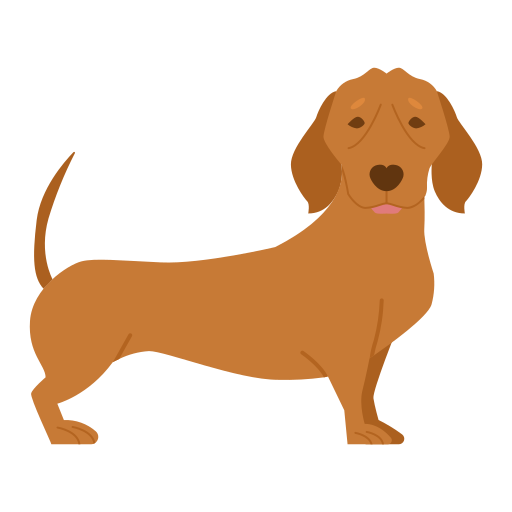
 Dachshund
 That soft thud you hear at two in the morning? Sneaky little paws hitting the hardwood after launching off a bed that sits roughly seventeen dachshund-lengths above the floor.
Nobody warns you about that sound.
Owning a long dog means signing up for a very specific set of worries, most of which involve that gloriously ridiculous spine and the stubby legs holding it up. The good news is that the habits that keep these dogs healthy are simple, repeatable, and mostly free.
Here are twelve of them, in no particular order of drama.
1. Treat the Spine Like Structural Engineering
Roughly one in four dachshunds will deal with intervertebral disc disease at some point. That number is not meant to scare you, just to focus you.
The discs between those vertebrae are prone to degenerating early because of the same genetic quirk that gives the breed its shape. Chondrodystrophy is the technical word. "Adorable but structurally opinionated" is the practical one.
Everything else on this list orbits around that fact.
What This Actually Changes Day to Day
Ramps instead of jumps. Support under the ribs and rear when lifting. No roughhousing on slick floors.
Small choices, repeated for a decade.
2. Keep Them Genuinely Lean
Weight is the single biggest lever you control, and it is not close.
Every extra pound on a dachshund is proportionally enormous. A dachshund carrying two extra pounds is roughly equivalent to an average adult human carrying an extra thirty, except the dachshund is also balancing a suspension bridge between its shoulders and hips.
A lean dachshund is not a deprived dachshund. It is a dachshund with a longer, better back.
You should be able to feel the ribs easily under a thin layer of fat, and see a waist from above.
If you cannot, adjust the food, not the excuses.
3. Measure Food, Every Single Time
The scoop lies. The "eyeball it" method lies harder.
Use an actual measuring cup or, better, a kitchen scale. Weighing food is the closest thing to a cheat code in this entire article.
And count the treats. Those little training bits add up faster than anyone believes until they do the math.
4. Install Ramps or Steps Before You Need Them
Furniture is the most common source of spinal trauma in this breed, and it happens during the boring moments: hopping down from the couch, launching off the bed, taking the stairs at full sprint.
Buy the ramp early. Train them to use it while they are young and bendy and think everything is a game.
A dachshund who learns ramps at six months will use them at six years. One who learns them after an injury will fight you.
5. Lift With Two Hands, Always
One hand under the chest, one hand supporting the rear. Keep the spine level, like carrying a loaded tray.
Never scoop them up under the front legs and let the back half dangle. That is the single most common handling mistake, and it puts a shocking amount of shear force through the lumbar region.
Teach guests this before they pick your dog up. Say it out loud, every time, until it feels rude. It is not rude.
The Kid Rule
Small children and dachshunds are a delightful combination with one non-negotiable condition: kids sit on the floor to hold the dog.
No carrying. No exceptions.
6. Build a Real Core
Muscle is the spine’s insurance policy.
Controlled walking on varied terrain, gentle inclines, and short sessions of standing on an unstable surface (a folded towel works) all build the deep stabilizers that hold those vertebrae in line.
Twenty minutes of purposeful movement beats an hour of chaotic zoomies for structural purposes. Do both anyway, because zoomies are the point of having a dog.
7. Take the Teeth Seriously
Dachshunds have small mouths crowded with a full-sized set of teeth, and periodontal disease arrives early and often in this breed.
Brush daily if you can, three times a week at absolute minimum. Dog toothpaste only, since human toothpaste contains xylitol in many formulations and that is genuinely dangerous.
Dental disease is not a cosmetic problem. Bacteria from an infected mouth travels through the bloodstream and settles in the heart, liver, and kidneys.
Start with a finger brush and a lot of patience. The first week is theater. By week three it becomes routine.
8. Protect Those Ears
Long, floppy ears trap moisture and warmth, which is exactly what yeast and bacteria want from an apartment.
Check them weekly. Look for redness, dark waxy buildup, or a smell that makes you recoil.
Clean with a proper canine ear solution, never with cotton swabs pushed into the canal. Wipe only what you can see.
9. Learn What Pain Actually Looks Like
Dachshunds are stoic to a fault, and the early signs of a disc problem are quiet ones.
Watch for a hunched posture, reluctance to jump onto things they normally jump onto, trembling, yelping when picked up, or a strange tension through the abdomen. Sometimes it is nothing more than a dog who suddenly does not want to be touched a certain way.
Dragging back legs or a wobbly rear end means the emergency vet, immediately, not in the morning.
The Twenty-Four Hour Rule
Time matters enormously with spinal injuries. Surgical outcomes drop sharply the longer a dog goes without deep pain sensation in the hind limbs.
When in doubt, go. Nobody has ever regretted an unnecessary vet visit for a dachshund back.
10. Trim the Nails, Actually Trim Them
Overgrown nails change how a dog stands, which changes how weight distributes through the legs, which changes the load on the spine.
You should not hear clicking on hard floors.
Every two to three weeks, take a small amount off. If you are nervous about the quick, use a grinder and go slowly. Frequent tiny trims beat occasional dramatic ones, and they gradually push the quick back so you can get shorter over time.
11. Respect the Stairs
Full flights of stairs are an underrated hazard, particularly going down, where each step becomes a small controlled fall through that long spine.
Baby gates at the top and bottom solve this in about four minutes.
For dogs who must navigate stairs, carry them down and let them walk up. Ascending is far gentler on the back than descending.
12. Keep Vet Visits Boring and Regular
Annual exams for young dogs, twice yearly once they hit seven. This is where things get caught while they are still small problems.
Ask specifically about spinal health at every visit. Ask your vet to run a hand along the back and note anything.
The best time to find a problem in this breed is before your dog tells you about it.
Bloodwork matters more than most people think, because dachshunds are predisposed to Cushing’s disease and hypothyroidism, both of which show up in numbers long before they show up in behavior.
Keep a simple log: weight at each visit, anything unusual you noticed, questions you meant to ask. Patterns become visible on paper that are invisible in memory.
One More Thing About Insurance
Get it early, before anything is on record.
Dachshund back surgery routinely runs into five figures, and pre-existing condition clauses are ruthless. A policy purchased at twelve weeks costs a fraction of one purchased after the first scare, and it will cover things the later policy never will.
The math on this one is not subtle.