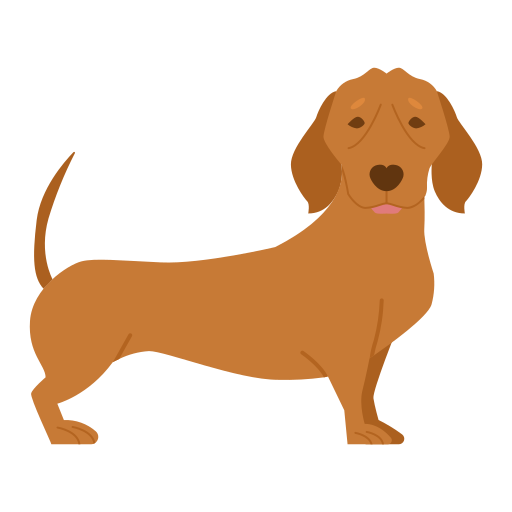
 Dachshund
 Ask almost anyone to describe a dachshund and you will get some version of the same picture: a fragile little lap ornament that exists to be carried in a tote bag and dressed as a hot dog every October.
That image is wrong in nearly every way that counts.
The original dachshund was built to squeeze into a pitch black tunnel, corner an animal roughly its own weight that had claws and a genuinely terrible attitude, and hold the line until a human arrived with a shovel. Badgers, specifically. Furious ones.
The myth survives because of the shape. Short legs and a long spine read as delicate to human eyes, and once a dog looks breakable, people start treating it like furniture instead of a working animal with a job history.
Meanwhile the dog itself has no idea it is supposed to be dainty.
Here are eight things about this breed that tend to surprise even people who already own one.
1. The Name Is a Job Description, Not a Cute Nickname
German speakers did not sit around brainstorming an adorable label. Dachs means badger. Hund means dog. Badger dog. Done.
That bluntness tells you everything about what these dogs were for.
The Design Makes Sense Once You See the Purpose
Every feature people find funny was a specification. The long body fits a tunnel. The short legs keep the chest low. The oversized paws shovel dirt backward with startling efficiency, which is why your flower bed keeps developing mysterious craters.
Even the loose skin around the neck had a reason: it let the dog twist and back out of tight spaces without tearing.
A dachshund is not a small dog with an odd shape. It is a purpose built tunneling machine that happens to fit on your couch.
2. That Enormous Bark Is a Feature, Not a Flaw
Anyone who has heard a ten pound dachshund announce the mail carrier knows the sound does not match the animal. The volume seems to arrive from a dog three times the size.
That was deliberate.
Hunters needed to hear their dog underground, sometimes through several feet of packed soil. A yappy little squeak would have been useless. Breeders selected for a deep, carrying bark that could travel through dirt and reach a person standing above.
So when your dachshund loses its mind over a squirrel at 6 a.m., it is not being dramatic. It is performing centuries of careful selective breeding, just aimed at the wrong target.
3. There Are Way More Varieties Than People Realize
Two sizes. Three coat types. The combinations produce dogs that feel genuinely different from one another.
Standard Versus Miniature
Standards typically run 16 to 32 pounds and were the original badger specialists. Miniatures usually sit under 11 pounds and were developed later for smaller quarry like rabbits.
Same silhouette, very different presence in a room.
Smooth, Longhaired, and Wirehaired
The smooth coat is the classic look most people picture. Longhaired dachshunds carry spaniel influence and tend to be a touch softer in temperament, at least as a general pattern.
Wirehaired dachshunds are the wildcards. Terrier blood went into that coat, and it shows up in the personality as a kind of cheerful chaos. Owners describe them as comedians with opinions, which is generous but not inaccurate.
4. The Nose Is Seriously Underrated
Dachshunds belong to the hound group, and not as a technicality. They track.
A dachshund following a scent enters a trance state where human voices simply stop registering. You can call, whistle, wave a treat, offer a car ride. The nose has taken over and management is no longer accepting requests.
Some regions still use them for tracking wounded game because the combination of low nose position and relentless focus works exceptionally well over difficult ground.
This is also the honest answer to the recall question. Your dog is not ignoring you out of spite. It has been temporarily promoted to a different department.
5. The Blanket Obsession Has an Explanation
Every dachshund owner learns to check the couch cushions before sitting down.
They burrow. Under blankets, into laundry piles, beneath the duvet at 2 a.m. with the determination of a small furry drill.
Why the Instinct Runs So Deep
Tunneling was the entire occupation. A dog bred over generations to seek out dark, enclosed, warm spaces does not switch that off because it now lives in a suburban house with central heating.
The blanket is the tunnel. Your bed is the tunnel. The gap behind the sofa is, tragically, also the tunnel.
Give them a proper cave bed or a designated burrow blanket and you will watch an instinct click into place with almost comic satisfaction.
The burrowing is not a quirk. It is a job the dog kept doing after the job ended.
6. That Long Back Deserves Real Respect
Here is the part where the "fragile" stereotype contains a grain of truth, though not in the way people mean.
Dachshunds carry a gene that produces their distinctive proportions, and it comes with a meaningful risk of intervertebral disc disease. The spine is long, the support structure is short, and the math is not forgiving.
Practical prevention matters more than wrapping the dog in bubble wrap.
Keep them lean, because extra weight loads the spine directly. Add ramps or steps at the couch and bed so they are not launching themselves down repeatedly. Use a harness rather than a collar for walks. Discourage the sustained upright begging pose, charming as it is.
None of that turns a dachshund into a delicate creature. It just means the hardware needs sensible maintenance, and any specific concerns are worth a conversation with your vet rather than a forum thread.
7. Stubbornness Is Actually Independent Decision Making
Trainers love to call dachshunds difficult. Owners nod along, exhausted.
But consider the original working conditions. The dog is alone, underground, out of sight, facing an animal that can genuinely hurt it. No handler is available to issue instructions. There is no time to wait for guidance.
A dachshund that looked around for permission would have been a dead dachshund.
So the breed was selected for animals that assess a situation and decide on their own. That trait did not vanish when the badgers did.
What This Means for Training
Your dachshund understands "sit" perfectly well. It is simply running a quick internal cost benefit analysis first.
Short sessions work better than long ones. Food motivates most of them enormously. Repetition without variety causes them to visibly check out, which feels like defiance but is closer to boredom.
Frame it as negotiation rather than obedience and the whole relationship improves.
8. They Have a Genuinely Strange Place in History
For a small breed, dachshunds keep turning up in unexpected corners of the past.
Queen Victoria adored them, which helped launch the breed’s popularity across Britain in the 1800s. Picasso owned a dachshund named Lump who appears in a remarkable number of his works and reportedly ran the household.
The first official Olympic mascot was a dachshund. Waldi represented the 1972 Munich Games, and the marathon route was designed to trace his shape.
Not many breeds can claim a royal endorsement, a Picasso cameo, and an Olympic marathon route drawn in their own silhouette.
The Chapter Nobody Mentions
The breed also took a hit during both World Wars, when its German associations made it a target of public hostility in Britain and the United States. Owners were harassed. Registrations collapsed.
American kennel clubs briefly pushed the name "liberty pup" in an attempt to soften the association, which worked about as well as you would expect.
The breed recovered, obviously, and did so at speed. Turns out a dog with that much personality is difficult to keep down for long.