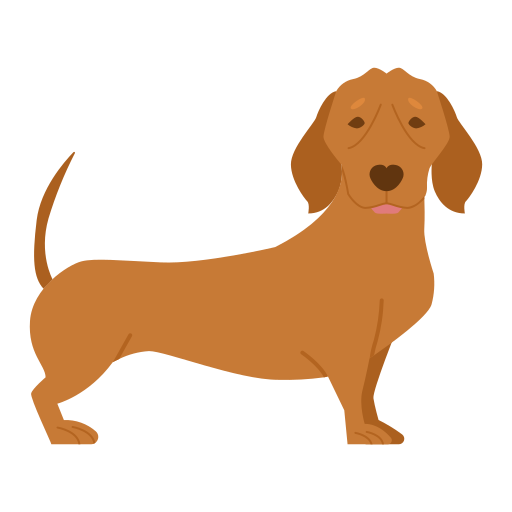
 Dachshund
 Short hair does not mean low maintenance, and any dachshund owner who has vacuumed a black sofa in July already knows it.
That myth has convinced thousands of people that a smooth doxie is basically a self-cleaning appliance. Meanwhile the wirehaired crowd assumes their dog needs a professional every six weeks, and the longhaired owners quietly panic every time their dog rolls in something.
Here is the thing about grooming a dachshund: the body shape changes everything. Low clearance, deep chest, floppy ears, short legs, and a spine that does not appreciate being hoisted around like a sack of flour.
So the standard dog grooming advice only half applies.
What follows are ten hacks that actually account for the sausage-shaped reality of the breed. Some will save you time. A couple might save you a vet bill.
1. Groom on the Floor, Not the Counter
Most grooming guides tell you to elevate your dog. Table, counter, washer lid, whatever gets them to your height.
For a breed with a documented history of disc problems, that advice is a little reckless. Every lift up and every jump down loads that long spine.
Work on the floor instead. Sit cross legged, put a towel or a yoga mat down for traction, and let your dog stand or lie on your lap.
A dachshund’s back is the single most expensive thing you own. Groom accordingly.
If you genuinely need the height for your own back, use a ramp or lift the dog with two hands: one supporting the chest, one supporting the rear.
The Two Hand Rule
Never scoop a doxie under the armpits and let the back half dangle. That is the exact motion that torques the spine.
Chest and rump, always. Make it muscle memory.
2. Use a Rubber Curry Brush on Smooth Coats
Smooth dachshunds shed. They shed constantly, in tiny needle-like hairs that weave themselves into upholstery with alarming commitment.
A slicker brush mostly skates across a smooth coat and accomplishes very little.
What actually works is a rubber curry brush or a grooming mitt. The rubber grabs loose hair through friction instead of trying to comb it out, and it doubles as a massage, which most smooths find deeply agreeable.
Five minutes, twice a week, in circular motions. You will be genuinely alarmed by the pile you produce.
3. Brush Longhairs Before the Bath, Never After
This one is counterintuitive and it trips up a lot of people.
Water tightens mats. A small tangle behind the ear that would have combed out in ten seconds dry becomes a solid felted knot once it gets wet, and then it needs scissors.
So the order matters: brush first, then bathe.
Longhaired dachshunds mat in four predictable places: behind the ears, in the armpits, along the trouser feathering on the back legs, and under the tail. Check all four before the water runs.
Working Out a Mat Without Scissors
Hold the base of the mat close to the skin so you are not pulling on the follicle.
Work from the outside edge inward with a metal comb, teasing a few hairs free at a time. Cornstarch or a detangling spray helps the fibers slide past each other.
Patience beats scissors here, because a mat cut out of feathering leaves a hole that takes months to grow back in.
4. Clean the Ears Every Single Week
Those gorgeous velvet ears are also a lid. They trap warmth and moisture against the ear canal, and yeast finds that arrangement delightful.
Weekly is not excessive for this breed. It is preventative.
Use a vet approved ear cleaner, squeeze it into the canal, massage the base of the ear for about twenty seconds (you want that squelching sound), then let your dog shake. Wipe the visible parts with a cotton pad afterward.
Cotton swabs stay in the drawer. They push debris deeper and risk the eardrum.
If you notice a sweet or musty smell, redness, or head shaking that will not stop, that is a vet visit, not a cleaning problem.
5. Wipe the Chest and Belly After Every Walk
Here is a hack nobody mentions. Your dachshund is roughly four inches off the ground.
Everything the world drops, they drag through. Pollen, road salt, lawn treatments, mystery puddles, the works.
Keep a stack of unscented baby wipes or a damp microfiber cloth by the door and do a quick pass along the chest, belly, and legs when you come in.
The dirtiest part of a dachshund is the part you never look at.
This one habit cuts down on itching, ear infections that start as allergen exposure, and the number of full baths you need in a year.
6. Bathe Less Than You Think
Speaking of which: most dachshunds do not need a bath more than once every four to eight weeks.
Overbathing strips the coat oils, which leads to dry flaky skin, which leads to scratching, which leads to more dirt sticking to irritated skin. It is a loop.
Use a gentle oatmeal or hypoallergenic shampoo. Rinse twice as long as feels necessary, because leftover residue is a top cause of itchiness that owners mistake for allergies.
And dry the ears. Always dry the ears.
7. Trim Nails in Weekly Slivers
Long nails change how a dog stands, which changes how weight loads through the spine. For a long backed dog, that matters more than it does for a labrador.
The problem is the quick, that blood vessel inside the nail. Let nails grow long and the quick grows with them, so you cannot make a big correction without pain and bleeding.
The fix is frequency, not force.
The Micro Trim Method
Take a sliver off each nail once a week. Barely anything, just the tip.
The quick recedes in response, and over about two months you can walk the nail back to a proper length without ever hitting blood.
For dogs who hate clippers, a rotary grinder is often a much easier sell, especially if you introduce it while it is switched off and paired with cheese.
8. Get Into the Chest Folds and Neck Wrinkles
Dachshunds have a prominent forechest, the keel, and older or heavier dogs develop soft folds around the neck and shoulders.
Moisture collects there. So does shampoo residue, drool, and food.
Run a finger along the keel and under the collar line during your weekly session. If it feels damp or smells sour, clean it with a soft cloth and dry it thoroughly.
Then check the collar itself. A damp collar sitting against skin is its own small ecosystem.
9. Give Wirehairs a Hand Strip, Not a Clipper Cut
Wirehaired dachshunds have a double coat: a harsh protective outer layer and a soft insulating undercoat.
Clippers cut the harsh outer hairs, and those hairs do not grow back with the same texture. Do it a few times and the coat goes soft, fluffy, and permanently different.
Hand stripping pulls the dead outer hairs out at the root so new harsh coat grows in properly. It sounds brutal and it is not, provided the hair is genuinely ready to release.
A clipped wire coat is a decision, not a haircut. Once the texture goes, it does not come back.
You can learn to do this yourself with a stripping knife and a lot of YouTube, or find a groomer who lists hand stripping as a service. Plenty do not.
Between full strippings, tidy the eyebrows and beard with thinning shears so your dog can see and does not carry half their dinner around.
10. Build a Five Minute Weekly Ritual
The biggest grooming mistake is treating it as an occasional event.
Occasional events are big, stressful, and take an hour. Rituals are small and boring and your dog stops caring.
Pick a consistent time, keep a small kit in one place (brush, ear cleaner, wipes, clippers, treats), and run the same sequence every week: ears, coat, folds, nails, quick belly check.
Why the Same Order Matters
Dogs relax into predictability. When your doxie knows ears come first and a treat comes last, the whole thing stops being a negotiation.
You also catch things early. Lumps, ticks, hot spots, a cracked pad, an ear that smells slightly off.
Five minutes a week is more or less the entire game, and it is far less effort than the alternative: standing in a bathroom on a Saturday with a wet, deeply offended sausage dog who has decided this is the worst day of their life.