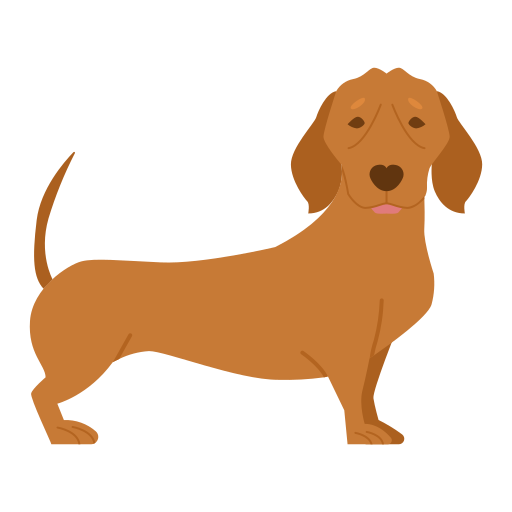
 Dachshund
 Scent receptors, not tail wags, do most of the emotional talking in a dachshund household. That famously long snout houses somewhere around 125 million of them, and scent hound brains hand over an enormous share of processing power to whatever the nose drags in.
Which means the wag you have been treating as the headline is closer to a footnote.
Owners of the breed are usually fluent in the loud stuff. Zoomies down the hallway. The outraged bark at a delivery van. The full body flop onto a couch cushion, delivered with all the subtlety of a stage actor dying in Act Three.
Underneath that racket, though, runs a quieter dialect built from scent, pressure, temperature, and timing. Learn it, and your dog stops seeming merely quirky and starts seeming genuinely articulate.
Love Smells Like Laundry
Ask a dachshund to describe you and it would not mention your face. It would mention your scent signature, which is roughly a thousand times more informative and considerably harder to fake.
This is why the sock thing happens.
The Sock Situation
You know the one. A single worn sock vanishes from the laundry basket and reappears in the dog bed, arranged with great care, guarded like a family heirloom.
That is not mischief. That is a love letter with terrible handwriting.
Scent hounds self soothe by surrounding themselves with the smell of their attachment figures. A garment that carries a full day of your body chemistry is, to a dachshund nose, essentially a photograph of you that also hums.
A dachshund does not steal your laundry because it smells bad. It steals your laundry because it smells like the safest thing in the world.
Fresh from the dryer? Ignored completely. Worn for nine hours and left on the bathroom floor? Priceless.
The Doorway Sniff Test
Watch what happens the moment you walk in the door.
Most dogs greet. A dachshund audits. There is usually a quick, businesslike pass along your shins, your shoes, the hem of your jeans, and it takes about four seconds.
Your dog is reading where you went, who you touched, whether another animal was involved, and what your stress chemistry looked like while you were gone. Only after the audit clears does the affection begin.
Skipping the sniff and going straight for a hug interrupts the sentence before your dog finishes reading it. Stand still for those four seconds. It matters more than you think.
The Burrow Invitation
Badger hunting left this breed with an instinct that looks, to modern eyes, like a blanket obsession.
It is not an obsession. It is architecture.
Digging into fabric, tunneling under duvets, and constructing a nest against something warm are all expressions of a very old drive to occupy a defensible space. What makes it a love language is who gets invited in.
Reading the Blanket Signals
A dachshund burrowing alone in the corner of the room is regulating itself. Perfectly healthy, nothing to read into.
A dachshund burrowing against the back of your knees while you sleep is making a statement about hierarchy, safety, and trust that would take a human several therapy sessions to articulate.
The most flattering version is the one people rarely notice: your dog digs a nest, settles in, then gets back up and re drigs it three feet closer to you. Same blanket, same effort, different coordinates. That relocation is the whole message.
Pay attention to which end of you they choose, too. Feet mean comfortable companionship. Torso means bonded. Face and neck usually mean something felt off today and your presence is being used as medicine.
Pressure Is a Word
Physical contact from a dachshund is rarely random, and the amount of body weight involved works almost like volume control.
The Lean
A dachshund leaning its shoulder into your calf while you stand at the kitchen counter is not asking for food. It is asking for nothing at all, which is precisely what makes it meaningful.
Leaning is an anchoring behavior. Your dog is borrowing your stability, and the willingness to put weight into another creature is a trust signal that dogs do not distribute casually.
The Chin Drop
Then there is the chin, dropped onto your foot, your thigh, the arm of the chair you happen to be occupying.
Resting the head means surrendering a certain amount of vigilance. In a breed genetically engineered to charge into dark tunnels after animals with claws, that surrender is not a small gesture.
Vigilance is currency for a dachshund. Every time your dog rests its chin on you and stops watching the room, it is spending some of that currency on you.
The Sound Nobody Translates
Dachshunds are famously vocal, and most of that vocabulary gets lumped under the single unhelpful heading of "barky."
Bark, howl, grumble, and sigh are separate words, though, and two of them are aimed directly at you.
The Grumble
Low, rolling, delivered while being petted or while circling into a nap. Owners frequently mistake this for a growl and pull their hand back.
Nine times out of ten it is a contentment vocalization, closer to a cat’s purr than to any warning. The tell is the body: loose spine, soft eyes, tail neutral or slowly swaying. Real warnings arrive with a stiff frame and a very still tail.
The Sigh That Means Everything
Three seconds after settling. A long exhale through the nose, sometimes with a small shudder at the end.
That sigh is a nervous system downshifting, and dogs overwhelmingly produce it in the presence of someone they consider safe. Hearing it means you have been classified as low threat, high value, which is about the highest rating on offer.
The Tail Tells Only Half the Story
Tail reading is where most owners get overconfident, and the dachshund tail is genuinely tricky because it is short, thick, and carried high by default.
A fast wag at hip level with a wiggling rear end is joy. A slow, high, stiff wag is arousal or uncertainty, not happiness, and it frequently precedes a bark.
The soft, low, almost lazy sweep that happens while your dog is lying down and looking at you? That one is affection in its purest form, and it costs the dog almost nothing to produce, which is exactly why it is honest.
Answering Back in Their Language
Fluency runs both directions. Once you know what your dog is saying, you can respond in kind, and the change in the relationship tends to show up within a week or two.
Speak in Scent
Leave a worn shirt in the crate or bed before you go out. Not a clean one.
Rub your hands over a new toy before presenting it, so the object arrives already tagged as yours. Novelty plus your scent is a far better combination than novelty alone.
Resist washing the dog bed cover every week. Your dog has spent months building a scent profile in that fabric, and stripping it back to detergent is the olfactory equivalent of repainting someone’s bedroom while they are at work.
Match Their Pace
Greet low and slow. Crouch, let the audit happen, then make contact.
Offer the back of your hand before the top of the head, since hands descending from above read as pressure rather than warmth to a dog whose eye level sits eight inches off the floor.
The fastest way to a dachshund’s heart is to stop rushing it. This is a breed that measures affection in seconds spent, not in enthusiasm displayed.
Return the Contact
When your dog leans, lean back gently. When the chin lands on your leg, rest a hand on the shoulder and leave it there without patting.
Patting is human punctuation. Steady contact is dog punctuation, and steady contact is what your dachshund actually asked for.
And on the evenings when the blanket nest gets rebuilt three feet closer to you for no obvious reason, take the compliment. That is your dog choosing you over the perfectly good spot it already had.