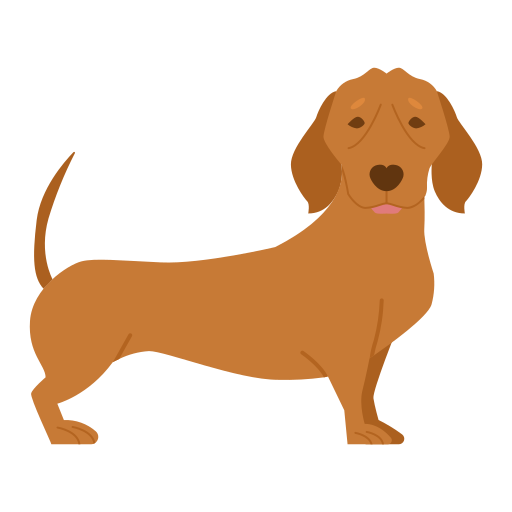
 Dachshund
 I once lost most of a bag of liver treats to a twelve pound dog with legs the length of dinner rolls.
Not stolen, exactly. Hidden. Redistributed around my house with the quiet confidence of an animal opening offshore accounts.
One turned up in a folded towel. Another in a slipper. A third surfaced weeks later in the pocket of a hoodie I had not worn since spring, by which point it had developed a texture I will not describe here.
If you share your home with a dachshund, you already know the routine. The treat goes in the mouth, the dog leaves the room, and the dog returns with an empty mouth and an expression suggesting nothing has happened and also that another treat would be lovely.
There is a reason for this. Several reasons, actually, and almost all of them are older than your couch.
Blame the Badgers
Dachshunds were not designed to be lap ornaments, whatever your dachshund may have told you. They were bred in Germany to chase badgers into underground burrows and then keep working once they got down there.
That job required a very specific kind of animal: low, stubborn, brave to the point of poor judgment, and extremely good at digging.
You cannot switch that off with a bag of kibble and a memory foam bed.
Caching Is Older Than the Breed
Wild canids stash food. Wolves do it, foxes are famous for it, and coyotes will bury a surplus meal and come back days later to collect.
The logic is simple. Food arrives unpredictably, so anything you cannot eat right now becomes tomorrow’s insurance policy.
Your dachshund has never once worried about tomorrow’s food supply. The instinct does not care. Instinct is not required to check the pantry before it fires.
A dachshund does not experience a treat as a snack. It experiences a treat as an asset, and assets require storage.
The Couch Is Just Softer Dirt
Watch closely the next time your dog hides something. There is a specific move involved, and it is the same move every time.
The treat gets placed. Then the nose comes down and pushes forward, again and again, tucking imaginary soil over the top with tiny deliberate shoves.
That is a burying motion. Your dog is covering a hole that does not exist, in a substrate that is technically a throw blanket, because the software does not know the difference and never will.
Hardwood floors offer nothing. Laundry piles, however, offer everything: they are soft, they move, and they smell reassuringly like you.
What the Hiding Actually Means
Most owners assume something is wrong. Usually the opposite is true.
Abundance, Not Anxiety
Dogs cache when supply outpaces appetite. Your dachshund is not hoarding because it fears starvation; it is hoarding because you keep handing over more food than one small stomach can reasonably process in an afternoon.
That is a comfortable dog making a comfortable decision.
The behavior tends to spike after holidays, after a new bag of chews enters the house, or after a guest discovers that a dachshund will make direct, sustained, soul deep eye contact for a single piece of cheese.
When It Is Guarding Instead
Here is where you need to pay attention, because caching and resource guarding look similar from across the room and are not remotely the same thing.
Caching is quiet and private. The dog hides the item, wanders off, and forgets about it until Tuesday.
Guarding involves the dog staying with the stash. Look for stiffening, freezing over the spot, hard staring, a low grumble when you walk past, or a sudden gulp as you approach.
Hiding is about the future. Guarding is about you. Telling those two apart is most of the work.
Occasional guarding is normal dog behavior and not a moral failing. Escalating guarding is worth a conversation with a trainer who uses reward based methods, before it becomes a habit with teeth in it.
The Boredom Variable
A dachshund with nothing to do will invent something to do, and treat logistics is a genuinely satisfying project for a scent driven brain.
Under exercised dogs hide more. Mentally understimulated dogs hide significantly more.
The Usual Crime Scenes
Every dachshund household develops its own map. The categories, though, are remarkably consistent across the breed.
Soft Furnishings
Couch cushions win by a wide margin, particularly the gap where the cushion meets the back of the sofa.
Dog beds come second. Your laundry basket takes bronze, and honestly it earned it.
Houseplants
Actual dirt in an actual container. For a dog operating on badger firmware, a fiddle leaf fig is not decor, it is a vault.
Check the soil. You will find things.
Your Bed
Under the pillow. Not near the pillow, not beside the pillow: under it, tucked with the care of someone hiding jewelry from a houseguest.
There is something almost sweet about it, right up until you roll over at midnight onto a bully stick.
Should You Let Them Do It?
Mostly, yes. This is a normal behavior performed by a normal dog, and stamping it out entirely would mean fighting several thousand years of hardware for no real benefit.
But there are limits, and they are worth knowing.
When It Stays Harmless
Dry biscuits, freeze dried treats, and anything shelf stable can sit in a slipper for a week without consequence. Let the dog have its hobby.
Sweep the usual spots once a week and move on with your life.
When It Becomes a Problem
Anything wet, meaty, or perishable changes the math completely. A hidden piece of chicken becomes a science experiment, and dachshunds have no policy against eating the results.
Ants find these stashes faster than you will. So do flies.
The rule of thumb is simple: if you can find it, laugh about it. If you cannot find it, follow the ants.
There is also a sharp increase worth flagging. A dog that suddenly starts hiding food obsessively, or hoarding when it never did before, sometimes has something else going on, and a vet visit is a reasonable next step rather than an overreaction.
How to Work With It Instead of Against It
The goal is not elimination. The goal is redirection, which is easier and considerably more fun.
Build Them a Legal Vault
Give your dog a designated stash spot: a cardboard box with old towels inside, a snuffle mat, or a dedicated blanket in a corner.
Hide a treat there yourself, let your dog watch you do it, and act delighted when the dog finds it.
Dachshunds are enthusiastic about anything that involves burrowing and food at the same time, which is to say they will take to this almost immediately.
Trade, Never Snatch
Grabbing a stash out from under your dog is the single fastest way to turn casual caching into genuine guarding.
Toss a better treat a few feet away instead. Collect the old one while your dog is busy.
You want your approach to predict good things, not confiscation.
Downsize the Delivery
Smaller treats get eaten on the spot. Large treats get filed away for later.
Break chews into pieces. Portion the daily allowance so it roughly matches actual appetite rather than exceeding it by three or four biscuits.
Give the Nose a Job
Scatter feeding in the yard, a simple find it game with kibble in cardboard tubes, or a snuffle mat at dinner will all burn through the same mental fuel that powers the hiding.
Ten minutes of nose work exhausts a dachshund more thoroughly than a mile of walking. Use that.
What Nobody Warns You About
The stashes outlive the memory of them. You will move a bookshelf in three years and find a petrified biscuit behind it, and you will know exactly who is responsible.
Guests become unwitting participants. A visitor sets down a bag, and by the time they leave there is a dental chew in it.
And there is the moment, eventually, where you catch your dachshund in the act: nose pushing invisible dirt over a treat placed carefully in a pile of clean laundry, absolutely convinced the operation is going unobserved.
Say nothing. Let the dog have this one.