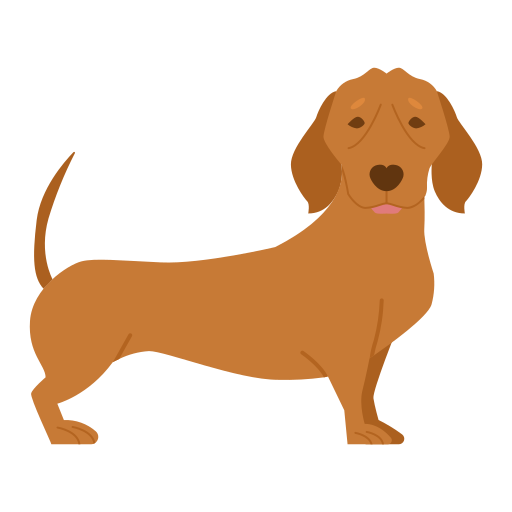
 Dachshund
 Before you understand what a dachshund actually is, life with one feels like a series of baffling mysteries. The barking at nothing. The tunneling under blankets. The absolute refusal to come inside when there’s a suspicious patch of dirt to investigate.
After you understand? All of it clicks into place.
That stubborn streak stops feeling like defiance and starts looking like exactly what it is: a working dog doing its job in a living room instead of a badger den.
Here are five traits that explain the wonderfully strange little animal currently glaring at you from inside a laundry basket.
1. That Body Was Engineered on Purpose
Long spine. Short legs. Chest like a barrel with a paddle attached to each corner.
Nothing about the dachshund’s shape was an accident. German breeders spent generations shaping a dog that could squeeze into a badger tunnel, brace itself against the walls, and drag out an angry animal roughly its own size.
The Chest Is the Secret Weapon
Look at that keel-shaped sternum sticking out in front. It gives the lungs room to work in tight spaces, which matters enormously when you’re doing hard physical labor several feet underground with limited airflow.
Those front paws turn slightly outward, too. That’s not a flaw, it’s a shovel design.
A dachshund isn’t a small dog with an odd shape. It’s a precision tool that happens to enjoy naps.
What It Means for You
The engineering has a cost, and it’s worth knowing. That long back needs support: no leaping off couches, no stairs when you can avoid them, and a healthy weight kept in check.
Ramps are cheap. Spinal surgery is not.
2. The Nose Runs the Whole Operation
Dachshunds are scent hounds, and that fact rearranges everything else about their behavior.
When your dog suddenly stops mid-walk and refuses to move, it isn’t being difficult. Something arrived on the breeze that is, in that exact moment, the most important thing in the known universe.
Their olfactory ability is genuinely remarkable. They were bred to track blood trails through undergrowth and follow a badger’s scent into a hole in the ground, which requires a level of nose that most companion breeds simply don’t possess.
Scent Beats Sight Every Time
Call your dachshund while it’s locked onto a smell and you may as well be talking to a fence post.
This is not a training failure. The nose has temporarily taken command of the ship, and the ears have gone off duty.
Give the Nose a Job
Snuffle mats. Scattered kibble in the grass. A treat hidden under one of three cups.
Ten minutes of nose work tires a dachshund out more thoroughly than a mile-long walk, and that’s not an exaggeration.
Owners who figure this out early tend to have calmer dogs. Owners who don’t tend to have a dog that redecorates the baseboards.
3. Stubbornness Is Actually Independent Problem Solving
Let’s reframe the most complained-about dachshund trait, because the complaint misses the point entirely.
A badger hunter goes into a tunnel alone. No handler. No commands. No backup.
Once that dog disappears underground, every decision it makes is its own, and hesitation gets it hurt. Breeders selected hard for dogs that would think independently and commit to their choices without waiting for permission.
The trait you’re calling stubborn is the exact quality that kept this breed alive underground for three hundred years.
Why "Sit" Gets a Blank Stare
Border collies want to know what you want. Dachshunds want to know what’s in it for them.
That’s a different negotiation, and it requires different tactics.
Training That Actually Lands
Keep sessions short and stop before boredom sets in. Make the reward genuinely worth it, meaning real food, not a dry biscuit you found in the back of the pantry.
Repetition drills fail badly. Games work beautifully.
And house training? Expect a longer runway than you would with most breeds, plus a dog that has strong opinions about going outside in the rain.
4. The Bark Is a Feature, Not a Bug
Yes, it’s loud. Yes, it’s disproportionate to the animal producing it. Yes, the mail carrier has heard it.
That volume was deliberately bred in.
A dachshund working underground needed a bark that could travel up through packed earth so the hunter above could locate the dog, dig down, and get them both out. Quiet dachshunds didn’t get found, so quiet dachshunds didn’t get bred.
The Vocal Range Is Wider Than You Think
Spend time with one and you start distinguishing between them. The alert bark. The demand bark. The low grumble aimed at a plastic bag that moved wrong.
There’s also the full-body howl, usually triggered by a siren, which most owners find hilarious exactly once before it starts happening at 3 a.m.
Managing the Volume
You will not train the bark out. You can absolutely train when it happens.
Teach a solid "quiet" cue and pay for silence rather than just interrupting noise. Block the window view of the sidewalk if the sidewalk is the trigger.
And here’s the part people skip: barking that ramps up over weeks usually points at boredom rather than temperament. Bored dachshunds get loud, and the fix is enrichment, not correction.
5. The Attachment Is Almost Comically Intense
Ask anyone who lives with one. The dachshund does not simply like its person. It selects a human and then commits with the fervor of a small furry cult member.
They follow you room to room. They sit outside the shower. They insert themselves between your body and the blanket with the confidence of an animal who believes it holds the deed to the bed.
Where the Burrowing Comes From
That blanket tunneling is ancient wiring. Denning instinct, straight from the tunnel work, expressed on your duvet at 9 p.m.
Give them a proper cave bed and watch what happens. Most dachshunds will pick it over anything else in the house, though they’ll still prefer your bed if given a vote.
Loyalty this concentrated is a gift, right up until the moment you try to leave the house alone.
The Flip Side Worth Watching
Intense bonding makes this breed prone to separation anxiety, and that’s the honest tradeoff.
Build independence early. Practice short absences. Feed meals in a separate room occasionally. Make your departures boring and your returns unremarkable, because drama on either end teaches the dog that your leaving is an event worth panicking about.
A dachshund that can be alone for a few hours without unraveling is a happier dog, full stop.
Living With the Package
These five traits don’t operate separately. They stack.
The nose finds something, the independence decides to pursue it, the bark announces the discovery, the body squeezes into somewhere it absolutely should not fit, and then the whole operation ends with the dog demanding to be carried back to the couch and tucked in.
Understanding the design behind the behavior changes the whole relationship. You stop fighting a dog that seems irrational and start working with an animal whose logic is perfectly consistent, just aimed at a job description written two hundred years ago in a German forest.
That shift is everything. It turns a frustrating dog into a fascinating one, and it turns you from an owner into someone who actually speaks the language.