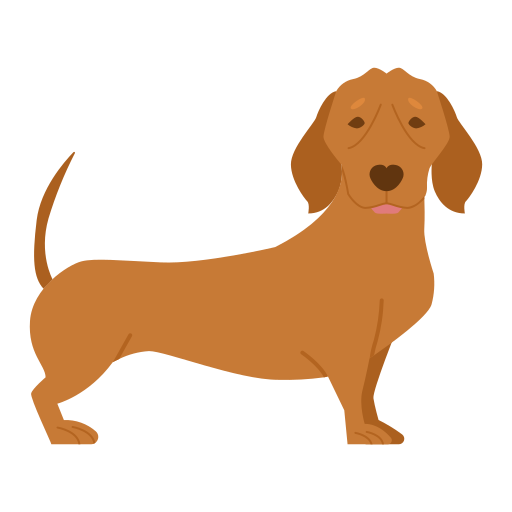
 Dachshund
 That sound at 6:12 in the morning, the one that starts low in the chest and climbs into a siren pointed straight at the neighbor’s fence, is not a behavior problem.
It’s a resume.
Underneath the sausage jokes and the sunbeam naps sits a dog who was purpose built to crawl into a dark tunnel and pick a fight with a badger. Nobody consulted the breed about the switch to apartment living. The wiring stayed exactly where it was.
So when your hound spends eleven hours a day with nothing to hunt, nothing to find, and nothing to solve, that energy does not evaporate. It gets reassigned.
Usually to your baseboards.
The Badger Hunter Living in Your Living Room
Herding breeds get all the credit for being "working dogs," and meanwhile the long dog on your couch is quietly one of the most job-hungry animals in the house.
The build tells the story. Short legs for burrowing. A chest like a barrel for lung capacity underground. A voice loud enough to be heard through several feet of packed dirt. A pain tolerance that borders on unreasonable.
That is not a lap dog with a design flaw. That is a specialist.
A bored dachshund does not sit quietly and wait for you to notice. A bored dachshund opens its own business.
What "a job" actually means
Nobody is suggesting you buy a badger.
A job, in the practical sense, is any repeatable activity with a beginning, a challenge, and a clear finish. Your dog starts it, works at it, and succeeds at it. That last part matters more than most people realize.
Exercise burns fuel. A job burns brainpower, and brainpower is the tank that never seems to empty on its own.
Twenty minutes of real problem solving will flatten a dachshund in a way that an hour of walking around the block simply will not.
Signs Your Hound Is Currently Unemployed
Most owners describe these as personality quirks. They’re closer to job applications.
The barking that has no off switch
Alert barking is the breed doing exactly what it was paid to do for three hundred years: announce the target and hold the position.
If the only thing happening in your dog’s day is a mail carrier and a squirrel, guess what becomes the target.
Destruction with a theme
Pay attention to what gets destroyed. Dachshunds rarely wreck things at random.
They tunnel. Under the comforter, into the couch cushions, through the laundry basket, down between the sofa arm and the frame. A dog who has dismantled the same corner of the same blanket four times this week is not being spiteful; that dog is digging a den and doing a decent job of it.
Velcro behavior that turned into anxiety
Following you room to room is normal for the breed. Panicking when you close the bathroom door is not.
A dog with zero independent purpose starts treating you as the only interesting thing in the building. That’s a heavy load for one person to carry.
The dachshund who has retired at four years old
Occasionally the opposite happens. Instead of chaos, you get a dog who sleeps eighteen hours a day, ignores toys, and shows interest in nothing except dinner.
Owners call this "calm." Sometimes it is. Sometimes it’s a shut-down brain that stopped expecting anything to happen.
Jobs That Suit a Long Dog
The good news: the breed’s ideal work costs almost nothing and fits in your living room.
Nose work, the undisputed champion
Scent work is the single best return on investment for this breed, full stop.
Start absurdly easy. Show your dog a treat, let them watch you set it behind a chair leg, then release them with a consistent cue like "find it." Celebrate like they solved a murder.
Once they understand the game, stop letting them watch. Hide three or four pieces around one room while they wait in another. Build from there into whole-house searches, then into scented cotton swabs tucked into cardboard boxes if you want to get fancy.
A twelve-year-old with a bad back can play this. A nine-week-old puppy can play this. That’s rare.
Ten minutes of searching will do more for your dog’s mood than an hour of walking, and it costs you nothing but a handful of kibble.
Turn dinner into work
Free food from a bowl is the most wasted opportunity in the average dog’s day.
Snuffle mats, puzzle feeders, rolled towels with kibble tucked in the folds, muffin tins covered with tennis balls: all of it converts a thirty-second meal into a fifteen-minute project.
Scatter feeding works too. Toss the portion across the yard or the rug and let them hunt it down, one piece at a time.
Give the digging somewhere legal to go
Fighting the instinct to dig is a losing battle. Redirecting it is easy.
A cheap plastic kiddie pool filled with play sand, torn paper, or a pile of old towels becomes the sanctioned dig site. Bury toys and treats in it. Make it the most rewarding hole on the property.
Your flower beds will notice the difference within a week.
Real sports for real instincts
Two organized sports were practically built for this breed. Earthdog trials send dogs through underground tunnels toward safely caged rats. Barn hunt hides a protected rat tube in a straw bale maze and asks the dog to find it and tell you.
Watch a dachshund realize the game is real. Something switches on behind the eyes that no amount of squeaky toys will ever produce.
Neither sport requires jumping or spinal strain, which brings up the part people skip.
The Spine Question Nobody Wants to Discuss
Roughly a quarter of dachshunds will deal with intervertebral disc disease at some point, and the breed’s proportions are the reason.
That fact does not mean your dog should do nothing. It means you choose the kind of work carefully.
Skip the repeated jumping, the agility hurdles, the couch launches, the twisting frisbee catches. Use ramps. Keep them lean, because every extra pound presses on that long back like a fingertip on a bridge.
Then load up on everything the nose can do, because scent work asks nothing of the spine at all.
Protecting the back and keeping the brain busy are not competing goals. Nose work satisfies both at once.
Trick training counts, and it counts double
Teaching a chain of behaviors (touch, spin, back up, chin rest, "put it away") builds focus and gives your dog a language for asking what comes next.
Five minutes. Twice a day. Genuinely, that’s the dose.
Building It Into an Ordinary Week
None of this requires a schedule taped to the fridge, though nobody will stop you.
Small and daily beats big and occasional
Two ten-minute sessions will outperform one long weekend marathon every single time. Consistency is what convinces a dog that the world is interesting.
Morning search before you leave. Puzzle feeder at dinner. Two or three tricks while the coffee brews.
Rotate before it goes stale
Dachshunds get bored of a solved problem quickly, which is exactly what you’d expect from a dog bred to think independently underground.
Keep three or four games in circulation and swap them every few days. Retire a puzzle for two weeks and it comes back fresh.
Watch for the change
Owners who commit to this usually report the same thing within ten days or so: less frantic barking, deeper sleep, a dog who settles instead of patrolling.
The stubbornness stays. That’s the breed, and honestly, it’s half the charm.
What shifts is the restlessness underneath it, the low hum of a working animal waiting to be given something worth doing.