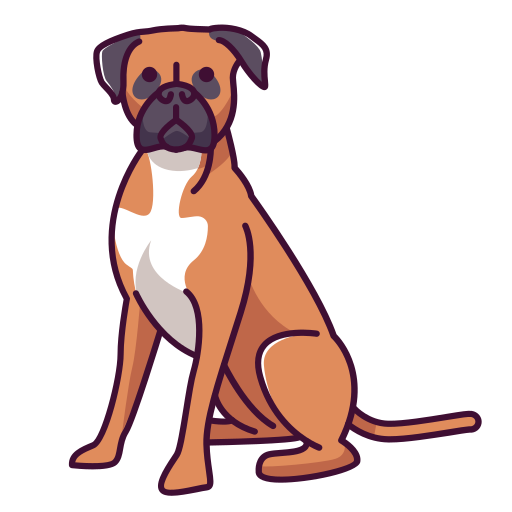
 Boxer
Boxer I spent the first six months with my Boxer convinced I had somehow trained her to be a tripping hazard.
Every time I stood at the kitchen counter, she parked herself directly on my socks. Not near them. On them.
Then I met three other Boxer owners at a training class and realized we were all describing the exact same dog. Same wedged posture, same seventy pounds of muscle folded onto a pair of human feet, same bewildered affection about the whole thing.
Turns out this is not a quirk. It is practically a breed signature.
The Velcro Dog Reputation Is Completely Earned
Boxers get called velcro dogs, and the nickname sticks because it is accurate. Some breeds want to be in the same house as you. Boxers want to be in the same square foot as you.
Foot sitting is the purest expression of that. Your dog gets contact, proximity, and a decent view of the room, all in one move.
Where This Comes From
Boxers were developed in Germany as working companions, not as independent field dogs sent off to make decisions alone. They were bred to stay close to a handler, take direction, and function as a partner rather than a specialist working a distant hedgerow.
That closeness got baked in. Centuries of selecting for dogs who wanted to be near their person produced a breed that finds physical separation genuinely uncomfortable.
Add the guardian history and you get something specific: a dog who wants to be next to you and positioned to react.
A Boxer sitting on your feet is not being needy. She is doing the job her ancestors were shaped for, using the only office she has available.
Decoding What the Foot Sit Actually Means
Not every foot sit means the same thing. Context changes the message, and once you start paying attention, the differences get obvious.
She Is Claiming You
Dogs mark what matters to them, and scent is currency. Sitting on your feet transfers her scent onto you and yours onto her, which is a low key way of saying this one is mine.
It happens more often in multi dog households. If you have two Boxers, watch what happens the second one of them settles on your feet.
The other one will find a way to get closer. Guaranteed.
She Is Watching the Door
Pay attention to which direction she faces. A Boxer who sits on your feet while facing away from you, eyes on the hallway or the front door, is not cuddling.
She is on duty.
That outward facing position is a guarding posture. She has decided your feet are the best spot to monitor the entrance to the room, and she is comfortable because she can feel exactly where you are without having to look.
She Is Cold, and Boxers Are Always Cold
Here is the boring practical answer that explains a shocking percentage of foot sitting: Boxers have thin coats, almost no undercoat, and very little body fat.
They lose heat fast. Your feet are warm.
A Boxer who sprawls across your feet in January is running a heating strategy, not a psychological one. Give her a sunbeam or a heated bed and watch how quickly your feet become optional.
She Is Checking In
Boxers are famously sensitive to household mood. They read tone of voice, tension, and the general emotional weather of a room with unsettling accuracy.
If your dog suddenly parks on your feet during an argument, a stressful phone call, or a thunderstorm, she is doing something closer to comfort seeking. Sometimes she is offering comfort rather than requesting it, and honestly the difference is hard to pin down.
Either way, the message is the same: whatever is happening, she would like to handle it in physical contact with you.
Why Feet and Not Somewhere Else
This question genuinely puzzled me for a while, because a Boxer could pick a lot of places to be close.
The answer comes down to geometry and permission.
Feet Are the Approved Landing Zone
A lot of Boxers learn early that the couch is conditional and the lap is a negotiation. Feet, though, feet are always available.
Nobody ever tells a dog to get off their feet. It is the one piece of human real estate with no rules attached.
It Keeps Her Facing Outward
Sitting between your legs or across your feet lets a dog keep her body oriented toward the room while still touching you. Compare that to lying on the couch beside you, where she has to choose between contact and a good sightline.
The foot position solves both problems at once. From a canine perspective, it is efficient design.
The Lean Is Part of the Package
If you own a Boxer, you know the lean. She sits, then slowly transfers her entire body weight against your shins until you are structurally supporting a small horse.
This is pressure seeking behavior, and it is deeply calming for dogs. The same principle behind weighted blankets applies here, which is why so many Boxers do it without ever being taught.
The lean is not clumsiness. It is a dog voluntarily applying deep pressure therapy, and using your legs as the equipment.
When Foot Sitting Crosses Into Something Else
Most of the time this behavior is delightful and completely benign. Occasionally it is a signal worth taking seriously.
Watch for These Patterns
Trouble looks less like foot sitting and more like an inability to be anywhere else. Panting, pacing, whining, or an obvious spike in distress the moment you cross the room are all worth noting.
Other signs include destructive behavior when you leave, refusal to eat unless you are in the room, and following you into the bathroom every single time with visible anxiety rather than curiosity.
Boxers are a high anxiety breed by nature. That does not mean every Boxer develops separation issues, but it does mean the raw material is there.
Building a Little Independence
None of this requires you to stop letting your dog touch you. The goal is a dog who chooses closeness rather than one who cannot tolerate distance.
Start small. Reward her for settling on a mat two feet away instead of directly on you, using a marker word and a treat the moment she lies down.
Practice brief separations inside the house, closing a door for thirty seconds and returning before she has time to escalate. Build the duration slowly and unpredictably so she never learns to brace for a specific pattern.
Give her jobs that do not involve you. Puzzle feeders, snuffle mats, and frozen stuffed toys teach a Boxer that good things happen independently.
A confident dog can rest in the next room. A dependent dog cannot rest at all unless she is touching you.
Exercise matters here more than most people expect. A Boxer with unspent energy will velcro harder, because sitting on you is at least something to do.
Making Peace With Your New Furniture Arrangement
Assuming everything is healthy, the honest answer is that you should probably just enjoy it.
Foot sitting is one of the clearest compliments a dog can pay you. She has options, she has a bed that cost more than your shoes, and she picked your feet anyway.
A few practical adjustments help. Keep a small rug or bed in the spots where you stand most often, and she will frequently accept that as a close enough substitute.
Teach a clean "back up" cue if you cook. Boxers are enthusiastic, not careful, and a seventy pound dog under a hot pan is a bad combination.
Wear slippers in winter. Your feet are her radiator, and she will absolutely reclaim them the second you sit down again.