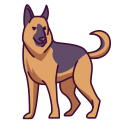
 German Shepherd
 Your beloved German Shepherd just snapped at the mailman, and your heart sank. This wasn’t supposed to happen. These intelligent, loyal dogs are meant to be protectors, not problems. But here’s the truth: aggression in German Shepherds rarely appears out of nowhere. It’s a puzzle with specific pieces, and once you understand what you’re looking at, you can actually fix it.
The good news? You’re not alone, and this isn’t unfixable. Thousands of German Shepherd owners have walked this exact path and come out the other side with calm, confident dogs. Let’s break down exactly what’s happening and, more importantly, what you can do about it starting today.
Understanding the Root Causes of German Shepherd Aggression
Before you can fix the problem, you need to understand what’s actually going on inside your dog’s head. German Shepherds aren’t randomly aggressive. Their behavior always has a reason, even if it’s not immediately obvious to us humans.
Fear-Based Aggression: The Hidden Culprit
Most people assume aggression means dominance. Wrong. Fear is the number one driver of aggressive behavior in German Shepherds. Think about it: when these dogs feel cornered, threatened, or uncertain, their instinct is to protect themselves. That protection often looks like barking, lunging, or snapping.
Common fear triggers include:
- Lack of early socialization
- Previous traumatic experiences
- Sudden environmental changes
- Unfamiliar people or animals entering their space
Your German Shepherd isn’t trying to be difficult. They’re trying to survive what they perceive as a genuine threat.
Protective Instinct Gone Overboard
German Shepherds were literally bred to protect. It’s in their DNA. But sometimes, that protective instinct doesn’t have an “off” switch. Your dog might decide that the neighbor, the delivery driver, or even your friend visiting for coffee is a danger to the household.
When a German Shepherd’s protective instincts aren’t properly channeled and directed, they don’t disappear. They simply get applied to everything, turning your dog into a hypervigilant guardian who never relaxes.
This constant state of high alert is exhausting for your dog and dangerous for everyone around them.
Lack of Mental Stimulation and Exercise
Here’s where many owners get tripped up. German Shepherds are working dogs. They need jobs. When they don’t get adequate physical exercise and mental challenges, all that pent up energy has to go somewhere. Often, it manifests as reactivity and aggression.
| Daily Requirement | Minimum Amount | Ideal Amount |
|---|---|---|
| Physical Exercise | 60 minutes | 90-120 minutes |
| Mental Stimulation | 20 minutes | 45-60 minutes |
| Training Sessions | 10 minutes | 20-30 minutes |
A bored German Shepherd is a ticking time bomb. Their intelligence needs an outlet, or it will create its own entertainment, and you won’t like the results.
Step 1: Assess and Document the Aggressive Behavior
You can’t fix what you don’t understand. Before implementing any training protocol, you need to become a detective. Start documenting every aggressive incident in detail.
What to Track
Create a simple log (use your phone’s notes app if that’s easier) and record:
- When did the aggression occur? (Time of day, day of week)
- Where did it happen? (Inside the house, on walks, at the dog park)
- Who was involved? (Strangers, family members, other dogs)
- What triggered it? (Be as specific as possible)
- How did your dog react? (Barking, growling, lunging, biting)
After tracking for just one week, patterns will emerge. Maybe your dog only reacts to men wearing hats. Or perhaps aggression spikes in the evening when they’re tired. These patterns are gold because they tell you exactly what to work on.
Identify the Threshold
Every German Shepherd has a threshold, the point where they switch from calm to reactive. Your job is to figure out where that line is. For example, your dog might be fine with other dogs at 20 feet away but loses it at 15 feet. That’s valuable information.
Step 2: Rule Out Medical Issues
Stop. Before you do anything else, schedule a vet appointment. Pain and illness can trigger aggressive behavior in dogs who were previously gentle. Conditions like hip dysplasia, arthritis, thyroid problems, or even dental pain can make your German Shepherd irritable and reactive.
What Your Vet Should Check
Ask for a comprehensive examination that includes:
- Complete blood work to identify hormonal imbalances
- Physical examination focusing on joints and spine
- Neurological assessment if the aggression appeared suddenly
- Dental check because tooth pain is agonizing
If your vet finds a medical issue, treating it might resolve the aggression entirely. At minimum, addressing pain will make training significantly easier.
Step 3: Implement Structure and Leadership
German Shepherds crave structure. They need to know who’s in charge and what the rules are. Inconsistency creates anxiety, and anxiety fuels aggression. You’re going to become the benevolent leader your dog desperately needs.
Establish Clear Rules and Boundaries
Start today with these non-negotiable rules:
No furniture privileges until the aggression is resolved. Your dog sleeps on their bed, not yours.
Meal times are earned. Before your dog eats, they must perform a command (sit, down, stay). This reinforces that you control resources.
Doorways and thresholds belong to you. Your dog doesn’t bolt through doors. They wait for your permission.
Leadership isn’t about dominance or fear. It’s about providing clarity, consistency, and confidence so your German Shepherd can relax knowing someone else is handling the decision making.
The “Nothing in Life is Free” Protocol
This is transformative. Your dog gets nothing (food, toys, affection, walks) without first performing a command. It sounds harsh, but it’s actually incredibly calming for German Shepherds. They understand: follow the rules, get good things. Simple. Clear. Effective.
Step 4: Desensitization and Counter-Conditioning
Now we get to the actual behavior modification. This is where you systematically change your dog’s emotional response to their triggers. It takes patience, but the results are permanent.
The Process
- Identify the trigger (let’s say other dogs, for this example).
- Find the threshold distance where your dog notices but doesn’t react (maybe 30 feet).
- Pair the trigger with something amazing. Every time your dog sees another dog at that safe distance, they get high value treats (chicken, cheese, hot dogs). Not kibble. The good stuff.
- Gradually decrease distance over weeks and months, always staying below threshold.
The goal is to rewire your dog’s brain so that other dogs predict treats and good things, not threats. This is counter conditioning at work, and it’s the gold standard for treating fear based aggression.
Patience is Everything
You might only progress five feet closer per week. That’s normal. That’s actually good. Rushing this process will set you back to square one. Slow and steady wins this race every single time.
Step 5: Teach Alternative Behaviors
Your German Shepherd needs to know what to do instead of being aggressive. You can’t just punish the unwanted behavior; you must teach an incompatible replacement behavior.
The “Look at Me” Command
This becomes your emergency redirect. When your dog starts to fixate on a trigger, you ask for eye contact instead. Practice this religiously:
- Say your dog’s name
- When they look at you, mark it (“yes!” or click)
- Reward immediately
- Practice 50 times per day in non stressful situations
When the real trigger appears, you’ll have a trained response to fall back on.
The “Place” Command
Teach your dog to go to a specific spot (bed, mat, crate) and stay there until released. This gives them a job during stressful situations. Doorbell rings? Go to place. Guests arrive? Go to place. It’s a sanctuary behavior that prevents reactive outbursts.
Step 6: Exercise and Mental Enrichment
Remember that energy chart from earlier? Time to put it into action. A tired German Shepherd is a well behaved German Shepherd.
Physical Exercise Ideas
- Long walks (vary the routes to keep it interesting)
- Fetch sessions
- Swimming
- Hiking
- Flirt pole work
- Treadmill training for bad weather days
Mental Stimulation Activities
- Puzzle toys stuffed with food
- Scent work and nose games
- Advanced obedience training
- Trick training
- Hide and seek games
Combine both daily. Your dog’s brain needs as much of a workout as their body. A German Shepherd who spent an hour doing scent work is far less likely to be reactive later that day.
Step 7: Consider Professional Help
Sometimes, you need backup. There’s zero shame in calling a professional, especially if the aggression involves biting or if you feel unsafe.
Who to Hire
Look for a Certified Professional Dog Trainer (CPDT) or a Veterinary Behaviorist. Avoid anyone who promises quick fixes or relies heavily on punishment based methods. You want someone who understands behavior modification science and uses positive reinforcement.
A good trainer will:
- Assess your dog in person
- Create a customized behavior modification plan
- Teach you the skills to continue training independently
- Provide ongoing support and adjustments
The difference between struggling alone for months and seeing progress in weeks often comes down to having an experienced professional guide you through the process.
If finances are tight, many trainers offer virtual consultations at reduced rates. It’s worth every penny.
Consistency: The Secret Ingredient
Here’s the truth nobody wants to hear: you need to be consistent every single day. Miss a day of training? You’ve potentially undone a week of progress. Let your dog rehearse the aggressive behavior once? You’ve reinforced it.
Set phone reminders. Put training sessions in your calendar. Make it as non negotiable as feeding your dog. Because honestly, it should be.
Track your progress weekly. Celebrate small wins. Notice when your dog holds eye contact a second longer or stays calm five feet closer to their trigger. These tiny victories compound into major transformations.
The German Shepherd who lunges at every dog they see can become the German Shepherd who calmly walks past the dog park. It happens. But only with relentless, patient, informed consistency.
You’ve got this.