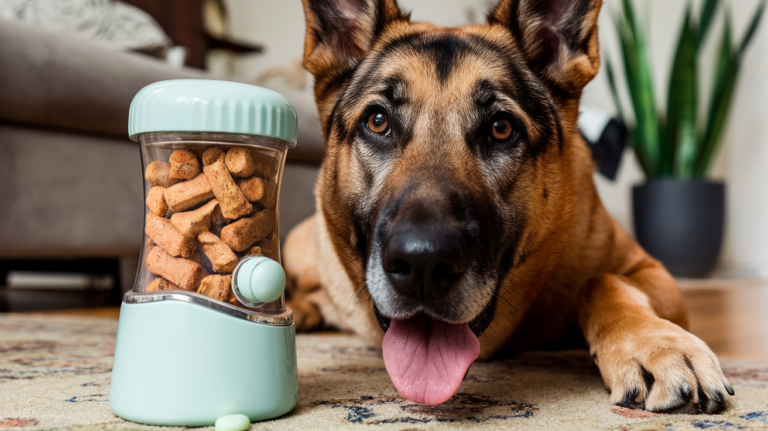
Fearful moments can be tough on both of you. These proven strategies help your German Shepherd feel safe, calm, and confident again.
Fourth of July fireworks explode overhead, and your 80-pound German Shepherd is trying to squeeze behind the toilet. Or maybe it’s the vacuum cleaner that sends your brave guardian dog into a panic. Fear doesn’t discriminate, and it doesn’t care that German Shepherds are supposed to be fearless protectors.
The reality is that fear in German Shepherds is surprisingly common, affecting up to 30% of the breed. But before you resign yourself to years of anxiety-filled episodes, know that change is possible. With the right approach, most fearful behaviors can be significantly reduced or even eliminated. These eight strategies have helped countless GSD owners restore their dogs’ confidence and peace of mind.
1. Create a Designated Safe Space
Every fearful German Shepherd needs a sanctuary, a place where the world can’t reach them. This isn’t about isolation; it’s about providing a reliable refuge where your dog can decompress when anxiety strikes.
Start by identifying a quiet area in your home that’s away from high-traffic zones. This could be a corner of your bedroom, a spare bathroom, or even a walk-in closet. The location matters less than the consistency. Your GSD needs to know this space is always available and always safe.
Set up the space with intention. Include a comfortable bed or crate (if your dog is crate trained), familiar blankets that smell like home, and perhaps a piece of your clothing. The scent factor cannot be overstated; your smell provides powerful reassurance to an anxious dog. Some owners add white noise machines or calming music to help mask triggering sounds.
Remember: A safe space is only effective if it’s introduced during calm moments, not just during crisis. Let your dog explore and enjoy this area when they’re relaxed, so it becomes associated with positive feelings rather than just fear.
The beauty of this strategy is its versatility. Whether your shepherd is afraid of thunderstorms, strangers, or loud noises, they can retreat to their safe space whenever needed. Never force them out or disturb them while they’re using it; this is their domain, and respecting that boundary builds trust.
2. Master the Art of Calm Energy
German Shepherds are emotional sponges, absorbing and reflecting the energy of their humans. If you’re anxious about their fear, they’ll sense it and interpret it as confirmation that there’s something to be afraid of. Your emotional state becomes their reality check.
When your GSD shows signs of fear, your instinct might be to rush over with concerned energy, speaking in high-pitched, worried tones. Stop. This approach validates their fear and can actually amplify it. Instead, adopt what dog behaviorists call “calm assertive energy.” This means maintaining relaxed body language, breathing steadily, and using a normal or slightly lower tone of voice.
Here’s what calm energy looks like in practice: Your dog starts pacing during a thunderstorm. Rather than following them around anxiously, you continue with a normal activity (reading, watching TV, cooking). You acknowledge their distress with a brief, matter-of-fact comment (“You’re okay, buddy”) but don’t make a big production of it. Your behavior communicates that there’s no real threat.
This doesn’t mean ignoring your dog’s fear completely. It means being the steady presence they need rather than joining their panic. Think of yourself as their emotional anchor; when the storm of fear hits, your stability keeps them from drifting into total chaos.
3. Implement Desensitization Protocols
Desensitization is the systematic, gradual exposure to fear triggers at levels low enough that they don’t provoke a full fear response. For German Shepherds, this science-backed approach can produce remarkable results, but it requires patience and precision.
| Desensitization Phase | Activity | Duration | Success Indicator |
|---|---|---|---|
| Phase 1: Baseline | Identify specific triggers; document reactions | 1 week | Clear understanding of fear hierarchy |
| Phase 2: Introduction | Expose to trigger at 10% intensity | 2-3 weeks | Dog remains calm and curious |
| Phase 3: Gradual Increase | Slowly increase intensity to 25-30% | 3-4 weeks | Dog shows interest without fear signals |
| Phase 4: Building Confidence | Continue increasing exposure with positive associations | 4-6 weeks | Dog approaches trigger voluntarily |
Let’s say your German Shepherd is terrified of vacuum cleaners. You wouldn’t start by turning it on next to them. Instead, begin with the vacuum in the corner of a room, unplugged and stationary. Reward your dog for simply being in the same room. Over days or weeks, gradually move it closer, then add the cord, then turn it on in another room, and eventually work up to using it in their presence.
The key is moving at your dog’s pace, not yours. Some German Shepherds need weeks at each level, while others progress faster. Watch for stress signals like panting, yawning, lip licking, or avoidance. If these appear, you’ve moved too quickly and need to dial back the intensity.
Pair each exposure with something wonderful: high-value treats, favorite toys, or enthusiastic praise. This creates a positive association that gradually overwrites the fear response. Your shepherd’s brain begins to link the trigger with good things rather than danger.
4. Use Counter-Conditioning Techniques
While desensitization reduces fear through gradual exposure, counter-conditioning goes a step further by changing your dog’s emotional response to the trigger. Instead of just tolerating the scary thing, your German Shepherd learns to love it (or at least feel neutral about it).
The formula is simple but powerful: Scary Thing = Amazing Rewards. Every single time your dog encounters their fear trigger, something phenomenal happens. For food-motivated GSDs, this might mean their absolute favorite treats (think real chicken, cheese, or hot dogs, not regular kibble). For toy-obsessed dogs, it’s their most prized plaything.
Timing is critical here. The reward must appear immediately when the trigger is present and disappear when it’s gone. If your shepherd is afraid of strangers, the moment a stranger appears in view, the treats start flowing. The instant the stranger leaves, the treats stop. This creates an undeniable connection in your dog’s mind.
Counter-conditioning works because it hijacks your dog’s emotional response before fear can fully take hold. You’re essentially teaching their brain that the presence of the trigger predicts something wonderful, not something terrible.
This technique is particularly effective for German Shepherds because of their food drive and eagerness to please. They’re quick learners, and most will start anticipating the reward when they see their trigger, which is exactly the response you want. Over time, the positive association becomes so strong that the fear diminishes or disappears entirely.
5. Establish Predictable Routines and Structure
German Shepherds are creatures of habit who thrive on structure. When life feels chaotic or unpredictable, anxiety flourishes. By establishing consistent routines, you provide your fearful GSD with a framework that reduces overall stress and makes the world feel more manageable.
Structure doesn’t mean rigidity; it means creating predictable patterns throughout the day. Feed your dog at the same times. Walk the same routes (initially). Use consistent commands and signals. Even the order in which you do things matters. If you always put your shoes on before walks, your dog learns to predict and prepare for that activity rather than being caught off guard.
For fearful dogs, this predictability is therapeutic. They expend less mental energy wondering what’s coming next and can instead relax into the rhythm of their day. Think about how comforting your own routines are when you’re stressed; the same principle applies to your German Shepherd.
Here’s a sample structure that works well for many GSDs:
- Morning: Wake up, immediate bathroom break, breakfast at 7 AM, short training session, rest period
- Midday: Play session or walk, mental enrichment activity, lunch (if feeding twice daily), quiet time
- Evening: Longer walk or exercise, dinner at 6 PM, family time, pre-bed bathroom break
Stick to this framework even on weekends. Consistency is the foundation of security for anxious dogs. As your shepherd becomes more confident, you can introduce more flexibility, but in the beginning, structure is your ally.
6. Engage in Confidence-Building Activities
Fear often stems from a lack of confidence, and German Shepherds are no exception. These dogs were bred to work, and when they’re not given opportunities to succeed and build self-assurance, anxiety can fill that void. The solution? Create experiences where your GSD can win.
Nose work is particularly powerful for fearful German Shepherds. These dogs have incredible scenting abilities, and engaging this natural talent provides both mental stimulation and achievement. Start simple: hide treats around your home and encourage your dog to find them. As they improve, make the challenges harder. Success in nose work translates to overall confidence because your dog learns to trust their abilities.
Agility training (even basic, backyard-style obstacles) offers similar benefits. When your German Shepherd successfully navigates a tunnel, jumps over a bar, or weaves through poles, they’re proving to themselves that they’re capable. Start with very easy obstacles and celebrate every small victory enthusiastically.
Trick training is another excellent option. Teaching your GSD to shake hands, roll over, or play dead might seem silly, but each learned behavior is a confidence deposit in their emotional bank account. The key is keeping sessions short (5 to 10 minutes), positive, and successful. End each session on a win.
The goal isn’t perfection; it’s progress. Every time your fearful German Shepherd tries something new and succeeds, they’re rewriting their internal narrative from “the world is scary” to “I can handle challenges.”
7. Consider Calming Supplements and Aids
Sometimes, behavioral strategies alone aren’t enough, and there’s no shame in seeking additional support through calming supplements or aids. These tools can take the edge off your German Shepherd’s anxiety, making them more receptive to training and behavior modification.
CBD products specifically formulated for dogs have gained popularity, and many owners report positive results. While research is still evolving, CBD may help reduce anxiety without the side effects of pharmaceutical options. Always choose high-quality, third-party tested products and consult your veterinarian about appropriate dosing.
Adaptil (Dog Appeasing Pheromone) diffusers or collars release synthetic versions of the pheromone mother dogs produce to comfort their puppies. For many German Shepherds, these products create a subtle calming effect, particularly in specific environments like the home or car.
L-theanine, chamomile, and valerian root are natural supplements found in many calming chews and treats. These ingredients have mild anxiolytic (anxiety-reducing) properties and can be useful for situational fears like vet visits or car rides.
Thundershirts or anxiety wraps apply gentle, constant pressure that can have a calming effect similar to swaddling a baby. Not every dog responds to them, but for those who do, the results can be impressive. The key is introducing the wrap during calm moments first, so your dog doesn’t associate it solely with stressful situations.
| Calming Aid | Best For | Onset Time | Notes |
|---|---|---|---|
| CBD Oil | General anxiety, chronic fear | 30-60 minutes | Start with low dose; requires consistency |
| Adaptil Diffuser | Home-based anxiety, separation issues | Continuous effect | Replace monthly; works for some dogs, not others |
| Calming Chews | Situational anxiety (vet visits, storms) | 30-45 minutes | Give before anticipated trigger |
| Thundershirt | Noise phobias, travel anxiety | Immediate to 15 minutes | Must fit properly; introduce gradually |
Remember that supplements and aids are tools to support behavior modification, not replacements for it. They work best when combined with the other strategies in this list.
8. Know When to Seek Professional Help
There’s a point where DIY approaches reach their limit, and recognizing that moment is crucial. Some fear issues in German Shepherds are rooted in trauma, genetics, or neurological factors that require professional intervention. Knowing when to call in an expert can save months of frustration and prevent your dog’s fear from worsening.
Consider consulting a certified dog behaviorist or veterinary behaviorist if your German Shepherd’s fear:
- Escalates despite consistent implementation of these strategies
- Results in aggression (fear-based biting, lunging, or snapping)
- Prevents normal daily activities (won’t go outside, refuses to eat, can’t be left alone)
- Appears to be worsening over time rather than improving
- Involves self-harm behaviors (excessive licking, tail chewing, destructive behavior)
Professional behaviorists bring expertise in creating customized behavior modification plans. They can identify subtle triggers you might miss and adjust approaches based on your specific dog’s needs. Many work in conjunction with veterinarians who can prescribe anti-anxiety medications when appropriate.
Don’t view professional help as failure. German Shepherds are complex, sensitive dogs, and some simply need more intensive support than others. The earlier you intervene with professional guidance, the better the long-term outcome. Left unaddressed, fear can generalize (spread to new situations) and become increasingly difficult to manage.
Your veterinarian can also rule out medical causes for fearful behavior. Pain, hormonal imbalances, and neurological conditions can all manifest as anxiety or fear. A thorough health check ensures you’re not missing an underlying physical issue that’s contributing to your dog’s distress.