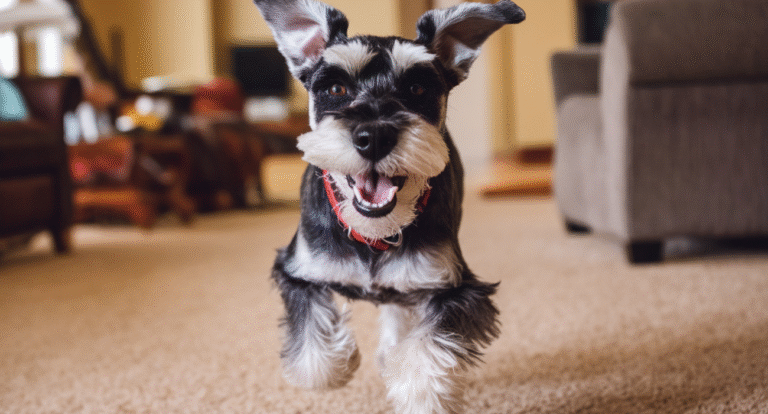
Avoid the most common training mistakes—these missteps could negatively impact your Schnauzer’s confidence and happiness, but there’s an easy fix.
That adorable Schnauzer of yours has the brain of a champion and the heart of, well, an anxious overachiever who really wants to please you but also has opinions. These dogs weren’t bred to blindly follow orders. They were bred to think, problem solve, and make decisions. Which is fantastic, until you accidentally traumatize them with training methods that completely ignore their unique psychology.
You wouldn’t teach a fish to climb a tree, right? So why would you train a Schnauzer like they’re any other breed? Let’s dive into the mistakes that could be turning your confident companion into a nervous wreck.
1. Using Harsh Corrections for a Sensitive Soul
Here’s something that surprises people: despite their tough, terrier exterior, Schnauzers are emotionally sensitive dogs. They’re not Golden Retrievers who bounce back from everything with a wagging tail, but they’re also not thick skinned enough to handle the kind of corrections you might use on, say, a cattle dog.
When you yell at your Schnauzer or use physical corrections, you’re not creating respect. You’re creating anxiety. These dogs have incredible memories, and they’ll associate that fear with the context: maybe it’s the training location, maybe it’s you, or maybe it’s the specific command you were working on.
The damage isn’t always obvious. A traumatized Schnauzer doesn’t always cower. Sometimes they just become stubborn, “forgetful,” or suddenly develop selective hearing that would rival a teenager.
Watch for the subtle signs: lip licking, yawning when they’re not tired, avoiding eye contact, or that classic move where they suddenly become fascinated by something across the room. These are stress signals, not defiance. Your Schnauzer is telling you they’re uncomfortable, and ignoring these signals is like ignoring a car’s check engine light.
2. Inconsistent Rules That Create Confusion
Schnauzers crave structure. Not in a militant way, but in an “I need to understand the rules of this game” way. When Monday’s rules don’t match Tuesday’s rules, and Mom allows something that Dad forbids, you’re not being flexible. You’re being confusing.
Imagine trying to learn a new language, but every day the grammar rules change randomly. That’s what inconsistent training feels like to your Schnauzer. They’re desperately trying to figure out what earns praise and what earns correction, but the goalposts keep moving.
This inconsistency doesn’t just slow down training. It creates chronic stress. Your Schnauzer never knows if they’re doing the right thing, so they’re in a constant state of uncertainty. Some dogs shut down entirely. Others become reactive or develop compulsive behaviors as coping mechanisms.
The fix? Family meetings. Boring, yes, but necessary. Everyone needs to enforce the same rules, use the same commands, and maintain the same boundaries. Your Schnauzer will thank you by actually learning instead of just guessing.
3. Skipping Socialization Windows
Schnauzers have a reputation for being aloof with strangers and potentially aggressive toward other dogs. But here’s the secret: this isn’t inevitable. It’s often the direct result of inadequate socialization during critical developmental windows, particularly between 3 and 14 weeks of age.
Missing this window doesn’t just create a shy dog. It can create a fearful, reactive dog who sees threats everywhere. That cute puppy who hides behind your legs? They’re not being cautious. They’re experiencing genuine fear that can snowball into aggression as a defensive strategy.
| Age Range | Socialization Focus | What Happens If You Skip It |
|---|---|---|
| 3 to 7 weeks | Littermates & mother | Poor bite inhibition, difficulty reading dog body language |
| 7 to 14 weeks | People, places, sounds | Fear of novelty, potential aggression toward strangers |
| 14 weeks to 6 months | Continued exposure & positive experiences | Reactivity solidifies, harder to modify behavior |
Even if you’ve missed the puppy window, it’s not hopeless. Adult Schnauzers can still learn, but you need patience and a systematic desensitization approach. Throwing an unsocialized Schnauzer into overwhelming situations (like a busy dog park) isn’t brave exposure therapy. It’s flooding, and it can make everything worse.
4. Training Sessions That Drag On Forever
Your Schnauzer is smart, but their attention span isn’t infinite. These dogs get bored fast, and a bored Schnauzer isn’t going to politely wait for you to finish your 30 minute training marathon. They’re going to check out mentally, and then you’ll mistake their exhaustion for stubbornness.
Ideal training sessions for Schnauzers? Five to ten minutes, maximum. Seriously. You can do multiple sessions throughout the day, but each individual session should be short, focused, and end on a positive note.
Long, repetitive training sessions don’t create better learning. They create resentment. Your Schnauzer starts associating training with boredom and frustration, which means they’ll actively avoid it in the future.
Think of it like studying for an exam. Cramming for six hours straight isn’t as effective as six sessions of focused study spread throughout the day. Your Schnauzer’s brain needs time to process and consolidate what they’ve learned. Push too hard, and you’ll actually impair their ability to retain information.
Watch for signs that your Schnauzer is done: sniffing the ground excessively, looking away repeatedly, moving slower, or just flat out refusing to engage. These aren’t signs of defiance. They’re signs of a tired brain saying “I need a break.”
5. Punishing Natural Breed Behaviors
Schnauzers were bred to hunt vermin and guard property. This means certain behaviors are hardwired into their DNA: barking at sounds, being suspicious of strangers, chasing small moving objects, and yes, digging. When you punish these natural behaviors without offering alternatives, you’re creating internal conflict that manifests as stress.
Your Schnauzer doesn’t understand why their instincts are suddenly wrong. From their perspective, they’re doing exactly what they’re supposed to do, and you’re randomly punishing them for it. This creates confusion and erodes trust.
The better approach? Redirect these behaviors into acceptable outlets. Your Schnauzer wants to dig? Create a designated digging area. They want to chase? Channel that drive into fetch or flirt pole games. They want to alert bark? Teach them a “quiet” command that acknowledges the bark but limits its duration.
6. Flooding Them with Overwhelming Situations
There’s a dangerous myth in dog training that says you should expose fearful dogs to their triggers until they “get over it.” This technique is called flooding, and while it sometimes works, it can just as easily create profound, lasting trauma.
Picture this: your Schnauzer is nervous around other dogs, so you take them to a crowded dog park and force them to “work through it.” But your Schnauzer isn’t learning that other dogs are safe. They’re learning that they can’t escape a terrifying situation, and that you won’t protect them. This is called learned helplessness, and it’s devastating.
The correct approach is gradual desensitization. You expose your Schnauzer to their trigger at a distance or intensity where they notice it but aren’t overwhelmed. You pair that exposure with positive experiences (treats, play, praise), and you slowly increase the intensity over weeks or months.
| Flooding (Wrong) | Desensitization (Right) |
|---|---|
| Maximum intensity exposure | Start below fear threshold |
| No escape option | Dog can retreat if needed |
| Sink or swim mentality | Gradual, controlled progress |
| Often creates worse fear | Builds genuine confidence |
Patience isn’t just a virtue in this scenario. It’s a requirement. Rushing the process isn’t brave; it’s counterproductive and potentially cruel.
7. Ignoring Body Language and Stress Signals
Schnauzers are constantly communicating with you through body language, but most owners miss about 90% of these signals. By the time your Schnauzer is growling or snapping, they’ve already sent dozens of earlier warnings that you completely ignored.
Early stress signals include: whale eye (seeing the whites of their eyes), tense body posture, closed mouth, ears pinned back, lip licking, yawning, panting when not hot, excessive shedding, and avoidance behaviors. These are your Schnauzer’s way of saying “I’m uncomfortable, please change something.”
When you ignore these signals and push forward with training, you’re teaching your Schnauzer that their communication doesn’t matter. Eventually, they’ll skip the subtle signals entirely and go straight to aggression because that’s what finally gets you to listen.
Your Schnauzer’s body language is their voice. Ignoring it isn’t persistence; it’s choosing to be deaf to their distress.
Start paying attention. Really watching your dog during training sessions. If they’re showing stress signals, you need to stop, reassess, and figure out what’s causing the discomfort. Maybe you’re moving too fast. Maybe the environment is too distracting. Maybe they’re physically uncomfortable or not feeling well.
8. Using Food Bribes Instead of Rewards
There’s a crucial difference between bribes and rewards, and confusing the two creates a dog who only performs when they see food in your hand. A reward comes after the behavior as positive reinforcement. A bribe is shown before the behavior to coax compliance.
When you hold a treat in front of your Schnauzer’s nose to lure them into a sit, you’re bribing. When your Schnauzer sits and then receives a treat from your pocket, you’re rewarding. See the difference?
Bribing creates conditional obedience. Your Schnauzer learns to ask themselves “What’s in it for me right now?” before deciding whether to listen. Rewarding creates genuine learned behavior where the action itself becomes the cue for potential reinforcement.
Here’s how to transition away from bribes: start with lures if you must, but fade them quickly. Once your Schnauzer understands the behavior, stop showing the treat beforehand. Give the command, wait for compliance, then produce the reward. Vary your rewards too. Sometimes it’s treats, sometimes it’s play, sometimes it’s just enthusiastic praise. Your Schnauzer should never know exactly what’s coming, which actually makes them more motivated to comply.
The goal isn’t to train a dog who works for treats. The goal is to train a dog who works with you because that cooperation is inherently rewarding and your relationship is built on trust rather than transaction.