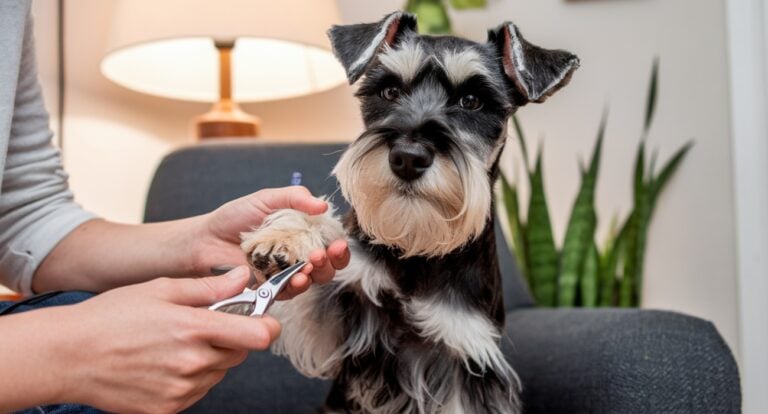
Discover eight subtle signals your Schnauzer’s happiness is at its peak. These clues show your dog’s true joy in daily life.
Schnauzers don’t do anything halfway. When they’re happy, they’re ecstatic. When they’re bored, everyone in a three block radius will know. These charismatic dogs have earned their reputation as the class clowns of the terrier world, and their joy is absolutely contagious when you know what to look for.
The good news? Happy Schnauzers aren’t exactly subtle about it. From their signature “Schnauzer smile” to their playful antics, these dogs give us plenty of clues. Learning to recognize these signs transforms you from a regular dog owner into a true Schnauzer whisperer.
1. The Infamous “Schnauzer Smile” Is on Full Display
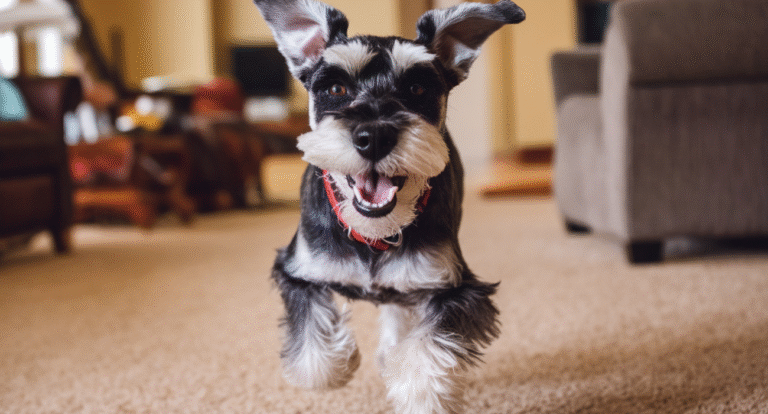
You’ve probably seen it: that goofy, open mouthed expression that looks suspiciously like a human grin. And guess what? That’s exactly what it is. Happy Schnauzers frequently pull back their lips in what dog behaviorists call a “submissive grin,” but in Schnauzer terms, it’s pure joy.
This smile typically appears during greeting times, play sessions, or when you pull out their favorite toy. Their whole face softens, their eyes get that happy squint, and those magnificent whiskers seem to point upward. The smile often comes packaged with a wiggling body and excited little huffing sounds that make you wonder if they’re trying to speak human.
Not all lip pulling is happiness, though. A true Schnauzer smile involves relaxed facial muscles and a soft gaze. If the lips are pulled back tightly with visible teeth and tense eyes, that’s stress or aggression, not joy. Context matters enormously when reading your Schnauzer’s expressions.
2. They’re Eating Enthusiastically and Maintaining Healthy Weight
A truly content Schnauzer approaches mealtime with gusto. These dogs aren’t known for being picky eaters (quite the opposite, actually), so when your Schnauzer maintains a healthy appetite and stable weight, it’s a strong indicator of overall happiness and wellbeing.
| Weight Category | Miniature Schnauzer | Standard Schnauzer | Giant Schnauzer |
|---|---|---|---|
| Healthy Range | 11-20 lbs | 30-50 lbs | 55-85 lbs |
| Meal Frequency | 2-3 times daily | 2 times daily | 2 times daily |
| Signs of Contentment | Clean bowl, relaxed after eating | Calm approach to food | Steady eating pace |
Watch for the complete picture, though. A happy Schnauzer doesn’t just wolf down food; they’re relaxed during meals, not guarding their bowl aggressively or showing anxiety around feeding time. After eating, they should seem satisfied rather than frantically searching for more or appearing lethargic.
A genuinely happy dog finds balance at mealtime: enthusiastic about food but not obsessive, satisfied but not overstuffed, and relaxed enough to walk away from the bowl when finished.
3. Their Sleep Pattern Is Consistent and Peaceful
Schnauzers need their beauty rest, typically logging 12 to 14 hours of sleep per day as adults. A happy Schnauzer sleeps soundly, often in the most ridiculous positions imaginable: upside down with legs in the air, sprawled across your favorite chair, or curled into an impossibly tight ball.
The quality matters more than quantity. Happy dogs cycle through sleep stages normally, including REM sleep where you might see twitching paws and muffled barks as they chase dream squirrels. They also feel secure enough to sleep in vulnerable positions, which shows they trust their environment completely.
Conversely, a stressed Schnauzer might sleep fitfully, wake frequently, or refuse to settle down. They might also insist on sleeping in hiding spots or maintaining hypervigilance even during rest time. Peaceful, unguarded sleep is the hallmark of a contented dog.
4. Playfulness Is Still Part of Their Daily Routine
Even senior Schnauzers maintain that terrier spark if they’re truly happy. These dogs were bred to be alert and active, so playfulness isn’t just puppyhood cuteness; it’s a lifelong personality trait. A joyful Schnauzer initiates play, whether that means bringing you toys, doing play bows, or zooming around the house for no apparent reason.
The famous “Schnauzer 500” is a particularly telling sign. This is when your dog suddenly tears through the house at maximum velocity, often after baths or when excitement peaks. It looks chaotic, but it’s actually a pure expression of joy and excess energy that needs releasing.
Pay attention to how they play, too. Happy dogs take breaks, respond to your cues, and know when to settle down. They’re enthusiastic but not frantic, engaged but not obsessive. Their play style should feel reciprocal and fun for everyone involved.
5. Their Tail Tells the Truth (When It’s There)
Many Schnauzers sport docked tails, which can make reading their rear end signals trickier. But whether your Schnauzer has a full tail or a nub, happy dogs wag it, and the whole back end usually joins the party. We’re talking full body wiggles that practically turn them into furry little vibrators on legs.
The direction and speed of tail wagging actually convey different emotions. Research suggests that right sided wagging indicates positive emotions, while left sided wagging may signal negative feelings. Fast, loose, wide wags with a relaxed body? That’s pure happiness. The tail moving so hard it creates a helicopter effect? Your Schnauzer just hit the jackpot of joy.
A happy Schnauzer’s tail wag isn’t an isolated movement. Their entire body participates in the celebration, from wiggling hips to prancing feet to that unstoppable smile.
Even with docked tails, you can read happiness in the movement. Watch for the nub wagging so vigorously that their whole rear end shimmies, combined with other positive signals like soft eyes and forward ears.
6. They’re Engaged and Responsive to You
A truly happy Schnauzer wants to be where you are, doing what you’re doing. These dogs are famously devoted to their people, often earning the nickname “velcro dogs” for their tendency to stick close. But it’s not just proximity; it’s quality engagement that matters.
Happy Schnauzers make eye contact, respond to their names, and show interest in interactions with you. They check in during walks, bring you toys, and generally treat you like the most fascinating person on the planet. This breed thrives on mental stimulation and bonding activities, so engagement is both a sign of happiness and a requirement for maintaining it.
Notice if your Schnauzer eagerly participates in training sessions, enjoys learning new tricks, or perks up when you suggest activities. Their enthusiasm for shared experiences reveals their emotional state more clearly than almost any other behavior. Schnauzers who ignore their people or seem indifferent are often stressed, ill, or unhappy.
7. Their Coat Looks Healthy and Well Maintained
While grooming requirements don’t change based on mood, a happy Schnauzer’s coat often looks better simply because they’re taking care of themselves. Contented dogs groom regularly (but not obsessively), maintain that characteristic wiry texture, and don’t develop stress related skin issues or excessive shedding.
You’ll notice your happy Schnauzer tolerates grooming sessions relatively well, too. These dogs require regular brushing, trimming, and professional grooming to maintain their iconic look. A dog who’s comfortable and content typically handles grooming with patience, viewing it as bonding time rather than torture.
Look for a coat that’s neither greasy nor dry, skin that’s free from excessive scratching or hot spots, and whiskers that maintain their proud, bushy appearance. Physical health and emotional wellbeing are deeply intertwined, and the coat often reflects both.
8. They Show Confident, Curious Body Language
Perhaps the most comprehensive happiness indicator is overall body language. A joyful Schnauzer carries themselves with confidence: ears forward (when alert), head up, posture relaxed yet ready. They approach new situations with curiosity rather than fear, and they recover quickly from startling events.
Watch how your Schnauzer moves through their world. Do they explore on walks with their tail up? Do they greet friendly strangers with interest? When they meet other dogs, is their approach playful and appropriate? Confident, curious behavior suggests a dog who feels secure in their environment and their relationship with you.
True happiness in dogs manifests as relaxed confidence: the ability to be both playful and calm, curious yet cautious, attached to their people but not anxiously dependent.
The ultimate test is resilience. Happy Schnauzers bounce back from minor upsets quickly, whether that’s a loud noise, a bath, or a stranger passing by. They might startle or react, but they don’t stay stuck in stress mode. This emotional flexibility indicates a fundamentally content and well adjusted dog.
Remember, every Schnauzer has their own personality quirks. Some are naturally more exuberant while others express happiness more quietly. The key is knowing your Schnauzer’s baseline and recognizing when they’re operating at their joyful best. These intelligent, spirited dogs give us so much; the least we can do is ensure they’re living their happiest lives possible.