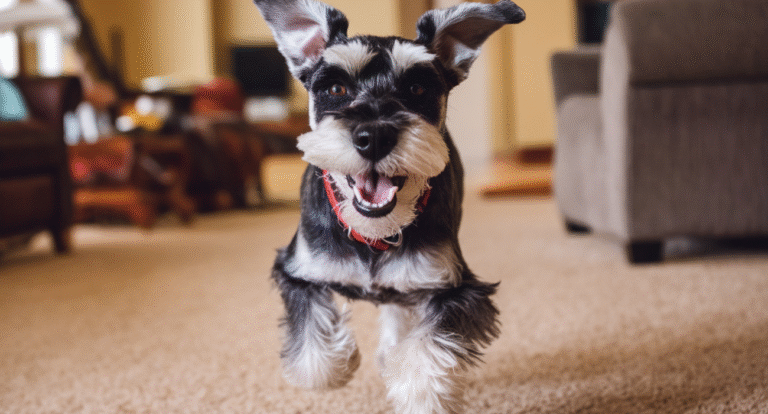
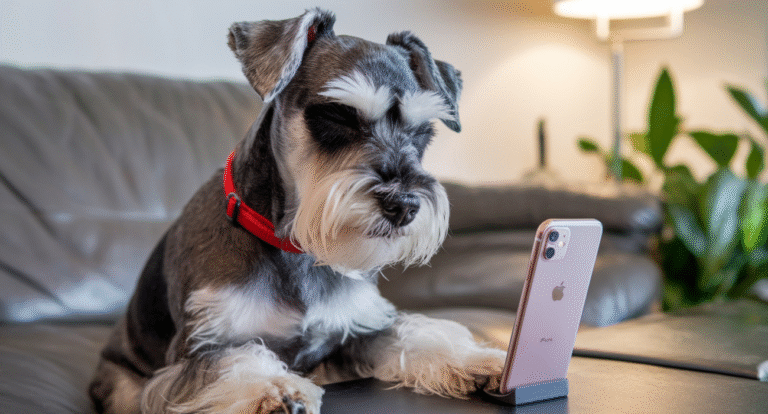
Is your Schnauzer craving more attention? Learn the subtle ways they ask for love so you can strengthen your bond every day.
Living with a Schnauzer means living with a dog who believes they deserve an audience at all times. And honestly? They’re probably right. These intelligent, energetic, gloriously bearded dogs weren’t bred to sit quietly in corners; they were bred to work, to think, to engage with their humans.
But what happens when your Schnauzer feels like they’re not getting enough of that engagement? Do they throw obvious tantrums? Sometimes. But more often, they employ a fascinating array of subtle, almost sneaky behaviors that whisper (or perhaps gently bark) “I need more of you.” Missing these signs means missing opportunities to strengthen your bond with your whiskered companion.
1. The Strategic Object Placement Initiative
Your Schnauzer has suddenly become an interior decorator, and their design philosophy can be summed up as “chaos in the most visible locations possible.” You’ll find their favorite toy precisely where you need to walk. Their tennis ball appears on your laptop keyboard. A chew bone materializes on your pillow.
This isn’t random dog mess. This is calculated. Your Schnauzer is creating conversation starters, physical reminders of their existence that you literally cannot ignore. Each strategically placed item is basically a furry telegram that reads: “Remember me? I’m here. Let’s do something together.”
The psychology behind this behavior is actually quite clever. Dogs learn through association, and your Schnauzer has figured out that their toys often lead to interaction with you. By placing these items in your path, they’re essentially setting up play opportunities and betting on your inability to resist their adorable face when you discover the offering.
2. The Velcro Dog Transformation
Suddenly, your independent Schnauzer who used to nap contentedly in another room has morphed into your shadow. Bathroom trip? They’re outside the door. Kitchen cooking? They’re underfoot. Working at your desk? They’ve somehow wedged themselves under your chair.
This proximity seeking behavior is one of the most obvious yet somehow still subtle signs that your Schnauzer craves more engagement. They’re not necessarily demanding immediate play; they simply want to be in your orbit, soaking up your presence like a bearded, four-legged satellite.
When your Schnauzer becomes your shadow, they’re not being clingy without reason. They’re expressing a fundamental need for connection and reassurance that you’re still their person and they’re still your priority.
The intensity of this behavior often correlates with how much quality time you’ve spent together recently. A Schnauzer who’s received plenty of interactive play and training sessions tends to be more confident about independent rest time.
3. The Dramatic Sigh Symphony
Ah yes, the Schnauzer sigh. It’s not just a sigh; it’s a performance. Your dog will position themselves within your line of sight, make eye contact to ensure you’re watching, and then release the most profoundly disappointed exhalation you’ve ever heard from a creature with four legs.
Sometimes they’ll add theatrical flair: flopping down with excessive drama, resting their head on their paws with Oscar-worthy despair, perhaps even adding a tiny groan for emphasis. The message is clear: their life is unutterably boring without your intervention.
What makes this particularly subtle is that sighing is also a normal dog behavior for settling down to rest. The difference? The attention-seeking sigh comes with eye contact, positioning, and often repeated performances until you respond. Your Schnauzer is essentially reviewing your level of attentiveness and finding it lacking.
4. The Inexplicable Toy Parade
Your Schnauzer begins a peculiar ritual: carrying toys to you, one by one, creating a growing pile at your feet or beside your chair. They don’t necessarily want to play with each toy. They just want you to acknowledge the toys. And them. Mostly them.
This behavior combines several motivations. First, it’s a direct invitation to interact. Second, it’s a demonstration of their possessions, like a child showing off their treasures to a parent. Third, it’s a test: will you respond? How will you respond? Should they bring MORE toys to increase the odds of engagement?
| Behavior | What It Looks Like | What They Really Want |
|---|---|---|
| Single Toy Drop | Places one toy near you and waits | “Maybe this one will interest you?” |
| Multiple Toy Collection | Creates a pile of various toys | “Surely ONE of these will get your attention!” |
| Toy + Vocal | Brings toy with whines or small barks | “I’m upping the urgency here, human” |
| Toy Switching | Brings toy, takes it away, brings different toy | “I’m workshopping which approach works best” |
5. The Selective Hearing Phenomenon
Suddenly, your usually obedient Schnauzer can’t seem to hear basic commands. “Come” means nothing. “Sit” draws a blank stare. “Stay” is apparently a suggestion they’re choosing to ignore. Yet the sound of a treat bag opening from three rooms away? Crystal clear reception.
This isn’t defiance; it’s negotiation. Your clever Schnauzer has determined that basic obedience isn’t earning them the engagement they crave. By “forgetting” their training temporarily, they’re forcing you to interact more intensely, perhaps getting up to physically guide them, using more animated voice tones, or offering rewards to regain their cooperation.
The key indicator that this is attention-seeking rather than actual training regression? They’ll suddenly “remember” everything perfectly when you pull out toys, harnesses, or anything else that signals fun interactive time ahead.
6. The Statue Stare Technique
Your Schnauzer has perfected the art of the unblinking stare. They position themselves at a distance where they’re definitely in your peripheral vision, then simply… watch. And watch. And watch some more. No movement, no sound, just pure, concentrated observation that feels like it’s burning holes through your consciousness.
This is psychological warfare disguised as patience. Your Schnauzer knows that humans are hardwired to respond to being watched. We feel that gaze. It creates an itch in our awareness that becomes increasingly difficult to ignore. Eventually, you’ll look back, make eye contact, and boom: they’ve got you. Connection established. Attention achieved.
The motionless stare is your Schnauzer’s way of saying “I’m being so good and patient, surely this level of restraint deserves acknowledgment.” It’s passive attention-seeking that somehow feels more compelling than active demands.
Some Schnauzers will maintain this statue-like vigil for impressive lengths of time, upgrading their technique with slight head tilts or single, pointed ear movements to remind you they’re still there, still watching, still waiting for you to be the human they know you can be.
7. The Reverse Psychology Routine
Here’s where your Schnauzer gets really sophisticated. They suddenly become very interested in something else entirely. A spot on the floor fascinates them. The view out a window they’ve looked through a thousand times becomes absolutely riveting. They begin playing with a toy independently, creating little growly sound effects.
The catch? They keep checking if you’re watching their “independence.” This is the canine equivalent of a child loudly announcing “I’m fine, I don’t need any help” while glancing back every three seconds to see if you’re paying attention to how fine they are.
This behavior exploits your natural curiosity and your bond with your dog. When your typically attention-seeking Schnauzer suddenly acts self-sufficient, it creates intrigue. What are they doing? Are they okay? Should you check on them? And the moment you show interest, they “reluctantly” accept your attention, as if they weren’t orchestrating this entire scenario.
The brilliance of this technique lies in its deniability. If you don’t respond, well, they were just entertaining themselves anyway (they weren’t, but they’ll pretend they were). If you do respond, they’ve successfully drawn you in without seeming demanding.
Understanding these subtle attention-seeking behaviors transforms them from puzzling quirks into clear communication. Your Schnauzer isn’t being difficult or manipulative in any negative sense; they’re being a social, intelligent creature who’s figured out multiple strategies for connecting with the human they adore.
The solution isn’t necessarily to respond to every single one of these behaviors (that way lies a completely spoiled Schnauzer who’s trained you rather than the other way around). Instead, use these signals as reminders to proactively schedule quality time: training sessions, interactive play, grooming time where you’re fully present, or even just fifteen minutes of undivided attention on the couch together.
Your bearded companion will thank you by being slightly less dramatic. Slightly.