Small changes make a big difference. These easy adjustments can improve both your Schnauzer’s happiness and lifelong health.
Schnauzers are fascinating contradictions wrapped in wiry fur coats. They’re simultaneously stubborn and eager to please, independent yet deeply bonded to their humans, dignified but absolutely ridiculous when playing. Understanding what makes these bearded beauties tick is half the battle in keeping them healthy and genuinely happy.
Most Schnauzer parents are already doing a decent job with the basics. But there’s a substantial gap between “fine” and “flourishing.” These seven modifications aren’t complicated or expensive, yet they address the specific psychological and physical needs that Schnauzers have evolved to require. Your pup’s improved demeanor will be noticeable within days.
1. Create a “Job” Through Interactive Puzzle Toys
Schnauzers were originally bred as working farm dogs, tasked with hunting rats and guarding property. That working heritage didn’t disappear just because your pup now lives in a suburban home! Without purposeful activities, Schnauzers often develop problematic behaviors rooted in boredom and frustration.
Interactive puzzle toys give your Schnauzer’s brain the workout it desperately craves. Start with beginner level puzzles where treats hide under sliding panels or behind simple flaps. As your dog masters these, graduate to advanced puzzles requiring multiple steps to reach the reward. Rotate different puzzles throughout the week to maintain novelty and challenge.
The mental exhaustion from 15 minutes of puzzle solving equals roughly 30 minutes of physical exercise for most Schnauzers.
The benefits extend far beyond simple entertainment. Problem solving activities release dopamine in your dog’s brain, creating genuine satisfaction and contentment. You’ll notice decreased destructive behaviors, reduced excessive barking, and a calmer demeanor overall. Many Schnauzer owners report that their dogs sleep more soundly after regular puzzle sessions.
Consider hiding puzzle toys around your home for your Schnauzer to discover during the day. This mimics the natural hunting and foraging behaviors their ancestors relied upon. Even on busy days when long walks aren’t possible, mental stimulation keeps your Schnauzer fulfilled and tired in the best possible way.
2. Establish Consistent Grooming Sessions as Bonding Time
Here’s something counterintuitive: grooming shouldn’t be something you do to your Schnauzer, but rather something you do with them. That wiry double coat requires regular maintenance regardless, so why not transform necessary grooming into meaningful bonding time?
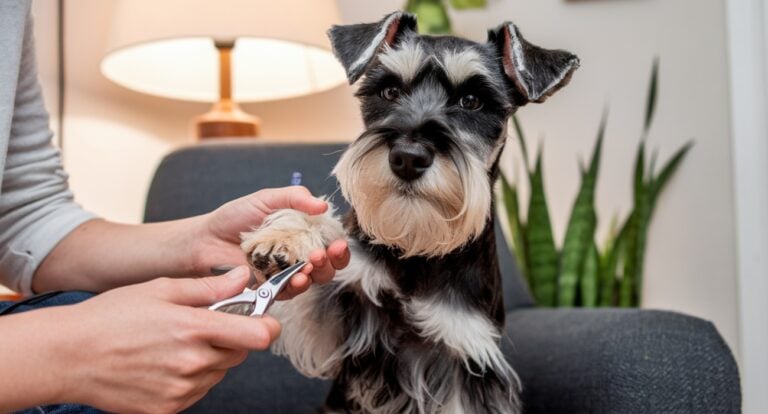
Schedule three to four brief grooming sessions weekly instead of one marathon event monthly. Brush their coat for 10 to 15 minutes while talking softly, checking for any skin issues, and offering small treats for cooperation. This regular handling increases your dog’s comfort with being touched, which proves invaluable during veterinary visits or emergencies.
The psychological benefits run surprisingly deep. Schnauzers are intensely loyal dogs who crave one on one attention from their preferred humans. Dedicated grooming time satisfies this need while simultaneously maintaining their coat health. The gentle brushing stimulates circulation, distributes natural oils, and prevents painful matting that can develop in their dense undercoat.
Pay special attention to their distinctive beard and leg furnishings. These areas accumulate debris and food particles that can cause skin irritation if neglected. Clean their beard after meals and check between their toes weekly. Your Schnauzer will appreciate the care, and you’ll catch potential health issues before they become serious problems.
3. Implement Structured Socialization Opportunities
Schnauzers possess an inherent wariness around strangers that served them well as watchdogs but can escalate into reactivity without proper socialization. Many adult Schnauzers develop leash reactivity or territorial behaviors simply because they lack regular, positive exposure to varied situations and individuals.
Set up weekly meetups with other dogs whose temperaments you trust. Dog parks can be overwhelming, so opt for controlled playdates in neutral spaces like fenced yards or quiet parks during off hours. Monitor body language carefully and intervene before excitement turns into overarousal. Short, successful interactions build confidence far more effectively than lengthy, stressful ones.
| Socialization Activity | Frequency | Primary Benefit |
|---|---|---|
| Controlled dog playdates | 1-2 times weekly | Improves canine communication skills |
| Public outdoor cafes | Weekly | Reduces stranger anxiety |
| Varied walking routes | Daily | Increases environmental confidence |
| Training classes | Weekly | Enhances focus amid distractions |
Expose your Schnauzer to different environments consistently. Walk through bustling downtown areas, quiet residential neighborhoods, and natural settings like trails or beaches. Each environment presents unique sights, sounds, and smells that build your dog’s confidence and adaptability. A well socialized Schnauzer is noticeably calmer and happier because they feel secure rather than threatened by novelty.
Remember that socialization isn’t just for puppies. Adult and senior Schnauzers continue benefiting from new experiences throughout their lives. If your older dog seems anxious, start slowly with low stress environments and gradually increase complexity as their confidence builds.
4. Adjust Feeding to Prevent Bloat and Digestive Issues
Schnauzers, particularly Standard and Giant varieties, face elevated risks for gastric dilatation volvulus (commonly called bloat). This life threatening condition occurs when the stomach fills with gas and twists on itself. While genetics play a role, feeding practices significantly influence susceptibility.
Split your Schnauzer’s daily food intake into two or three smaller meals rather than one large feeding. This simple modification reduces the volume of food in the stomach at any given time, decreasing bloat risk substantially. Slow feeder bowls further help by preventing rapid gulping that introduces excessive air into the digestive system.
Schnauzers who eat from elevated feeders show a 110% increased risk of bloat compared to those eating from floor level bowls.
Avoid vigorous exercise for at least one hour before and two hours after meals. That post dinner walk should be leisurely, not energetic. Many Schnauzer owners find that morning is the ideal time for intense play sessions, with meals following a calm down period.
Monitor your dog’s eating pace and demeanor. Some Schnauzers benefit from puzzle feeders that dispense kibble slowly during meals. If your dog shows signs of food anxiety (guarding, gulping, or stress around feeding times), consult with a veterinary behaviorist. Addressing these issues improves not just physical health but emotional wellbeing too.
5. Provide Elevated Resting Spots Throughout Your Home
This recommendation surprises many people, but Schnauzers genuinely appreciate having options for where and how they rest. Their watchdog heritage means they instinctively prefer vantage points where they can monitor their environment. Providing elevated resting spots satisfies this deep seated need.
Place comfortable dog beds or cushions on sofas (with permission), window seats, or raised dog beds in main living areas. Schnauzers feel more secure when they can observe household activity and potential “threats” approaching doors or windows. This doesn’t mean they’re anxious; it simply aligns with how their brains are wired.
The physical benefits matter too. Elevated beds improve air circulation around your dog, particularly important for breeds with thick double coats prone to overheating. Orthopedic raised beds reduce pressure on joints, especially beneficial for aging Schnauzers or those with early arthritis symptoms.
Watch where your Schnauzer naturally chooses to rest. Do they gravitate toward the back of the couch? Camp out by windows? Claim particular chairs? Honor these preferences by placing designated beds in their favorite spots. You’ll notice your dog using these spaces frequently, appearing more relaxed because they feel both comfortable and secure.
6. Introduce Nose Work and Scent Games
Never underestimate a Schnauzer’s nose! While they’re not tracking hounds, their scenting ability remains impressive and vastly underutilized in most households. Nose work taps into natural canine behaviors while providing mental stimulation that satisfies on a primal level.
Start simply by hiding treats around a single room while your Schnauzer waits elsewhere. Release them with an enthusiastic “find it!” and let them search. Gradually increase difficulty by using multiple rooms, hiding treats in elevated locations, or placing them inside boxes or under towels. The searching behavior itself provides fulfillment regardless of how quickly they succeed.
Consider formal nose work classes or DIY scent training at home. Hide specific scented items (birch, anise, or clove essential oils on cotton swabs work well) and reward discovery. This mimics professional detection work and gives your Schnauzer an authentic job to master. The concentration required during scent work sessions leaves dogs mentally satisfied and pleasantly tired.
Many Schnauzers become obsessed with nose work in the best possible way. It channels their natural intensity and determination into a healthy outlet. Owners consistently report improved focus, reduced anxiety, and better overall behavior after implementing regular scent games. Just 10 minutes daily makes a remarkable difference.
7. Establish Clear Boundaries With Consistent Rules
Here’s something Schnauzer owners need to hear: your dog wants structure. These intelligent, somewhat stubborn breeds thrive when they understand exactly what’s expected. Inconsistent rules create anxiety and confusion, leading to testing behaviors that everyone finds frustrating.
Decide on household rules and enforce them every single time. If your Schnauzer isn’t allowed on furniture, that rule applies whether you’re home, guests are visiting, or you’re exhausted after a long day. If jumping isn’t acceptable, it’s never acceptable, even when they’re excited to see you. Consistency eliminates the gambling aspect that keeps unwanted behaviors alive.
| Common Schnauzer Rule | Why Consistency Matters |
|---|---|
| Furniture access | Prevents confusion about territory and privilege escalation |
| Jumping on people | Eliminates reinforcement of overexcited greeting behaviors |
| Begging during meals | Reduces food obsession and digestive upset from table scraps |
| Door manners | Prevents escape risks and establishes calm entry/exit protocols |
This doesn’t mean being harsh or authoritarian. Set your Schnauzer up for success by managing their environment. If they steal food from counters, don’t leave food accessible. If they bark at the window, close the curtains during trigger times. Prevention beats correction every time.
Structure provides psychological security that allows Schnauzers to relax rather than constantly testing boundaries to understand their place in the household.
Train alternative behaviors for common frustrations. Instead of simply saying “no” when your Schnauzer jumps, teach an incompatible behavior like sitting for greetings. Reward heavily when they comply, making good choices more rewarding than problematic ones. Your Schnauzer’s intelligence means they learn quickly when expectations stay clear and reinforcement remains consistent.
Remember that consistency across all family members matters immensely. If one person allows behaviors others prohibit, your Schnauzer will naturally gravitate toward the most permissive individual while largely ignoring others. Family meetings about dog rules aren’t optional—they’re essential for your Schnauzer’s wellbeing.