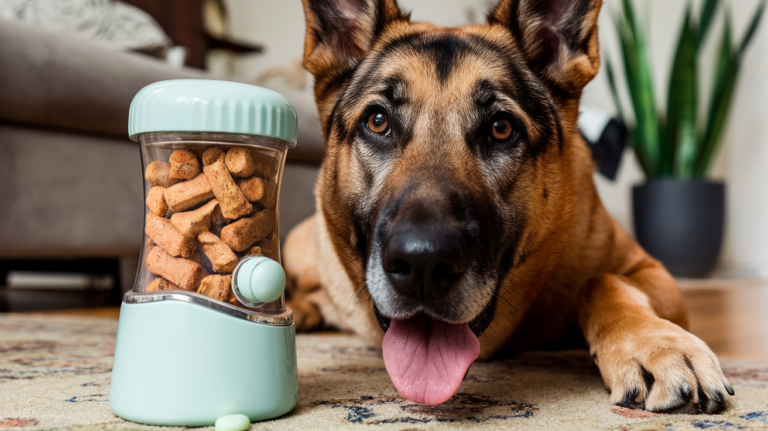
Training a German Shepherd doesn’t need to feel overwhelming. These smart shortcuts save time, reduce frustration, and actually work with your dog’s instincts.
You didn’t adopt a German Shepherd because you wanted an easy, low-maintenance companion. You wanted a dog with presence, intelligence, and enough personality to fill a room. Congratulations, you got exactly that! Now comes the fun part: channeling all that energy and brainpower into something productive.
German Shepherds are working dogs at heart. They crave structure, purpose, and mental stimulation the way most dogs crave treats. Without proper training, that drive can turn into destructive behavior, excessive barking, or a very creative escape artist. These seven hacks will help you unlock your GSD’s full potential while keeping your sanity intact.
1. Use the “Two Brains” Approach: Mental + Physical Training
Most German Shepherd owners know their dogs need exercise. What many don’t realize is that mental exhaustion is just as important as physical exhaustion. A GSD who runs five miles but gets no mental stimulation will still tear up your couch out of boredom.
The solution? Combine both. Instead of mindless fetch sessions, turn exercise into training opportunities. Practice recall during off-leash time, incorporate sit/stay commands during walks, or set up an obstacle course in your backyard that requires your dog to think through each challenge.
Your German Shepherd’s brain is their most powerful muscle. Exercise it with the same intensity you exercise their body, and you’ll have a balanced, happy dog.
Here’s a practical breakdown of the mental versus physical training ratio:
| Activity Type | Time Invested | Impact on Behavior | Best For |
|---|---|---|---|
| Physical only (running, fetch) | 60 minutes | Moderate | Releasing excess energy |
| Mental only (puzzle toys, training) | 20 minutes | High | Preventing boredom behaviors |
| Combined (agility, scent work) | 30 minutes | Very High | Complete fulfillment |
The combined approach wins every time. Activities like nosework, where your GSD uses their incredible sense of smell to find hidden treats, or agility training that requires them to navigate obstacles while following your commands, hit both targets simultaneously.
2. Master the “Nothing in Life is Free” Protocol
German Shepherds love having a job, and this protocol gives them one. The concept is brilliantly simple: your dog earns everything through compliance. Want dinner? Sit first. Want to go outside? Wait at the door until released. Want that squeaky toy? Eye contact and a down command, please.
This isn’t about being harsh or domineering. It’s about creating a framework where your GSD understands that good things come from listening to you. This breed particularly thrives under clear leadership and consistent rules. When they know what’s expected, they’re happier and more confident.
Start small. Before meals, ask for a simple sit. Before opening doors, require a wait command. Before throwing the ball, get a steady eye contact. Within weeks, you’ll notice your German Shepherd naturally checking in with you before acting, which is exactly what you want.
3. The “Incompatible Behavior” Trick for Problem Solving
Here’s where things get clever. Instead of constantly saying “no” to unwanted behaviors, teach your GSD an incompatible behavior that prevents the problem altogether. A dog can’t jump on guests if they’re holding a sit. They can’t pull on the leash if they’re walking in a heel position. They can’t bark at the mailman if they’re fetching their favorite toy.
This hack works because German Shepherds are incredibly task-oriented. Give them an alternative job, and they’ll happily do it. Let’s say your GSD goes bonkers when the doorbell rings. Instead of shouting over the chaos, train them to run to their bed when they hear the bell. Practice this repeatedly with a helper, rewarding heavily each time they choose the bed over the door.
The incompatible behavior method works for:
- Jumping (teach “sit to greet”)
- Leash pulling (teach “focus” or heel)
- Counter surfing (teach “place” command)
- Possessive guarding (teach “drop it” and “trade”)
4. Implement “Surprise Reward” Variable Reinforcement
Once your German Shepherd knows a command, don’t reward every single time. This might sound counterintuitive, but variable reinforcement actually creates stronger, more reliable behavior. Think about it like a slot machine: if it paid out every time, it wouldn’t be nearly as compelling.
After your GSD has mastered a command, start rewarding randomly. Sometimes they get a treat, sometimes enthusiastic praise, sometimes a quick game of tug, and sometimes just a calm “good.” This unpredictability keeps them engaged and trying harder because they never know when the jackpot is coming.
The most powerful training tool isn’t consistency of rewards; it’s the anticipation of rewards. Keep them guessing, and keep them engaged.
The key is to ensure the behavior is solid before you switch to variable reinforcement. If your recall is still shaky, reward every time. Once it’s bulletproof? Mix it up. Your German Shepherd’s performance will actually improve because they’ll put in extra effort hoping for that high-value reward.
5. Create a “Job Jar” for Daily Mental Enrichment
German Shepherds were bred to work, and without work, they’ll create their own (usually destructive) jobs. The job jar hack solves this beautifully. Write down 10 to 15 quick training exercises or tasks on slips of paper, put them in a jar, and pull one out daily for a five to ten minute training session.
Examples for your job jar:
- Practice three commands in different rooms
- Learn a new trick
- 10 minutes of scent work
- Find the hidden treat game
- Practice greeting strangers calmly
- Leash training in a new environment
- Teach “go to your bed” from increasing distances
This approach keeps training fresh for both of you. The randomness prevents your routine from getting stale, and your GSD never knows what challenge is coming next. Plus, those daily training sessions compound over time, creating a remarkably well-trained dog without marathon training sessions.
6. Use “Marker Training” for Precision Communication
Clicker training (or using a verbal marker like “yes!”) is especially effective with German Shepherds because of their incredible ability to make associations. The marker tells your dog the exact moment they did something right, creating crystal clear communication.
Here’s why this matters more with GSDs than other breeds: their intelligence means they’re constantly trying to figure out what you want. Without precise feedback, they might latch onto the wrong behavior. Did you reward the sit, or the fact that they tilted their head adorably while sitting? A marker removes all ambiguity.
The marker becomes a bridge between the behavior and the reward. Your German Shepherd sits. You click (or say “yes!”). Then you deliver the treat. That marker promises a reward is coming, which means you can mark behaviors even when treats aren’t immediately accessible. This is invaluable for training complex behaviors or distance commands.
7. The “Threshold Training” Game Changer
German Shepherds can be reactive, whether it’s to other dogs, strangers, or passing cars. Threshold training teaches them to remain calm below their trigger point and gradually increases their tolerance. This hack has transformed countless “reactive” GSDs into calm, focused companions.
Here’s how it works: identify the distance at which your dog notices a trigger but doesn’t react. That’s their threshold. Work at that distance, rewarding calm behavior and gradually decreasing the distance over multiple sessions. If your GSD reacts, you’ve pushed too far; increase the distance again.
The beauty of threshold training is that it works with your dog’s natural responses rather than against them. You’re not suppressing their instincts; you’re teaching them that calm behavior gets rewarded even in exciting situations. For a breed as alert and aware as German Shepherds, this is essential for real-world reliability.
| Distance from Trigger | Dog’s State | Training Action |
|---|---|---|
| 50+ feet | Notices but calm | Train here! Heavy rewards for focus |
| 30 to 50 feet | Alert, some tension | Proceed with caution, keep sessions short |
| Under 30 feet | Reactive, aroused | Too close! Increase distance immediately |
Be patient with this process. Some German Shepherds progress quickly; others need weeks or months. The investment pays off with a dog who can handle any environment confidently.
Training a German Shepherd isn’t about domination or strict discipline. It’s about partnership, clear communication, and giving one of the world’s smartest breeds the mental challenges they desperately need.
These seven hacks work because they respect what German Shepherds are: intelligent, driven, loyal working dogs who thrive when given purpose and structure. Implement even a few of these strategies, and you’ll see remarkable changes in your GSD’s behavior, focus, and overall happiness. Your German Shepherd isn’t trying to make your life difficult. They’re just waiting for you to give them a challenge worthy of their abilities.