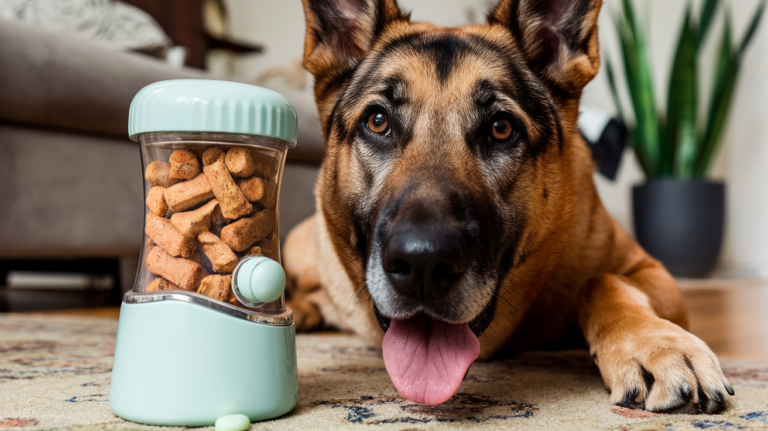
Training doesn’t have to feel exhausting. These clever hacks speed progress while keeping sessions fun and frustration-free.
German Shepherds are amazing dogs who can also drive you absolutely bananas during training. One minute they’re performing complex commands flawlessly, and the next they’re acting like they’ve never heard the word “come” in their entire lives.
Here’s the secret most trainers won’t tell you upfront. Your German Shepherd isn’t being difficult on purpose. These dogs need mental stimulation, clear boundaries, and training techniques that respect their working dog heritage. Master these seven hacks, and you’ll have a GSD who’s not just obedient but genuinely eager to work with you.
1. Use the “Two Treat” System for Lightning-Fast Recalls
Getting a German Shepherd to come when called can feel impossible, especially when there’s something more interesting happening across the park. The solution? Make yourself infinitely more interesting than whatever distraction is calling their name.
Here’s how the two treat system works: keep treats in both hands during training sessions. When your GSD comes to you on command, give them the treat from your right hand. But here’s the magic part. While they’re munching, show them the treat in your left hand, then toss it a few feet away. This creates a game where coming back to you means another reward is immediately in play.
This technique taps into your German Shepherd’s natural drive and prey instincts. They’re not just coming for one reward and then feeling done. They’re engaged in an exciting pattern that makes recall inherently fun. Within a few sessions, most GSDs start sprinting back at lightning speed because they know the game is about to continue.
Pro tip: Vary the distance of your tosses to keep things unpredictable. Sometimes throw the second treat two feet, sometimes ten. The randomness keeps your dog’s brain fully engaged and prevents the training from becoming monotonous.
2. Master the “Middle” Command for Perfect Control
Most German Shepherd owners focus on sit, stay, and down. But there’s one underrated command that will revolutionize how you handle your dog in challenging situations: “middle.”
Teaching your GSD to position themselves between your legs (facing forward) gives you incredible control in crowded spaces, during encounters with other dogs, or when you need them to stay close. It’s like having a safe zone your dog can retreat to whenever the environment gets overwhelming.
Start training this indoors with your dog facing you. Lure them through your legs with a treat, then reward them when they’re in position. Add the verbal cue “middle” once they understand the motion. Gradually practice in different locations until your German Shepherd automatically moves to this position when they’re uncertain or when you give the command.
Why this matters: German Shepherds are protective by nature. Having a reliable “middle” command gives them a job (staying close to you) while preventing reactive behavior toward perceived threats.
The beauty of this command is its versatility. Use it at the vet’s office, during neighborhood walks when other dogs approach, or in busy public spaces. Your GSD will feel secure, and you’ll have precise control without needing a tight leash grip.
3. Implement “Training Layering” for Complex Behaviors
German Shepherds get bored with repetitive training faster than almost any other breed. If you’re drilling the same command fifteen times in a row, you’ll see their interest evaporate before your eyes. The solution is training layering, a technique that keeps their brilliant minds engaged.
Instead of practicing one command repeatedly, create mini circuits that combine three to five different behaviors. For example: sit, shake, down, spin, and come. Run through this sequence, reward at each step, then repeat the circuit. Your German Shepherd stays mentally engaged because they’re constantly anticipating what comes next.
This approach mirrors how these dogs were bred to work. German Shepherds were developed for varied tasks that required switching between different jobs quickly. Training layering satisfies that hardwired need for mental complexity and prevents the glazed-over look you get from traditional repetitive training.
Here’s a sample training circuit structure:
| Exercise | Duration | Focus Area |
|---|---|---|
| Sit/Stay | 30 seconds | Impulse control |
| Heel Walk | 20 steps | Loose leash walking |
| Down/Stay | 45 seconds | Extended duration |
| Recall | From 15 feet | Distance response |
| Trick (spin, shake, etc.) | 1 rep | Mental engagement |
Cycle through this circuit three times per session, and watch how much more focused your German Shepherd becomes. They’ll start anticipating the pattern and engaging more enthusiastically because they know variety is coming.
4. Use “Premack’s Principle” to Your Advantage
Here’s a training concept that sounds fancy but is incredibly simple: Premack’s Principle states that high probability behaviors can reinforce low probability behaviors. In plain English? Use what your German Shepherd wants to do as a reward for doing what you want them to do.
Does your GSD go absolutely nuts when they see their ball? Make them perform a sit or down before you throw it. Is there a specific spot in the yard they always race to? Use access to that spot as the reward for a successful recall. Want to go sniff that interesting fire hydrant? First, we heel nicely past these three distractions.
This technique is incredibly powerful for German Shepherds because these dogs are so driven by specific activities. You’re not always reaching for treats (which can become less motivating over time). Instead, you’re building a pattern where good behavior unlocks the things they’re already desperate to do.
The mindset shift: Stop viewing your dog’s enthusiastic behaviors as problems to suppress. Start seeing them as premium rewards you control access to.
Premack’s Principle also helps in situations where treats aren’t practical or effective. Try offering treats to a German Shepherd who’s locked onto a squirrel across the yard. Good luck with that. But tell them they can chase after they hold a sit for five seconds? Now you’re speaking their language.
5. Create “Decision Points” During Walks
Leash reactivity and pulling are two of the most common German Shepherd training challenges. These dogs are powerful, alert, and constantly scanning their environment for interesting stimuli. Traditional “stop every time they pull” advice can turn a 20-minute walk into a 90-minute standstill.
Instead, create deliberate decision points throughout your walk. These are moments where your GSD must check in with you and make a choice to continue. Pick specific locations (a driveway, a tree, a mailbox) and stop there every time. Wait for your dog to look at you or offer a sit, then continue.
This technique accomplishes several things at once. First, it builds automatic check-ins without you having to constantly command attention. Second, it breaks up the walk into manageable segments that prevent your German Shepherd from building up steam and pulling harder. Third, it creates a predictable pattern that reduces anxiety and reactivity.
After a few weeks of consistent decision points, something magical happens. Your German Shepherd starts checking in with you automatically at those locations and even begins offering attention at new spots. They’ve learned that walks are a collaborative activity, not a solo mission where they drag you along.
6. Employ the “1-2-3 Release” for Bulletproof Stays
German Shepherds often struggle with duration commands like stay or place. They understand the concept but get antsy after 10 or 15 seconds. The problem usually isn’t lack of understanding; it’s unpredictability. Your dog doesn’t know if this stay will last five seconds or five minutes, so they get anxious and break early.
The 1-2-3 release method solves this by creating clear expectations. When you put your GSD in a stay, count out loud (“one… two… three…”) then release them with an enthusiastic “okay!” or “free!” Start with just three seconds, and practice until it’s absolutely solid. Then move to five seconds, then seven, then ten.
The counting serves multiple purposes. It gives you a consistent timeframe to work with, so you’re not randomly releasing at different intervals. It provides audio cues that help your dog understand time is passing. Most importantly, it builds a pattern where your German Shepherd learns to predict when release is coming, which dramatically reduces their anxiety about the command.
Once your GSD is comfortable with the pattern, you can fade the counting and extend duration. But that predictable structure in early training creates confidence that lasts. Your dog learns that staying always has an endpoint, and breaking early never gets reinforced.
7. Introduce “Task Switching” Drills for Real-World Reliability
Here’s where most German Shepherd training falls apart: the dog performs beautifully at home, in the training class, during practice sessions… and then completely ignores you the moment real distractions appear. This happens because we train in too-predictable environments with too much time between commands.
Task switching drills prepare your GSD for real-world chaos. Set up training scenarios where you rapidly switch between different commands in distracting environments. Call them to you, immediately ask for a down, stand up three seconds later, call them to heel, then release to play. The transitions are quick, the environment is stimulating, and your dog has to stay mentally locked in.
This mirrors what German Shepherds were bred for: working in dynamic environments where the task might change at any moment. Police dogs and military dogs don’t get the luxury of quiet training rooms and predictable sessions. They need to respond immediately regardless of what’s happening around them.
| Distraction Level | Example Environment | Recommended Commands per Minute |
|---|---|---|
| Low | Quiet backyard | 4 to 6 |
| Medium | Front yard with occasional passersby | 6 to 8 |
| High | Dog park periphery or busy street | 8 to 12 |
Start these drills in low distraction environments and gradually increase difficulty. Your goal is a German Shepherd who stays responsive to you even when there are multiple interesting things competing for their attention. The rapid switching prevents them from locking onto distractions and teaches them that focusing on you is always the highest priority no matter what else is happening.
The ultimate goal: A German Shepherd who views you as their most valuable resource, regardless of environmental temptation. Task switching builds that unshakeable focus better than any other training method.
Remember: German Shepherds are working dogs who need mental challenges to thrive. These seven hacks aren’t just about obedience; they’re about creating a training relationship that satisfies your dog’s deep need for purposeful work. When training becomes engaging and varied, your GSD won’t just obey—they’ll genuinely enjoy the partnership you’ve built together.