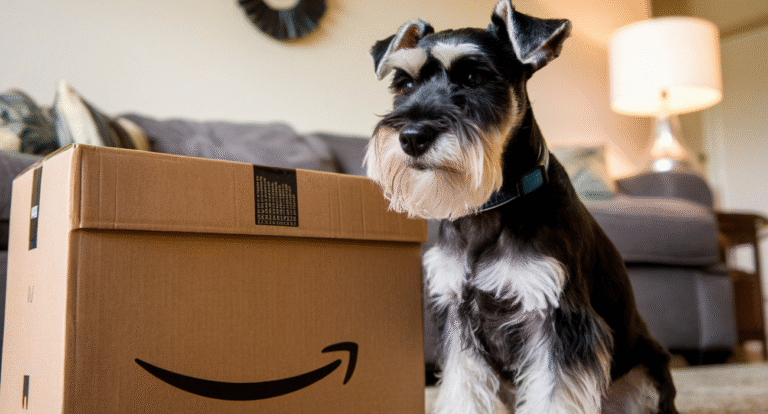
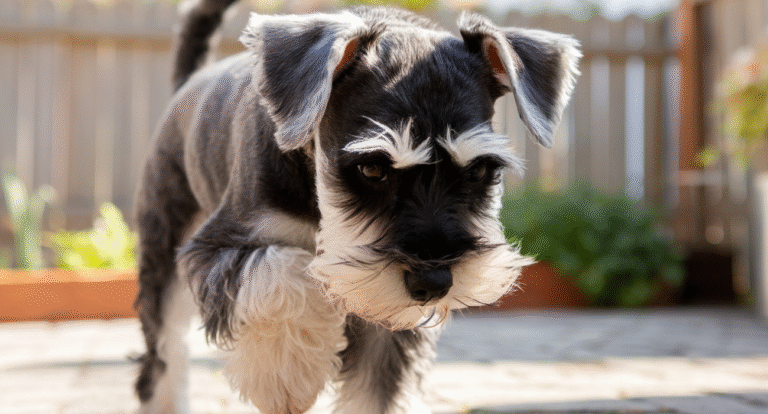
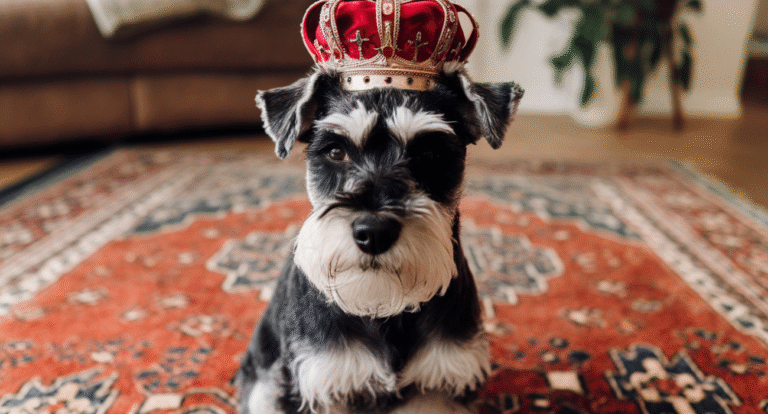
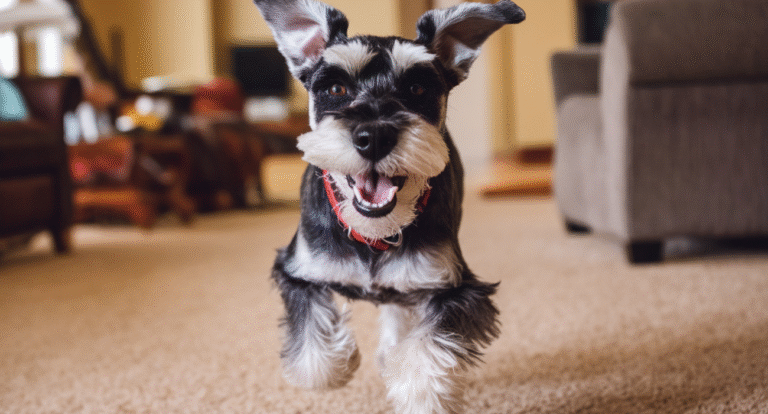
Keep your Schnauzer happy and entertained when home alone with these seven clever ideas. They’ll stay calm and joyful until you return.
You come home after a quick grocery run and your schnauzer has transformed your favorite shoes into abstract art. The couch cushions are on the floor. There’s a mysterious wet spot on the carpet. Your neighbor texts to say the barking was “impressive.” Sound familiar?
Schnauzers are smart. Like, too smart for their own good sometimes. They get bored easily, they bond intensely with their humans, and they have opinions about everything. When you leave them alone without a game plan, chaos ensues. The solution isn’t magic, though. It’s about working with your dog’s natural instincts instead of against them.
1. Master the Art of Gradual Departures
Stop making leaving such a production. Seriously. All that goodbye drama (“Mommy loves you! I’ll be back soon! Be a good boy!”) actually amps up your schnauzer’s anxiety. You’re basically confirming that your departure is a Big Deal Worth Panicking About.
Instead, practice what trainers call gradual desensitization. Start small. Put on your coat and sit back down. Pick up your keys and watch TV. Open the door, step outside for ten seconds, then come back in like nothing happened. No fanfare, no emotional speeches.
The goal is to make your comings and goings so boring that your schnauzer barely looks up from his nap.
Build up slowly over days or weeks. Step outside for thirty seconds. Then a minute. Then five. Keep it random and uneventful. Your schnauzer needs to learn that doors opening don’t equal abandonment. They’re just… doors opening. Eventually, you can leave for real errands while your pup stays calm because this whole leaving thing? Totally routine.
2. Create a Stimulation Station (Not Just a Sad Empty Room)
Your schnauzer’s brain needs a job. These dogs were bred to hunt rats in German stables, which required focus, problem solving, and serious determination. Modern pet life doesn’t exactly provide those outlets. So when you leave your schnauzer alone with nothing to do, that busy brain finds its own entertainment. Usually the destructive kind.
Set up what I call a stimulation station. This is your dog’s designated alone time headquarters, stocked with mental challenges that actually engage that terrier intelligence. We’re talking puzzle feeders filled with treats, frozen Kong toys stuffed with peanut butter and kibble, snuffle mats that turn mealtime into a treasure hunt, and rotating toy selections so nothing gets boring.
Here’s a breakdown of engagement options:
| Activity Type | Example | Engagement Time | Difficulty Level |
|---|---|---|---|
| Puzzle Feeders | Nina Ottosson games | 15 to 30 minutes | Medium to Hard |
| Frozen Treats | Stuffed Kong, frozen broth cubes | 20 to 45 minutes | Easy |
| Snuffle Mats | Hide kibble in fabric strips | 10 to 20 minutes | Easy to Medium |
| Lick Mats | Spread with yogurt or purees | 15 to 25 minutes | Easy |
| Chew Toys | Bully sticks, yak chews | 30 to 60 minutes | Easy |
The magic happens when you give these items only during alone time. Your schnauzer starts associating your departure with awesome stuff appearing. Suddenly, you leaving becomes the trigger for fun rather than fear.
3. Tire Them Out Before You Leave (The Non-Negotiable)
A tired schnauzer is a good schnauzer. This isn’t just dog owner wisdom; it’s neuroscience. Physical exercise releases endorphins, reduces cortisol (the stress hormone), and promotes that lovely drowsy contentment that makes solo time bearable.
Before you leave for work or errands, get your schnauzer properly exercised. I’m not talking about a leisurely stroll around the block where they stop to sniff every three feet. I mean real exercise that gets the heart pumping and the tongue hanging out. A 30 to 45 minute brisk walk, a game of fetch in the backyard, a training session that engages their brain, or even a quick agility run through homemade obstacles.
Schnauzers have surprising stamina for their size. Don’t underestimate how much energy is packed into that compact body. Mental stimulation counts too. Fifteen minutes of training new tricks can tire them out as much as a half hour walk because thinking is exhausting.
A properly exercised schnauzer will spend your absence napping instead of plotting couch destruction.
Time your exercise right. Finish about 30 minutes before you actually need to leave so your dog has time to cool down, hydrate, and settle into rest mode. Then when you slip out the door, they’re already halfway to dreamland.
4. Set Up Strategic Background Noise
Silence is weird for dogs. Think about it: when you’re home, there’s constant ambient noise. The TV murmuring, you moving around, the dishwasher running, doors closing. Then you leave and suddenly it’s dead quiet except for every terrifying sound from outside. That mail carrier’s footsteps? INTRUDER ALERT. A car door slamming? PANIC MODE ACTIVATED.
Schnauzers, with their alert terrier heritage, are especially prone to noise triggered anxiety. They were bred to bark at anything unusual, and when they’re alone, everything seems unusual.
Counter this by leaving appropriate background noise. Dog specific TV channels or playlists actually work beautifully. There are YouTube channels with hours of calming music mixed with occasional dog friendly sounds so your pup knows everything’s normal. Some schnauzers do great with talk radio because human voices are comforting. Others prefer classical music (studies show it genuinely reduces canine stress).
White noise machines can mask those trigger sounds from outside. Your schnauzer won’t react to the mailman if they can’t hear him approaching. Just keep the volume moderate. You want ambient comfort, not a rock concert.
5. Consider a Midday Break (Or Hire Someone Who Will)
Let’s talk reality. Adult dogs can physically hold their bladder for eight to ten hours, but should they? Not really. More importantly, is it fair to expect your schnauzer to entertain themselves for your entire workday? Also not really.
If you’re gone for long stretches, a midday break becomes essential for your dog’s wellbeing. This could be you on lunch break, a trusted neighbor, a professional dog walker, or a pet sitting service. Even a 15 to 20 minute visit transforms your schnauzer’s day.
The benefits are massive:
- Bathroom relief (obviously)
- Mental stimulation from interaction
- Physical activity to burn energy
- Breaking up the monotony of solo time
- Reinforcing that people do come back
Some schnauzers do wonderfully with doggy daycare if they’re social butterflies. Others are more selective about their canine friendships and prefer solo attention. Know your dog’s personality. Not every schnauzer wants to party with other pups all day, and forcing it creates more stress than it relieves.
6. Designate a Comfort Zone (With Strategic Boundaries)
Where your schnauzer spends alone time matters tremendously. Free roaming the entire house? That’s overwhelming and gives too many opportunities for mischief. Locked in a tiny crate for hours? That’s prison, not comfort. The sweet spot is somewhere in between.
Create a designated comfort zone that feels safe but not restrictive. For many schnauzers, this might be a dog proofed room like a laundry room or large bathroom with their bed, toys, water, and stimulation activities. Baby gates work beautifully to section off part of your home without the confinement of crating.
If your schnauzer is crate trained and genuinely sees their crate as a cozy den (not a punishment box), that can work for shorter absences. But we’re talking a properly sized crate where they can stand, turn around, and stretch out comfortably. Include comfortable bedding, a favorite toy, and maybe an item of your clothing that smells like you.
The goal is a space where your schnauzer feels secure, not trapped. Think cozy bedroom, not jail cell.
Location matters too. Pick somewhere relatively central and quiet, not a basement corner or isolated spot. Your schnauzer shouldn’t feel banished. Add familiar smells, their favorite blanket, and keep the temperature comfortable. Some dogs like being able to see outside; others find it overstimulating. Experiment to find what works for your particular pup.
7. Train the “Settle” Command (Your Secret Weapon)
Here’s something most schnauzer owners never teach: calm behavior on cue. We train sit, stay, come, and all the active commands. But teaching your dog to actively relax? That’s next level useful.
The “settle” command teaches your schnauzer to go to their bed or designated spot and chill out. Not just lie down, but actually enter a calm mental state. This becomes incredibly powerful for alone time because you’re giving them a specific job: relax here until I return.
Start training when you’re home. Lead your schnauzer to their bed or mat and use a consistent command like “settle” or “place.” Reward any calm behavior: lying down, resting their head, closing their eyes. Initially, they might get up after five seconds. That’s fine. Guide them back, say the command again, reward calm.
Gradually increase duration. Start with ten seconds of settling, then thirty, then a minute. Use a release word (“okay!” or “free!”) so they know when settling time is over. Practice multiple times daily in short sessions. The goal is building that muscle memory for relaxation.
Once your schnauzer understands the concept at home while you’re present, start practicing with brief absences. Cue “settle,” step into another room for thirty seconds, return and reward if they stayed calm. Build up slowly. This command becomes your pre departure routine, cueing your dog that it’s time to relax, not panic.
Your schnauzer’s alone time struggles aren’t personal failures. These dogs were literally designed to be human companions and working partners. Independence doesn’t come naturally, but with consistency, patience, and the right strategies, your bearded buddy absolutely can learn to handle solo time without demolishing your home or their own peace of mind. Start implementing these techniques gradually, celebrate small wins, and remember that every schnauzer is different. What works for one might need tweaking for another. The journey to a calm, confident home alone schnauzer takes time, but it’s absolutely achievable.