Leaving them alone doesn’t have to mean guilt. Try these clever strategies to keep your German Shepherd calm, busy, and content.
Your German Shepherd’s anxiety starts the moment you reach for your keys. That whimpering, those pleading eyes, the way she follows you to the door… sound familiar? These incredibly intelligent dogs weren’t bred to lounge around empty houses all day, and their separation struggles are real. But here’s the good news: with the right strategies, your loyal companion can actually learn to enjoy their solo time.
Think of it this way. You’re not just leaving your dog home alone; you’re teaching them an essential life skill. Independence is healthy, and your German Shepherd is more than capable of mastering it. Let’s explore seven proven methods that transform anxious waiting into peaceful contentment.
1. Create an Epic Morning Workout Routine
Let’s start with the golden rule of German Shepherd ownership: a tired dog is a happy dog. These athletic powerhouses were literally designed to work all day, so a gentle stroll around the block won’t cut it. Before you leave for work, your GSD needs serious physical activity that actually depletes their energy reserves.
Think beyond basic walks. We’re talking running, fetch sessions that leave them panting, agility practice in the backyard, or even having them wear a weighted vest during exercise. The goal is to create genuine physical fatigue, not just mild interest. A properly exercised German Shepherd will spend the first few hours of your absence simply recovering and napping.
Your German Shepherd’s behavior problems aren’t personality flaws. They’re usually just excess energy desperately searching for an outlet.
Here’s what a solid morning routine might look like:
| Activity | Duration | Energy Burn Level |
|---|---|---|
| Brisk walk or jog | 20-30 minutes | Moderate |
| High intensity fetch or frisbee | 15-20 minutes | High |
| Training session (commands, tricks) | 10-15 minutes | Mental + Physical |
| Cool down walk | 10 minutes | Low |
The mental component is just as crucial as the physical. Combining obedience training with exercise engages both body and mind, creating the perfect pre-departure exhaustion cocktail.
2. Turn Your Home Into a Puzzle Paradise
German Shepherds possess problem solving abilities that would impress most humans. That massive brain needs constant stimulation, or it turns its attention to your stuff. Enter puzzle toys: the unsung heroes of canine entertainment.
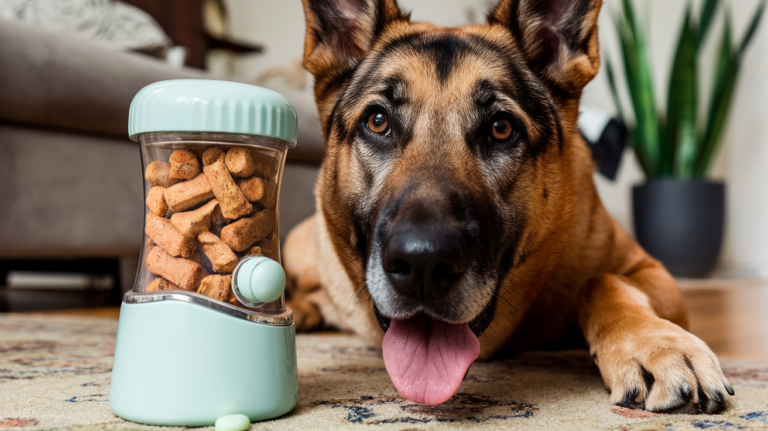
Invest in a variety of interactive feeders and puzzle toys at different difficulty levels. Kong toys stuffed with frozen peanut butter, treat dispensing balls that require rolling and manipulation, puzzle boards with sliding compartments… these aren’t just distractions. They’re jobs. And your German Shepherd loves having a job.
Rotate the toys regularly to maintain novelty. Monday might feature the purple puzzle ball, Wednesday brings out the treat maze, and Friday introduces the snuffle mat. This rotation prevents boredom and keeps your dog engaged with “new” challenges throughout the week. Some owners even hide multiple puzzle toys around the house, creating a scavenger hunt that can occupy a clever GSD for an hour or more.
Pro tip: freeze Kong toys overnight. This extends the entertainment from ten minutes to potentially 45 minutes or longer, and it’s especially appreciated during warmer months.
3. Establish a Dedicated Safe Space
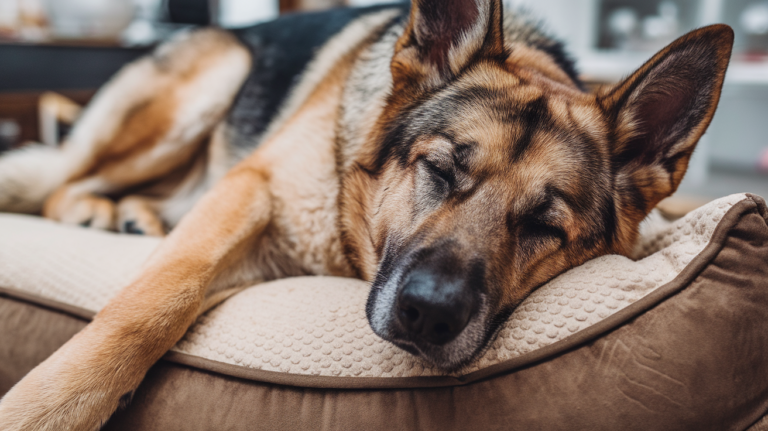
Your German Shepherd needs a place that feels like theirs. Not just any corner of the house, but a specifically designated zone that represents safety, comfort, and security. For many dogs, this means crate training, but it could also be a cozy bed in a quiet room or even a specific area of your bedroom.
The key is positive association. This space should never be used for punishment. Instead, it becomes the place where good things happen: special treats appear, favorite toys live there, and it smells reassuringly like you. Many owners leave an unwashed t-shirt in their dog’s safe space, providing olfactory comfort during absences.
Make this area genuinely appealing. Orthopedic beds for joint support (German Shepherds are prone to hip issues), comfortable temperature control, perhaps a white noise machine or soft music to mask startling outside sounds. Some dogs appreciate having a view of the yard or street; others prefer cave like spaces where they feel protected. Learn your individual dog’s preferences.
The goal isn’t confinement. It’s creating a sanctuary where your German Shepherd chooses to retreat because it feels like the best spot in the house.
4. Implement Strategic Feeding Times
Here’s a simple trick that many owners overlook: feed your German Shepherd right before you leave. Seriously, it’s that straightforward. Dogs naturally become drowsy after eating as their bodies focus energy on digestion. Time your departure to coincide with post meal sleepiness, and you’ve just bought yourself several hours of peaceful napping.
Take this concept further by using slow feeder bowls or puzzle feeders for meals. Instead of gulping breakfast in 30 seconds, your dog now spends 15 to 20 minutes working for their food. That’s mental stimulation plus the sedating effect of eating plus the subsequent food coma. It’s the trifecta of alone time success.
For dogs who struggle with longer absences, consider investing in an automatic feeder that dispenses a midday snack or meal. This breaks up the day, gives your dog something to anticipate, and provides another round of that helpful post eating drowsiness.
5. Leverage Technology for Connection and Monitoring
We live in an era where you can literally video chat with your dog, and honestly? It’s kind of amazing. Pet cameras with two way audio allow you to check in, speak to your German Shepherd, and even dispense treats remotely. While this shouldn’t replace proper exercise and mental stimulation, it can provide reassuring touchpoints throughout the day.
Some German Shepherds respond beautifully to hearing their owner’s voice midday. Others get more anxious when they hear you but can’t reach you, so monitor your individual dog’s reaction. Many pet cameras also track activity levels, sending alerts if your dog seems unusually restless or anxious. This data helps you adjust your strategies and understand patterns in your dog’s behavior.
Don’t underestimate the power of doggy television either. Yes, really. Services like DogTV or simply leaving on nature documentaries can provide gentle background stimulation. Many German Shepherds enjoy watching birds, squirrels, and other animals on screen. It’s not a primary entertainment source, but it adds environmental enrichment to an otherwise quiet house.
6. Consider a Midday Break or Dog Walker
Sometimes the best solution is the most obvious one: break up the day. If you’re gone for ten or twelve hours, that’s genuinely too long for most German Shepherds, especially younger or more energetic individuals. A midday visit from a dog walker, pet sitter, or helpful neighbor completely transforms your dog’s experience.
Even just 20 minutes makes a dramatic difference. A quick bathroom break, some play time, a brief walk, maybe a training session or two… suddenly your dog isn’t facing one endless stretch of solitude but two manageable periods. The psychological impact is huge. Your German Shepherd now has something to look forward to, breaking the monotony.
Can’t afford a regular dog walker? Get creative. Trade off with another dog owner in your neighborhood, check if a trustworthy teenager needs some extra income, or ask if a work from home friend might appreciate a furry lunch companion. Where there’s a will, there’s usually a way.
7. Practice Departure Desensitization
Here’s where we address the emotional component of being home alone. Some German Shepherds aren’t just bored; they’re genuinely anxious about separation. These dogs need systematic desensitization to departure cues, and it works remarkably well with consistency.
Start by removing drama from your comings and goings. No elaborate goodbyes, no guilt ridden apologies, no lengthy farewell rituals. Treat leaving like it’s no big deal, because ideally, it shouldn’t be a big deal. Make your departure boring and predictable.
The most powerful message you can send your German Shepherd is calm confidence. Your energy tells them whether they should worry or relax.
Practice mock departures throughout the day. Put on your coat, grab your keys, walk to the door, then sit back down. Repeat this until your dog barely glances up. Gradually extend this: step outside for five seconds, come back in, ignore the dog for a moment, then calmly resume normal activity. Build up to longer absences incrementally.
Pair your actual departures with high value treats that only appear when you leave. Special chews, stuffed Kongs, or puzzle toys that come out exclusively at departure time create positive associations. Your dog begins to connect your absence with good things rather than loss.
The counterintuitive part? Don’t make a fuss when you return either. Ignore your German Shepherd for the first few minutes after arriving home, then greet them calmly once they’ve settled. This teaches that your comings and goings are just normal parts of life, nothing to get excited or worried about.
These seven strategies work best when combined, creating a comprehensive approach to your German Shepherd’s wellbeing. Some techniques will resonate more with your individual dog; others might need tweaking to fit your lifestyle. The common thread? You’re acknowledging your dog’s needs while teaching valuable independence. And that’s the foundation of a happy, confident German Shepherd who handles alone time like the capable, intelligent creature they truly are.