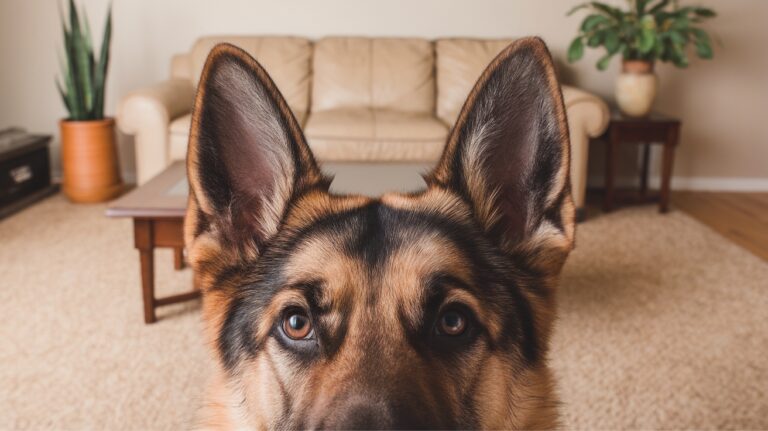
Your shepherd’s ears are tiny emotion antennas. Find out how each twitch, tilt, and position reveals exactly what they are thinking in the moment.
If you’ve ever wished your German Shepherd could just tell you what they were feeling, good news: they already are. Their ears are constantly broadcasting a signal, and all you have to do is learn how to tune in.
German Shepherds are one of the most emotionally expressive dog breeds on the planet. Those magnificent, upright ears aren’t just for show. They’re a real-time window into your dog’s inner world.
1. Ears Fully Upright and Forward
When your German Shepherd’s ears are standing straight up and angled forward, your dog is locked in. Something has grabbed their full and undivided attention.
This is the classic “alert” position. It usually means your GSD has heard, seen, or smelled something interesting and is actively processing it.
Fully erect, forward-facing ears are a sign of peak mental engagement. Your dog isn’t being aggressive. They’re being a German Shepherd.
You might see this when a squirrel darts across the yard, when a stranger approaches the front door, or when you grab the leash.
It’s worth noting that alert ears are neutral, not threatening. The rest of the body tells you the rest of the story.
2. Ears Relaxed and Slightly to the Side
This is the ear position most owners overlook because it looks like nothing is happening. But that’s exactly the point: nothing stressful is happening, and your dog is perfectly content.
Relaxed ears sit naturally, without being pinned back or pushed rigidly forward. They may tilt gently outward like little satellite dishes at ease.
What Relaxed Ears Actually Mean
A dog in this state is comfortable, calm, and not on high alert. This is your GSD in their happy place.
You’ll typically see this during a lazy afternoon nap, a casual walk through a familiar neighborhood, or a slow belly rub session on the couch.
3. Ears Pulled Back Flat Against the Head
This one is important to recognize quickly. Ears that are flattened tightly against the skull are a sign your dog is feeling anxious, fearful, or potentially submissive.
It’s a very different look from relaxed ears, and once you’ve seen it a few times, you won’t confuse the two. The energy in the dog’s whole body usually shifts as well.
Fear vs. Submission: Spotting the Difference
Fearful ear pinning is often accompanied by a tucked tail, wide eyes, and a low body posture. Submissive pinning might look similar but happens during greetings with a more dominant dog or person.
Context matters enormously here. The same ear position can mean different things depending on what’s going on around your dog.
Flattened ears are your dog waving a white flag. It’s a signal that calls for calm, reassurance, and zero pressure from you.
4. One Ear Up, One Ear Down
Ah, the asymmetrical ear. This one is genuinely adorable and also kind of fascinating from a behavioral standpoint.
When your GSD is sporting one ear up and one ear casually flopped, they’re usually in a state of mild curiosity. They’ve noticed something, but they’re not fully committed to figuring it out yet.
A Sign of a Relaxed, Curious Mind
Puppies and younger GSDs do this constantly as their ear muscles are still developing. But even adult dogs will pull this look out when something mildly interesting catches their eye.
Think of it as your dog’s version of a raised eyebrow. Intrigued, but not alarmed.
5. Ears Swiveling and Rotating
German Shepherds can move each ear independently, which is one of the coolest things about the breed and also one of the most useful signals to watch.
When you see your dog’s ears rotating like little radar dishes, they’re actively scanning their environment for more information. They’ve picked up on something but haven’t fully located or identified it yet.
What to Do When You See This
Don’t rush to reassure your dog or distract them. Let them process. They’re doing exactly what their brain is built to do.
If the swiveling leads to full alert ears, check out what caught their attention. If it resolves back into relaxed ears, your dog has decided it wasn’t worth worrying about.
6. Ears Back but Not Flat (the “Airplane Ears”)
This is a subtle but meaningful distinction. Ears that are pulled back softly, without being pressed flat to the skull, often signal friendliness, excitement, or affection.
Many GSD owners call this the “airplane ears” look because the ears angle back and slightly outward, almost like little wings. It frequently shows up during greetings, playtime, or when your dog is really happy to see you.
Don’t Confuse This with Fear
The key difference is the tension (or lack of it) in the dog’s overall body language. Airplane ears come with a wiggly butt, a relaxed face, and possibly an attempt to climb directly into your lap despite weighing 75 pounds.
Fear ears are tighter, lower, and accompanied by very different body signals. The vibe is completely different once you know what to look for.
Soft, swept-back ears paired with a wagging tail and a loose body? That’s a dog who is genuinely, unabashedly happy to be near you.
7. Ears Forward with a Hard, Stiff Body
This is the ear signal that deserves the most attention and the most respect. Ears rigidly forward, combined with a stiff body, a fixed gaze, and a closed mouth can indicate your dog is feeling threatened or preparing to react.
It looks similar to the alert position at first glance, but the stillness of the body is what changes everything.
Reading the Full Picture
A dog that is alert will often shift, sniff, and look around. A dog that is moving into a reactive state goes very, very still.
This is your cue to calmly remove your dog from the situation, increase distance from whatever is triggering them, and give them space to decompress. No need to panic, just act.
Why This Matters for GSD Owners Specifically
German Shepherds are intensely loyal and protective by nature. They take their job as family guardian seriously, sometimes very seriously.
Understanding this ear signal helps you intervene early, before your dog feels like they have to escalate. It’s one of the most valuable things you can learn as a GSD owner.
Putting It All Together
Reading your German Shepherd’s ears isn’t about memorizing a chart. It’s about building a habit of watching the whole dog, with the ears as your starting point.
Over time, you’ll start to notice patterns. You’ll know what your specific dog’s “I’m nervous” ears look like versus their “I heard a weird noise” ears. Every GSD is a little different.
The more fluent you become in their body language, the stronger your communication and your relationship will be. And honestly, there are few things more satisfying than truly getting your dog.