Find out which Schnauzer myths still fool owners and why it’s time to leave them behind. Get the facts for a happier, smarter pup.
Schnauzers look like tiny professors who’ve spent too much time in the library and not enough time explaining themselves to the general public. As a result, myths about these dogs have multiplied faster than tumbleweeds in a ghost town. Ask ten different people about Schnauzers, and you’ll get ten different stories, many of which contradict each other entirely.
Here’s the thing: Schnauzers are already interesting enough without the embellishment. They don’t need a mythology built around them, yet somehow they’ve acquired one anyway. Let’s tackle the biggest misconceptions that even experienced Schnauzer owners sometimes believe.
1. “Schnauzers Are Hypoallergenic Dogs”
This is perhaps the most widespread myth in the Schnauzer world, and it’s caused countless misunderstandings. The truth? No dog is truly hypoallergenic. Not Schnauzers, not Poodles, not even those fancy designer breeds that cost as much as a used car.
What Schnauzers actually are is low shedding. Their wiry double coat doesn’t shed the way a Golden Retriever’s does, which means less dander floating around your home. Dander, for those who don’t know, is the real culprit behind pet allergies, not the fur itself. Because Schnauzers shed minimally, they may trigger fewer allergic reactions in some people. But here’s the kicker: they still produce dander, they still produce saliva, and both contain the proteins that cause allergic reactions.
If you have severe dog allergies, spending time with a Schnauzer before committing is absolutely essential. Some allergy sufferers do wonderfully with Schnauzers; others discover that their sneezing fits are just as bad as with any other breed. Your mileage will vary dramatically based on your specific sensitivities.
Low shedding does not equal hypoallergenic. Every dog produces allergens, and pretending otherwise sets families up for heartbreak when they realize their new Schnauzer still triggers their allergies.
2. “Schnauzers Don’t Need Much Exercise”
Looking at a Miniature Schnauzer sitting primly on a velvet cushion, you might think they’re content to spend their days as decorative lap dogs. You would be spectacularly wrong. Schnauzers, regardless of size, were bred as working dogs with serious jobs to do. Miniature Schnauzers were ratters on German farms. Standard Schnauzers guarded property and drove livestock. Giant Schnauzers worked alongside butchers and brewers.
This working heritage means Schnauzers need substantial physical and mental stimulation. A quick walk around the block isn’t going to cut it. These dogs need at least 30 to 60 minutes of genuine exercise daily, and that’s just the baseline. Mental stimulation is equally important; a bored Schnauzer is a destructive Schnauzer.
Without adequate exercise, Schnauzers develop behavioral problems faster than you can say “chewed furniture.” They’ll bark excessively, dig holes in your yard, and generally make their dissatisfaction known to everyone within a three-block radius. They’re intelligent dogs that need jobs to do, whether that’s agility training, scent work, or advanced obedience training.
3. “All Schnauzers Are Aggressive Towards Other Dogs”
This myth probably originated because Schnauzers have strong personalities and don’t back down from confrontation. They’re confident, assertive, and sometimes downright bossy with other dogs. But aggressive? Not inherently, no.
Schnauzers were originally bred to work independently and make decisions without human input. This makes them naturally confident and sometimes a bit too big for their britches. However, proper socialization from puppyhood creates Schnauzers that are perfectly friendly with other dogs. The key word here is socialization.
A Schnauzer that meets various dogs, people, and situations during their critical socialization period (roughly 3 to 14 weeks old) develops into a well adjusted adult. A Schnauzer that’s isolated or poorly socialized may indeed become reactive or territorial. But that’s true of virtually any breed. Blaming the breed for what’s actually a training and socialization issue is both unfair and inaccurate.
4. “Schnauzers Are Easy to Groom at Home”
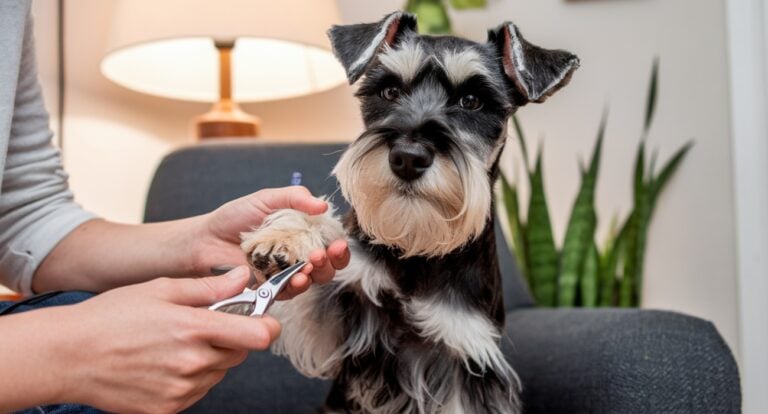
Sure, if your definition of “easy” includes learning professional grooming techniques, investing in quality tools, and spending several hours every six to eight weeks meticulously hand stripping or clipping your dog. For most people, grooming a Schnauzer is about as easy as performing dentistry on yourself.
Schnauzers require specialized grooming to maintain their distinctive appearance and coat health. Their double coat consists of a soft undercoat and a wiry outer coat. Show dogs are typically hand stripped, a process that removes dead hair by plucking it out by the roots. This maintains the correct texture and color but requires significant skill and time.
Most pet owners opt for clipping instead, which is faster but gradually softens the coat texture over time. Either way, Schnauzers need regular grooming every six to eight weeks, plus daily brushing to prevent matting. Their distinctive beards collect food and water, requiring frequent cleaning. Their eyebrows need trimming so they can actually see. And don’t even get started on the ear hair situation.
Professional grooming for Schnauzers typically costs between $50 and $100 per session, depending on your location and the dog’s size. Over a Schnauzer’s lifetime, you’ll spend thousands on grooming. This isn’t a breed you can bathe at home every few months and call it good.
The Schnauzer’s distinguished appearance doesn’t happen by accident. It’s the result of dedicated, skilled grooming that most owners cannot realistically maintain on their own.
5. “Schnauzers Are Stubborn and Untrainable”
This myth confuses intelligence with stubbornness, and independence with defiance. Schnauzers are wickedly smart dogs that learn quickly and remember forever. The problem isn’t that they can’t learn; it’s that they question why they should obey.
Think of Schnauzers as the lawyers of the dog world. They understand the rules perfectly well; they’re just not convinced the rules apply to them in this particular situation. They want to understand the reasoning behind commands, and they absolutely will exploit any inconsistencies in your training approach.
This makes Schnauzers excellent candidates for positive reinforcement training but terrible matches for heavy handed or inconsistent methods. They respond beautifully to training that’s engaging, varied, and reward based. They excel in obedience competitions, agility, and other dog sports when properly motivated. The key is making training worth their while and establishing yourself as a confident, consistent leader they respect.
6. “Schnauzers Bark Constantly and Can’t Be Trained to Stop”
Yes, Schnauzers are vocal dogs. They were bred to alert their owners to intruders, vermin, and basically anything that moves within their territory. Barking is part of their genetic programming. However, the myth that they bark uncontrollably and can’t be trained to be quieter is absolutely false.
Schnauzers bark for specific reasons: alerting to perceived threats, boredom, anxiety, or attention seeking. Address the underlying cause, and the barking decreases significantly. A well exercised, mentally stimulated Schnauzer with proper training barks far less than a bored, understimulated one.
Teaching the “quiet” command, providing adequate exercise, and managing their environment all dramatically reduce nuisance barking. Will your Schnauzer still alert you when someone approaches your door? Absolutely. That’s what they’re designed to do. But there’s a massive difference between appropriate alert barking and the nonstop yapping that gives Schnauzers their bad reputation.
Schnauzers don’t bark because they’re bad dogs. They bark because they’re doing exactly what centuries of breeding designed them to do: protect their territory and alert their people. Channel that instinct appropriately, and you’ll have a great watchdog, not a noise machine.
7. “All Three Schnauzer Sizes Have the Same Temperament”
This is perhaps the sneakiest myth because the three Schnauzer types (Miniature, Standard, and Giant) look like they’re just different sizes of the same dog. Plot twist: they’re actually distinct breeds with different histories and temperaments.
Miniature Schnauzers are the most popular and were developed separately from their larger cousins. They’re generally more outgoing and sociable, with a terrier’s feisty attitude. They can be excellent family dogs and tend to be more adaptable to apartment living.
Standard Schnauzers are the original, oldest type. They’re intelligent, energetic, and extremely versatile. They have strong guarding instincts and can be more reserved with strangers than Miniatures. They need experienced owners who understand their independent nature.
Giant Schnauzers are the powerhouses of the family. They’re working dogs through and through, requiring extensive socialization, training, and exercise. They’re naturally protective and can be dominant, making them unsuitable for first time dog owners. They need jobs to do and aren’t happy as couch potatoes.
While all three share certain characteristics like intelligence and loyalty, assuming they’re interchangeable based on size preference alone leads to mismatched expectations and frustrated owners. Research the specific size you’re interested in, not just “Schnauzers” in general.