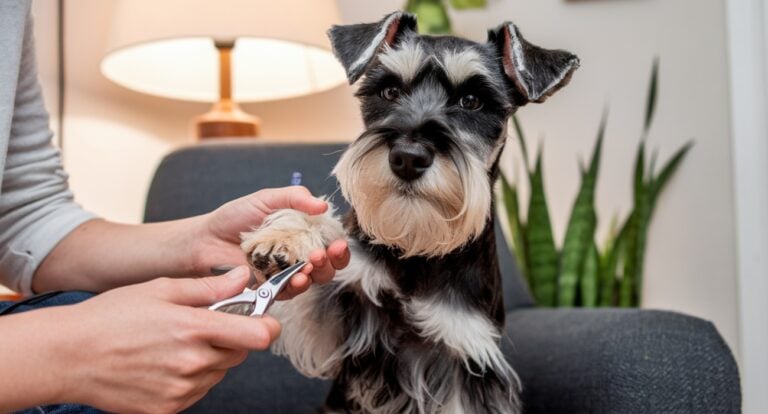
Aggression in Schnauzers can be managed with these six fast strategies. See better behavior and a calmer pup in record time.
Ever watched your Schnauzer transform from cuddly couch potato to snarling gremlin in 0.5 seconds flat? You’re definitely not alone. These charismatic terriers have a reputation for being alert watchdogs, which is just a polite way of saying they can be intensely reactive to basically everything.
But here’s something most Schnauzer owners don’t realize: that aggression is often your dog’s way of communicating fear, frustration, or overstimulation. Your pup isn’t trying to ruin your life or become the neighborhood menace. They just need help channeling that big personality into appropriate behaviors, and that’s exactly what we’re going to tackle today.
Understanding Your Schnauzer’s Aggressive Triggers
Before diving into solutions, you need to become a detective. Schnauzer aggression rarely appears randomly. These smart dogs typically react to specific triggers, and identifying yours is crucial for lasting change.
Common triggers include:
- Other dogs (especially unfamiliar ones)
- Strangers approaching their territory or family
- Resource guarding (food, toys, favorite humans)
- Loud noises or sudden movements
- Being restrained or cornered
- Pain or discomfort from health issues
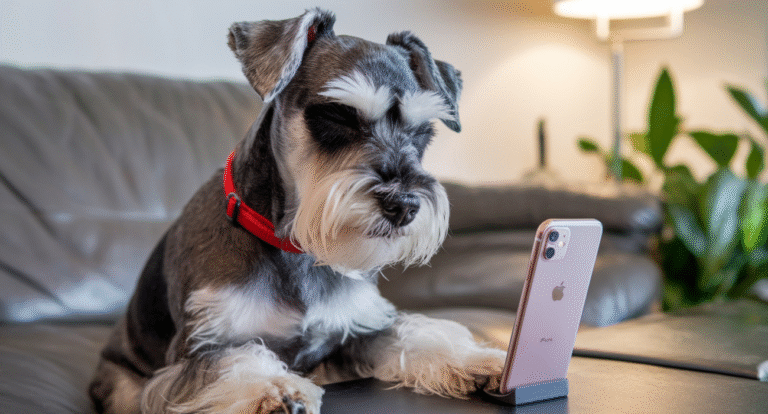
Start keeping a simple journal on your phone. Note when aggressive behaviors happen, what preceded them, and how your dog acted afterward. You’ll spot patterns within just a few days, which gives you a roadmap for training.
The foundation of fixing aggression is understanding that your Schnauzer isn’t giving you a hard time. They’re having a hard time themselves.
Pay special attention to your dog’s body language before the aggression erupts. Schnauzers usually provide warning signals like stiffening, whale eye (showing the whites of their eyes), lip licking, or freezing. Catching these early signs means you can intervene before things escalate.
1. Master the “Look at Me” Command for Instant Redirection
This single command might be the most powerful tool in your arsenal. When your Schnauzer locks onto a trigger, their brain essentially goes offline. The “Look at Me” command interrupts that fixation and reconnects their attention to you.
How to train it:
Start indoors with zero distractions. Hold a treat near your eyes and say “Look at Me” or “Watch Me” in a happy tone. The instant your dog makes eye contact, mark it with “Yes!” and deliver the treat. Practice this 10 times per session, twice daily.
Gradually add distance and distractions. Practice in different rooms, then the backyard, then on quiet streets. The goal is building such a strong habit that your Schnauzer automatically checks in with you when they’re uncertain or triggered.
Here’s where it gets practical: Once your dog reliably responds indoors, start using the command before they reach their aggressive threshold outside. See another dog 50 feet away? “Look at Me,” treat, praise, keep moving. You’re teaching them that good things happen when they focus on you instead of reacting to triggers.
| Training Phase | Environment | Success Rate Goal | Typical Timeline |
|---|---|---|---|
| Foundation | Indoors, no distractions | 90% success | 3 to 5 days |
| Intermediate | Backyard, mild distractions | 80% success | 1 to 2 weeks |
| Advanced | Public spaces, moderate triggers | 70% success | 2 to 4 weeks |
| Mastery | High distraction environments | 85% success | 4 to 8 weeks |
The beauty of this approach? You’re not punishing aggression; you’re making something better more rewarding. Your Schnauzer learns that checking in with you is always the winning move.
2. Implement Structured Desensitization Training
Desensitization sounds technical, but it’s actually straightforward. You’re systematically exposing your Schnauzer to their triggers at a level that doesn’t provoke aggression, then gradually increasing intensity. Think of it like building tolerance.
The critical rule: Never push too fast. If your dog reacts aggressively, you’ve moved too quickly and need to back up several steps.
Let’s say your Schnauzer loses their mind around other dogs. Start by having them observe another dog from 100 feet away (or whatever distance keeps them calm). Feed high value treats continuously while the other dog is visible. When the trigger dog disappears, treats stop. You’re creating a powerful association: other dogs = amazing things happen.
Over multiple sessions, decrease the distance by small increments. Maybe next week you’re at 90 feet, the week after 80 feet. This feels slow, but rushing creates setbacks that take even longer to fix.
Patience in training isn’t optional with Schnauzers. These intelligent dogs remember bad experiences just as vividly as good ones, making careful progression essential.
Combine desensitization with counterconditioning (changing the emotional response). Your goal isn’t just tolerance; it’s teaching your Schnauzer to like the presence of their triggers because wonderful things consistently follow.
Pro tip: Use treats your dog would literally climb walls for. Regular kibble won’t cut it. We’re talking small pieces of chicken, cheese, hot dogs, or freeze dried liver. Save these jackpot rewards exclusively for desensitization training.
3. Establish Clear Leadership Through Structure
Schnauzers are terriers bred to think independently and make decisions. Without clear leadership, they’ll appoint themselves as household security director, which manifests as aggressive protective behaviors.
Leadership doesn’t mean domination or outdated alpha techniques. It means providing structure, consistency, and clear communication. Your Schnauzer needs to understand that you’ve got everything handled.
Practical structure elements:
Implement “Nothing in Life is Free” (NILIF). Your dog sits before meals, waits at doorways until released, and performs a command before getting attention or toys. This isn’t about being mean; it’s about creating predictable patterns that reduce anxiety.
Control resources without being a tyrant. Feed at consistent times, maintain a regular walking schedule, and keep sleeping arrangements consistent. Schnauzers thrive on routine because it eliminates uncertainty (a major aggression trigger).
Claim your space calmly. If your Schnauzer is blocking a doorway or becoming possessive of furniture, ask them to move using a command like “Off” or “Move.” Reward compliance immediately. You’re teaching that cooperation with your requests leads to good outcomes.
Here’s something important: aggressive Schnauzers often suffer from too much freedom and not enough guidance. By providing structure, you’re actually reducing their stress load because they no longer feel responsible for making all the decisions.
4. Exercise That Brain and Body Relentlessly
A tired Schnauzer is a well behaved Schnauzer. These energetic terriers were bred to work, and without adequate physical and mental stimulation, all that energy gets channeled into reactive behaviors.
Most owners underestimate their Schnauzer’s exercise needs. A quick 15 minute potty walk doesn’t cut it. Standard Schnauzers need 60 to 90 minutes daily; Miniatures need 45 to 60 minutes. Giant Schnauzers? They need even more.
But here’s the secret: mental exhaustion is just as crucial as physical exercise. Twenty minutes of training or puzzle solving can tire your dog as much as an hour of walking.
Incorporate these brain draining activities:
- Hide and seek with treats around the house
- Food puzzle toys (especially stuffed, frozen Kongs)
- Learning new tricks beyond basic obedience
- Scent work or “find it” games
- Flirt pole sessions (great for prey drive outlets)
Schedule high energy activities before situations where aggression typically occurs. Planning a trip to the vet? Tire your Schnauzer out first. Expecting visitors? A solid training session beforehand makes a massive difference.
One of my favorite techniques: teach your Schnauzer to “go find” specific toys by name. Start with one toy, say “Where’s your ball?” enthusiastically, then help them find it and celebrate wildly. Add more toys gradually. This game provides mental stimulation, strengthens your bond, and gives you a positive redirection tool during tense moments.
5. Use Management Tools Strategically
Training takes time, but you need solutions right now for managing aggression safely. That’s where management tools come in. They’re not permanent fixes, but they buy you time to train while keeping everyone safe.
Essential Management Strategies:
Window film or strategic barriers
If your Schnauzer launches at every passing dog or person they see through windows, block that visual access. Reactivity behind barriers (barrier frustration) often generalizes to outdoor aggression.
Proper leash equipment
Front clip harnesses give you better control and reduce pulling that builds frustration. For strong or extremely reactive dogs, a properly fitted basket muzzle during training ensures safety without causing pain. Muzzles aren’t cruel; they’re responsible tools that prevent bites while you work on training.
Create distance
Cross the street when you see triggers approaching. There’s zero shame in avoiding situations your dog isn’t ready to handle. You’re being a responsible owner, not a failure.
Teach an emergency exit strategy
Train a specific phrase like “Let’s go!” that means immediate u-turn and retreat. Practice this with high value rewards until it’s automatic.
Management doesn’t fix aggression, but it prevents rehearsal of aggressive behaviors. Every time your dog practices lunging, barking, or snapping, those neural pathways strengthen. Prevention is training.
Consider the environment from your dog’s perspective. Tight leashes, crowded spaces, and forced interactions all elevate stress. Sometimes the kindest thing you can do is simply remove your Schnauzer from overwhelming situations.
6. Get Professional Help When Needed
Some aggression cases require expert intervention. There’s no badge of honor for struggling alone when a professional could fast track your progress.
Seek professional help if:
- Your Schnauzer has bitten someone (even if “just a nip”)
- The aggression is worsening despite your training efforts
- You feel afraid of your own dog
- Multiple triggers exist and you’re overwhelmed
- Your dog shows aggression toward family members
Look for certified professionals: Certified Professional Dog Trainer (CPDT), Certified Behavior Consultant Canine (CBCC), or veterinary behaviorists (DACVBs). Avoid trainers using punishment based methods, shock collars, or dominance theory. Modern, science backed training is more effective and doesn’t damage your relationship.
Many behavior issues have medical components. Schedule a thorough vet exam to rule out pain, thyroid problems, or other health issues causing irritability. A Schnauzer with chronic ear infections or arthritis might display aggression simply because they hurt.
Online resources help, but nothing replaces eyes on assessment. A qualified trainer observes subtle body language, identifies triggers you’ve missed, and creates a customized plan for your specific situation.
The investment pays off: Professional guidance typically achieves in weeks what might take months of trial and error on your own. Plus, you avoid accidentally reinforcing aggressive behaviors or using techniques that backfire with Schnauzers’ particular temperament.
Your Schnauzer’s aggression didn’t develop overnight, and it won’t disappear instantly. But with consistent application of these strategies, you’ll start seeing improvements within days and substantial transformation within weeks. These beard faced terriers are incredibly smart and capable of remarkable behavioral changes when given proper guidance and leadership.