Love isn’t always obvious. Learn five unexpected ways your German Shepherd shows affection that you might be missing.
Think you know all the ways your German Shepherd shows love? Think again. Sure, everyone recognizes the obvious signs: the tail wags, the excited greetings, the follows you to the bathroom habit. But German Shepherds are complex creatures with emotional intelligence that rivals most humans, and they’ve got some seriously unexpected ways of saying “you’re my favorite person ever.”
These working dogs weren’t bred to be lapdog cuddlers (though many certainly try). Their expressions of love come wrapped in protective instincts, fierce loyalty, and behaviors that might seem weird until you understand the message behind them. Get ready to see your GSD’s quirks in a whole new light.
1. They Become Your Personal Shadow (Yes, Even in the Bathroom)
Let’s address the elephant in the room, or rather, the 80 pound dog squeezed into your tiny bathroom. If your German Shepherd follows you everywhere, including those moments when you’d really prefer some privacy, congratulations! You’ve been chosen.
This isn’t clinginess or separation anxiety (usually). This is your GSD’s protective instinct and pack mentality in full force. In the wild, pack members stick together for safety, and your shepherd has decided you’re their pack. The most vulnerable member. Who clearly needs supervision during all activities, including showers.
Here’s what’s really happening: Your German Shepherd isn’t just being nosy. They’re performing guard duty, making sure you’re safe, and maintaining that crucial pack bond. When they plop down right outside the bathroom door or, let’s be honest, inside the bathroom with you, they’re saying “I’ve got your back, even when you’re at your most vulnerable.”
The bathroom follow isn’t stalking; it’s your German Shepherd’s way of saying you’re never alone because they’ve appointed themselves your personal bodyguard for life.
This behavior intensifies because German Shepherds were literally bred to work alongside humans. Shepherds in Germany needed dogs who would stick close, anticipate their movements, and never leave their side. Your dog is just doing what centuries of breeding programmed them to do, except instead of herding sheep, they’re herding you.
2. They Bring You Their Most Prized Possessions (Usually Gross Ones)
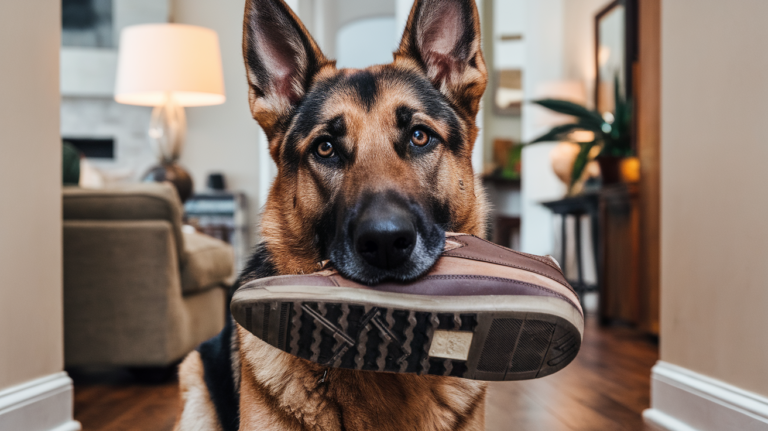
You’re sitting on the couch when your German Shepherd trots over, tail wagging, and drops something at your feet. A slobbery tennis ball? Their favorite toy? No, no. It’s that disgusting, half destroyed thing that might have once been a shoe but is now an unidentifiable object of questionable origin.
Welcome to the gift giving ritual. In dog culture, this is the equivalent of bringing you diamonds. Your GSD is sharing their most valuable resources with you, which in their mind, is the ultimate gesture of trust and affection.
| Gift Type | What They Think It Means | What It Actually Is |
|---|---|---|
| Destroyed toy | “I’m sharing my treasure!” | That $30 indestructible toy from last week |
| Random stick | “I found this just for you!” | Literally any stick from outside |
| Their food bowl | “You’re part of the pack!” | An empty bowl with kibble dust |
| Dead things (sorry) | “I’m providing for you!” | Best not to think about it |
This behavior taps into your German Shepherd’s ancestral instincts as a working dog. They want to contribute to the family unit, to show they’re pulling their weight. When they bring you items, they’re demonstrating that they’re a valuable pack member who can provide resources.
The really interesting part? German Shepherds are selective about who receives their gifts. If your GSD is regularly presenting you with their treasures (no matter how gross), you’ve earned top tier status in their world. They don’t waste their precious belongings on just anyone.
3. They Lean on You (All 90 Pounds of Them)
Standing in the kitchen making dinner, and suddenly you feel like you’re being slowly crushed by a furry avalanche? Your German Shepherd has initiated what dog behaviorists call “the lean,” and it’s one of the most endearing (if physically demanding) displays of affection.
This full body press isn’t your dog being lazy or losing their balance. The lean is actually your GSD’s way of hugging you. Unlike humans who use their arms, dogs use their entire body to show physical affection. When your shepherd leans against you, they’re creating maximum contact, soaking up your presence like a furry, four legged sponge.
That 90 pound lean isn’t your dog forgetting how to stand; it’s their version of a full body hug that says “you are my person, and I need to be touching you right now.”
Here’s the fascinating part: German Shepherds typically only lean on people they trust completely. It’s a vulnerable position that requires them to let their guard down. In the canine world, pressing against another creature means you’re confident they won’t hurt you, attack you, or take advantage of your exposed position.
Some German Shepherds become professional leaners, perfecting the art of applying just enough pressure that you can’t move but not so much that you topple over. It’s a delicate balance, really. They might lean while you’re cooking, watching TV, working at your desk, or basically any time you’re stationary for more than thirty seconds.
The intensity of the lean often correlates with how much they’ve missed you. Been gone for eight hours? Prepare for maximum lean upon return. Just came back from the bathroom? Probably a light, casual lean. Your German Shepherd has calibrated their leaning pressure based on separation duration.
4. They “Herd” You with Gentle Nudges and Bumps
Ever notice your German Shepherd bumping you with their nose, particularly when you’re moving around the house? Or maybe they circle around you, seemingly trying to direct your movement? Congratulations, you’re being herded.
This behavior comes straight from their herding dog DNA. German Shepherds were originally bred to herd and protect flocks, keeping sheep grouped together and moving in the right direction. When they do this to you, they’re not being pushy (okay, maybe a little), they’re expressing care and concern for your wellbeing.
What herding behaviors look like in your home:
- Nose bumps on your legs or hands when you’re walking
- Circling around you or family members to “group” everyone together
- Gentle blocking when you try to go somewhere they think is unsafe
- Positioning themselves between you and strangers or perceived threats
This protective herding instinct means your German Shepherd has taken responsibility for your safety. They’re not trying to control you (mostly), they’re trying to protect you. When they nudge you away from the street, block you from going out the door first, or circle your kids to keep them in one area, they’re fulfilling their ancestral purpose.
Those gentle bumps and strategic positioning aren’t your dog being bossy; they’re your German Shepherd’s way of saying “I’m responsible for your safety, and I take that job very seriously.”
The sweetest part? German Shepherds often herd with incredible gentleness, especially with children or elderly family members. They’ve somehow figured out that different pack members need different levels of intervention. Your GSD might give you a firm bump but will barely touch a small child, adjusting their herding style based on who they’re protecting.
5. They Make Intense Eye Contact (Like, Really Intense)
Your German Shepherd locks eyes with you from across the room. Seconds pass. A minute. They’re still staring. You begin to feel uncomfortable, wondering if maybe you’ve done something wrong or if they’re plotting something. But then their tail does a little wag, and you realize: this is love.
Prolonged eye contact in the dog world is actually a huge deal. In canine communication, direct staring can be confrontational or threatening. But when your German Shepherd gazes into your eyes with a soft, relaxed expression, something magical happens: both of your brains release oxytocin, the same bonding hormone that floods a mother’s brain when she looks at her baby.
Scientists have actually studied this! Research shows that when dogs and humans make eye contact, both species experience an oxytocin boost, creating a positive feedback loop of affection and bonding. Your German Shepherd knows this (instinctively, at least) and uses eye contact as a way to strengthen your bond.
How to tell if the stare is loving or something else:
Loving gaze characteristics:
- Soft, relaxed eyes
- Slightly squinted or “smiling” expression
- Slow tail wag
- Relaxed body posture
- May include a gentle head tilt
Not so loving stare:
- Hard, fixed eyes
- Stiff body
- No tail movement or tucked tail
- Tense facial muscles
- Usually accompanied by other warning signs
German Shepherds are particularly intense with their gazing because they’re working dogs bred to take direction from humans. They evolved to read human faces and respond to subtle cues. That intense stare? They’re reading your emotional state, checking in on you, and simultaneously broadcasting their own devotion.
Some German Shepherds develop what owners call “the velcro stare,” where they watch your every move, anticipating your next action. This isn’t just obsession (though it might feel like it), it’s your dog staying connected to you, ready to spring into action whether you need protection, companionship, or someone to share your sandwich with.
The next time your GSD fixes you with that intense, unwavering gaze, try gazing back. You’ll likely notice their expression soften, maybe a slow blink, or a content sigh. You’re not just making eye contact; you’re participating in an ancient bonding ritual that connects human and canine in the deepest way possible.
Now that you know these five unexpected love languages, you’ll probably start noticing them everywhere. That shadow in the bathroom? Love. The gross toy on your pillow? Love. The 90 pound weight suddenly attached to your leg? Also love. Your German Shepherd has been shouting their affection from the rooftops this whole time, just in their own wonderfully weird way.