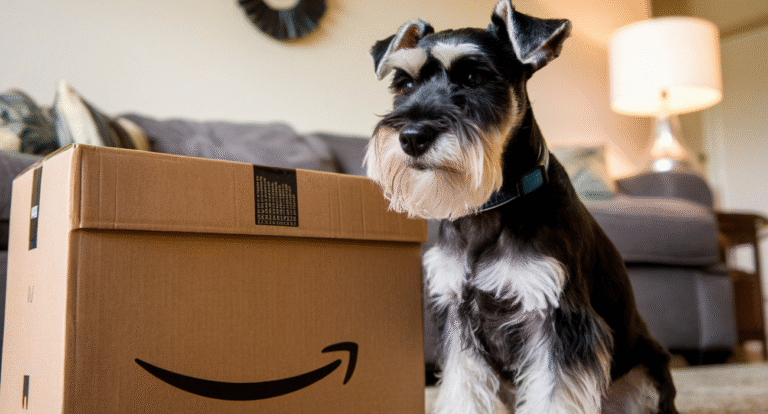
Watch for these five clever clues your Schnauzer might be outsmarting the whole family. Their intelligence could surprise everyone at home.
Ever feel like your Schnauzer understands way too much of what’s going on? Like they’re reading your mind or predicting your next move before you even make it? That’s because they are. These whiskered wonders have been pulling the wool over our eyes for generations, and it’s about time we gave them credit where credit is due. Beneath that adorable, bearded exterior lies the mind of a strategic mastermind who’s been training you all along.
1. They’ve Mastered the Art of Selective Hearing
Your Schnauzer can hear a cheese wrapper opening from three rooms away through two closed doors, but suddenly goes deaf when you call them to come inside from the backyard. Coincidence? Absolutely not. This is strategic intelligence at its finest.
Schnauzers have perfected what animal behaviorists call “contextual obedience,” which is a fancy way of saying they choose when to listen based on what benefits them most. When you’re opening the treat jar, their hearing is superhuman. When it’s bath time? Suddenly they don’t understand English anymore.
This isn’t defiance; it’s calculated decision making. Your Schnauzer has performed a rapid cost benefit analysis and determined that ignoring you right now serves their interests better than obeying.
Watch your Schnauzer’s ears closely. You’ll notice they perk up and swivel at sounds that interest them, even while they’re “ignoring” your commands. They’re not actually ignoring you at all. They’re choosing to prioritize other stimuli, which requires a sophisticated level of cognitive processing. They understand you perfectly; they just have their own agenda.
This selective attention demonstrates executive function, the ability to filter information and make decisions about what deserves attention. It’s the same skill that allows humans to work in noisy coffee shops or focus during conversations at loud parties. Your Schnauzer is essentially telling you, “I hear you, I just don’t care right now,” and that takes brains.
2. They’ve Trained You Without You Realizing It
Here’s a fun exercise: think about your daily routine. Now ask yourself how much of it revolves around your Schnauzer’s schedule. Who trained whom, exactly?
If you feed your dog at the same time every day because they start staring at you or nudging their bowl, congratulations! You’ve been trained. If you’ve learned to move your coffee cup to a higher surface because your Schnauzer’s tail clears the coffee table, they’ve modified your behavior. If you automatically toss them a piece of your snack when they sit pretty next to you, they are the trainer and you are the trainee.
| Your Action | Schnauzer’s Strategy | Result |
|---|---|---|
| Moving snacks to higher shelves | Making you work harder to access food they might want | You think you’re outsmarting them, but you’re just playing their game |
| Letting them sleep in your bed | Strategic whimpering and adorable positioning | They got the warm spot and you’re clinging to the edge |
| Changing your walking route | Stopping dead and refusing to move on certain paths | You now walk where they want to go |
| Opening doors for them | Scratching or staring until you comply | They expend minimal energy while you do all the work |
Operant conditioning works both ways, and your Schnauzer has been using positive and negative reinforcement on you since day one. They’ve learned exactly which behaviors get them what they want, and they’ve systematically shaped your responses to their needs. Professional dog trainers spend years learning these techniques. Your Schnauzer? They figured it out naturally.
The really impressive part is how gradual this training process is. They don’t demand everything at once. They slowly increase their demands over time, testing boundaries and expanding their territory inch by inch. Before you know it, you’re buying organic dog treats and hand feeding them chicken while you eat frozen pizza standing over the sink. Who’s really in charge here?
3. They Can Read Your Emotions Better Than Your Best Friend
Your Schnauzer knows you’re upset before you even fully process the feeling yourself. They’re picking up on microscopic changes in your body language, tone of voice, and even your scent that signal emotional shifts.
Research shows that dogs can distinguish between different human facial expressions and emotional states. But Schnauzers take this to another level entirely. They don’t just recognize that you’re sad; they know what kind of sad. Are you “lost my keys” frustrated or “existential crisis” melancholic? Your Schnauzer knows the difference and adjusts their response accordingly.
These bearded empaths are reading your emotional state through a combination of visual cues, auditory signals, and chemical changes in your hormones that they detect through scent. It’s like having a furry emotional intelligence expert living in your home.
Notice how your Schnauzer behaves differently around various family members? They’re not just responding to who gives them treats. They’ve created individualized relationship strategies based on each person’s personality, emotional patterns, and behavioral tendencies. That requires theory of mind, the ability to understand that different individuals have different mental states. This is a cognitive skill that human children don’t fully develop until around age four.
Your Schnauzer also knows when you’re about to leave the house, even before you pick up your keys. They’re monitoring subtle changes in your routine: the way you check your phone more frequently, how you glance at the clock, the slight shift in your energy as you mentally prepare to go. They’ve built a predictive model of your behavior, and they’re using it to anticipate your next move. That’s not just smart. That’s eerily smart.
4. They’re Master Problem Solvers Who Play Dumb
Ever watched your Schnauzer struggle with a puzzle toy for three seconds before looking at you with those big, innocent eyes? Then the moment you look away, they’ve suddenly “figured it out” and extracted every treat inside? Yeah, they were never confused. They were evaluating whether manipulating you would be easier than solving the puzzle themselves.
Schnauzers are capable of remarkable problem solving when sufficiently motivated. They can figure out complex latches, open doors, move furniture to reach high places, and even use tools in rudimentary ways. But here’s where the intelligence really shows: they understand that sometimes pretending to be helpless gets faster results than doing it themselves.
This demonstrates metacognition, or thinking about thinking. Your Schnauzer is considering multiple approaches to a problem and selecting the most efficient one. Sometimes that means solving the puzzle. Sometimes that means conning you into solving it for them. The fact that they can make this calculation shows sophisticated planning abilities.
Watch your Schnauzer when they think you’re not paying attention. You’ll see them do things you didn’t know they could do. Opening cabinet doors. Moving chairs to create a climbing structure. Figuring out how to unlatch their crate from the inside. They’ve been holding back, showing you only what they want you to see while keeping their full capabilities hidden. That’s not just intelligence; that’s strategic intelligence with a side of deception.
5. They Have Better Social Skills Than Most Humans
In multi dog households or at the dog park, watch how your Schnauzer navigates social situations. They’re not just playing; they’re networking. They know which dogs like rough play and which prefer gentle interaction. They understand hierarchies and know when to defer and when to assert themselves. They broker peace between feuding pups and form alliances that benefit them.
Your Schnauzer possesses what psychologists call social intelligence: the ability to navigate complex social environments, build relationships, and influence group dynamics. They’re essentially running a canine LinkedIn, complete with strategic connections and calculated social moves.
They also code switch between different social contexts. The way your Schnauzer behaves with you at home is different from how they act with strangers, which is different from how they interact with other dogs, which is different from how they behave at the vet’s office. This contextual adaptation requires them to maintain multiple behavioral models and select the appropriate one based on their current environment and goals.
Even more impressively, Schnauzers understand social referencing. When they encounter something unfamiliar, they look at you to gauge your reaction before deciding how to respond. They’re using your emotional state as information to inform their own decisions. This shows they understand that you have knowledge they don’t have and that your reactions can provide valuable data about potential threats or opportunities.
Your Schnauzer has also figured out the household rules, even the unspoken ones. They know which furniture is off limits (even if they test those boundaries). They understand guest etiquette versus family member protocols. They’ve learned the household routine and become upset when it changes because they’ve internalized the patterns and expectations of their social environment. That level of cultural learning and adaptation? That’s intelligence that some species never develop.