Guarding is natural for Schnauzers. Check if your dog shows these strong instincts and what it really means.
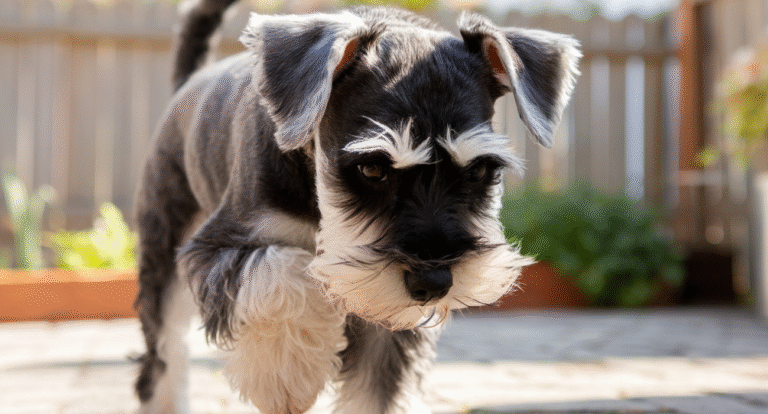
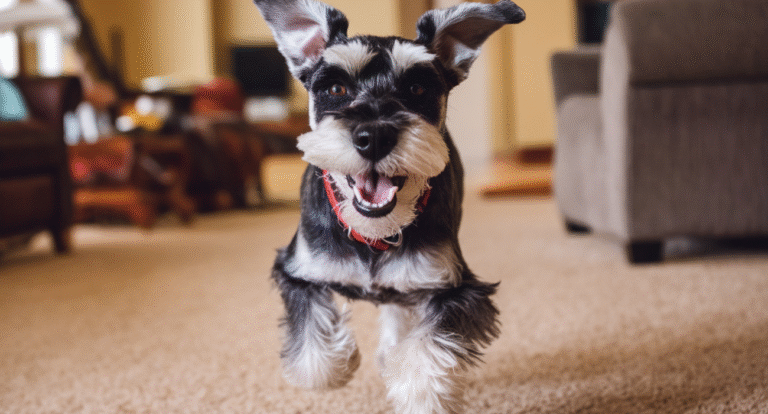
Your Schnauzer might be small, but have you noticed how they act like they’re running their own private security firm? That distinctive beard isn’t just for show, it’s attached to a dog breed originally developed to guard farms and chase away vermin in Germany. Despite their compact size and undeniably adorable appearance, Schnauzers possess genuine protective instincts that often surprise their owners.
Whether you have a Miniature, Standard, or Giant Schnauzer, certain behaviors might reveal their inner guard dog. Let’s explore the five key instincts that transform your fuzzy companion into a surprisingly effective protector.
1. The Alarm Bark: Your Schnauzer’s Built-In Security System
If you own a Schnauzer, you’re intimately familiar with their vocal nature. But this isn’t just random noise or attention seeking behavior. Schnauzers were specifically bred to alert their owners to anything unusual, making barking an essential part of their original job description.
Your Schnauzer’s bark serves multiple purposes in their guard dog repertoire. They bark at approaching strangers, unusual sounds, and changes in their environment. This vocalization instinct runs so deep that even well trained Schnauzers often struggle to completely suppress it. They’re not being disobedient; they’re fulfilling what they perceive as a critical duty.
What makes the Schnauzer’s alert barking particularly interesting is its specificity. Pay attention to your dog’s different barks. You’ll likely notice they have distinct vocalizations for the mail carrier versus a family member coming home versus a squirrel in the yard. This nuanced communication system demonstrates genuine intelligence and assessment capabilities.
The bark isn’t just noise; it’s your Schnauzer’s way of saying “I’ve detected something that requires your attention, and I’m taking my security role seriously.”
The challenge for owners comes when this instinct goes into overdrive. Some Schnauzers bark at every leaf that moves, while others show remarkable discrimination about what deserves an alert. Training can help moderate excessive alarm barking, but completely eliminating it means working against your dog’s fundamental nature.
2. Territorial Awareness: Patrolling Their Domain
Watch your Schnauzer carefully, and you’ll notice something fascinating: they have mental maps of their territory. Whether you have a house with a yard or an apartment, your Schnauzer knows the boundaries of their domain and takes inventory of everything within it.
This territorial awareness manifests in several ways. Your Schnauzer likely has favorite surveillance spots, windows they prefer for watching the street, or positions that give them optimal views of entry points. They’re not just lounging; they’re strategically positioning themselves for maximum situational awareness.
Many Schnauzer owners report that their dogs perform regular “security sweeps” of the house or yard. These aren’t random wanderings. Your dog is checking that everything remains as it should be, investigating any changes since their last patrol, and ensuring no intruders have breached the perimeter. It’s adorable and impressive simultaneously.
The territorial instinct becomes particularly evident when someone new enters their space. Your Schnauzer might become more alert, position themselves between you and the newcomer, or refuse to fully relax until they’ve assessed the situation. This behavior stems from generations of breeding that valued dogs who took property protection seriously.
3. The Protective Stance: Positioning and Body Language
One of the most telling signs of guard dog instincts appears in how your Schnauzer positions themselves in various situations. This isn’t conscious strategy on their part; it’s instinctive behavior hardwired through selective breeding.
Notice where your Schnauzer sits when you’re at the park, having visitors, or walking down the street. Many Schnauzers naturally position themselves between their owner and potential threats. They might sit facing outward rather than toward you, maintaining visual contact with their surroundings while staying close to you.
This protective positioning extends to doorways and entry points. Does your Schnauzer rush to the door when someone knocks? Do they position themselves in the doorway when it opens, creating a physical barrier between your visitors and the interior of your home? These aren’t accidents; they’re tactical decisions made by a dog fulfilling their perceived security role.
The body language accompanying this positioning tells you everything about your Schnauzer’s mindset. Erect posture, forward facing ears, intense eye contact, and a still tail all indicate a dog in guardian mode. They’re assessing the situation and ready to escalate their response if necessary.
When your Schnauzer plants themselves firmly between you and a stranger, they’re making a clear statement: “This person is under my protection, and you’ll need my approval to proceed.”
4. Stranger Discrimination: Distinguishing Friend from Foe
Perhaps one of the most sophisticated guard dog instincts your Schnauzer possesses is their ability to distinguish between different types of strangers. This goes beyond simple friend or foe categorization; Schnauzers demonstrate nuanced assessment skills that reveal genuine intelligence.
Your Schnauzer likely reacts differently to the mail carrier versus a dinner guest you’ve invited. They might be suspicious of someone approaching your car but friendly toward children at the dog park. This discrimination ability showcases their capacity to read context, body language, and social cues.
What’s particularly interesting is how Schnauzers often defer to their owner’s reaction when making these assessments. If you greet someone warmly, your Schnauzer typically moderates their initial suspicion and eventually accepts the person. However, if you seem uncertain or uncomfortable, your dog’s guard instincts intensify accordingly.
Some Schnauzers develop sophisticated recognition systems. They learn to identify regular visitors, service people who come at predictable times, and neighbors they see frequently. These individuals gradually move from the “unknown threat” category to the “familiar and acceptable” category, though many Schnauzers never completely drop their alert status around anyone outside the immediate family.
The flip side of this discrimination ability can be frustrating for owners. Schnauzers sometimes decide certain people are suspicious for reasons unclear to humans. That one friend they always bark at? Your Schnauzer has identified something in that person’s body language, scent, or behavior that triggers their protective instincts, even if you can’t perceive it.
5. The Alert Posture: Constant Environmental Monitoring
The final guard dog instinct that defines Schnauzers is their seemingly tireless vigilance. Unlike some breeds that can completely relax and tune out their surroundings, Schnauzers maintain a baseline level of awareness even during downtime.
Watch your Schnauzer when they appear to be resting. Their eyes are rarely fully closed. Their ears continue to track sounds throughout the house. They’ll lift their head at distant noises that you barely register. This isn’t anxiety or hypervigilance in the clinical sense; it’s a working dog maintaining readiness for their assigned task.
This constant monitoring means Schnauzers often notice things before their owners do. They detect the pizza delivery driver two minutes before the doorbell rings. They know someone is in the driveway before the car door opens. They sense when neighborhood kids are playing in the street even from inside the house.
A Schnauzer’s rest mode is more accurately described as “low power alert status” rather than true relaxation. They’re always at least partly on duty.
The environmental monitoring extends beyond just auditory and visual stimuli. Schnauzers are remarkably attuned to changes in their environment. A bag in a different location, furniture that’s been moved, or a new object in the house all warrant investigation. They maintain a mental baseline of how things should be and become alert when deviations occur.
This vigilance serves them well in their self appointed security role but can present challenges for owners. Schnauzers may struggle to fully relax in new environments, become overstimulated in busy settings, or have difficulty with sudden changes to routine. Understanding that this behavior stems from guard dog instincts rather than behavioral problems helps owners respond appropriately and compassionately.