Short on time but long on energy? This quick game delivers mental stimulation, better behavior, and a noticeably happier German Shepherd.
German Shepherd owners will tell you the same thing: a tired GSD is a good GSD. But here’s what most people get wrong. They think “tired” means physically exhausted from running and playing fetch until their arm falls off. Actually, mental exhaustion is way more effective than physical exercise alone.
Five minutes. That’s all it takes to give your shepherd’s brain the workout it desperately craves. These quick games tap into your dog’s natural instincts and intelligence, leaving them satisfied and calm for hours afterward. Ready to discover what experienced GSD owners have been doing all along?
Why Your German Shepherd Needs Mental Stimulation (Not Just Physical Exercise)
German Shepherds aren’t your average couch potato breed. These dogs were specifically designed to think, problem solve, and work alongside humans in demanding roles. Police work, search and rescue, military operations… these aren’t jobs for dummies. Your GSD has inherited that same incredible intelligence, and it needs an outlet.
The problem? Most owners focus exclusively on physical exercise. They throw the ball for an hour, go for long runs, visit the dog park daily. And yet, their shepherd is still bouncing off the walls at home.
Physical exercise alone is like giving your brain a cardio workout but never reading a book or solving a puzzle. Your body might be tired, but your mind is screaming for something to do. The same applies to your German Shepherd.
Mental stimulation isn’t a luxury for your GSD; it’s an absolute necessity. Without it, you’re not just dealing with a bored dog… you’re dealing with a brilliant mind that will find increasingly creative (and destructive) ways to entertain itself.
What Happens When GSDs Don’t Get Mental Exercise
| Behavior | Why It Happens | How Mental Games Help |
|---|---|---|
| Excessive Barking | Boredom and pent up mental energy seeking release | Channels focus into productive problem solving |
| Destructive Chewing | Attempt to self soothe and create mental engagement | Provides appropriate mental outlet and satisfaction |
| Hyperactivity | Understimulated brain creating chaos to stay busy | Burns mental calories more effectively than running |
| Attention Seeking | Desperate for any kind of mental interaction | Fulfills need for engagement in positive ways |
| Escape Attempts | Searching for stimulation outside the home | Creates contentment and reduces wanderlust |
The beauty of mental stimulation is its efficiency. Five minutes of focused brain work can tire your German Shepherd as much as thirty minutes of fetch. When you combine both physical AND mental exercise, you’ve got the recipe for a perfectly balanced, well behaved dog.
Step 1: Set Up Your Space (30 Seconds)
Before diving into the game, you need the right environment. Good news: this requires almost zero preparation.
Clear a small area in your living room, hallway, or kitchen. You need about six feet of space where your dog can move around comfortably. Push aside any furniture or objects your GSD might accidentally knock over in their excitement.
Gather your treats. This is crucial. You want small, high value treats that your dog goes crazy for. Think tiny pieces of cheese, hot dog bits, or those freeze dried liver treats. The treats need to be small enough that your dog can eat them quickly without getting full. Pro tip: use your dog’s regular kibble if they’re food motivated enough, saving the calories for actual meals.
Grab three cups or containers that are opaque (not see through). Plastic cups, ceramic bowls, empty yogurt containers… anything works as long as your dog can’t see through them and they’re safe to interact with.
Place everything within arm’s reach. The whole setup should take you less than a minute.
Step 2: Introduce the Shell Game (2 Minutes)
Now comes the fun part: teaching your German Shepherd the classic shell game. This simple activity taps into their natural scenting abilities and problem solving skills.
Start stupidly easy. I mean it. Use just one cup to begin.
Let your dog watch as you place a treat under the cup. Then immediately lift the cup and let them have the treat. Repeat this three or four times. You’re teaching them the basic concept: treats hide under cups, and finding them equals reward.
Add the second cup. Place two cups upside down in front of your dog. Let them see you put the treat under one of them. Don’t move the cups around yet! Just let your dog choose. When they nose or paw at the correct cup, lift it immediately and praise like they just won the lottery. Big celebration! “YES! Good dog! You’re SO smart!”
Common Mistakes at This Stage
Most people rush this part. They immediately start shuffling cups around before the dog understands the game. Your GSD needs to grasp the fundamental rule first: there’s a treat under one of these cups, and my job is to find it.
If your dog seems confused, go back to the single cup for a few more repetitions. Some dogs get it immediately; others need more time. Neither is better or worse… it’s just how their individual brain works.
The breakthrough moment: You’ll know your dog understands when they confidently go straight to the correct cup without hesitation. That’s when you know they’ve made the connection.
Step 3: Increase the Challenge (2 Minutes)
This is where the magic happens. Your German Shepherd’s brain is now fully engaged, and you’re about to kick things up a notch.
Introduce movement. Place the treat under one cup while your dog watches. Now, slowly swap the position of two cups. Start with obvious, slow movements. Your dog should be able to track which cup has the treat easily.
When they choose correctly, celebrate enthusiastically. Remember, the reward isn’t just the treat… it’s your excitement and praise too.
Add the third cup. Now you’re playing the real shell game. Three cups, one treat, and some shuffling. Keep your movements slow and deliberate at first. You want your dog to succeed, building their confidence and keeping them engaged.
The goal isn’t to trick your dog. The goal is to provide just enough challenge that they have to really think and focus, activating those problem solving pathways in their brain.
Adjust Based on Your Dog’s Skill Level
Every German Shepherd is different. Some will master this game in one session; others need several days of practice. Pay attention to your dog’s body language:
Signs they’re engaged and happy: Focused attention, wagging tail, excited movement toward the cups, trying different strategies if they’re wrong.
Signs you’ve made it too hard: Losing interest, walking away, seeming frustrated or confused, giving up without trying.
If you see the second set of behaviors, make it easier! Go back to two cups, or slow down your movements. The game should be challenging but achievable.
Pro tip: Some GSDs figure out they can just knock over all the cups to get the treat. If this happens, hold the cups down or place them further apart. You want them to indicate the correct cup (by nosing or pawing) rather than just creating chaos.
Step 4: Make It a Daily Ritual (1 Minute Setup)
Consistency is everything with German Shepherds. They thrive on routine and predictability.
Choose a specific time each day for your five minute game. Many owners love doing this right before dinner (theirs, not the dog’s). The dog gets mental stimulation, and then settles down while you eat. Perfect timing.
Other great moments:
- First thing in the morning to burn off that initial energy
- After work to decompress together
- Before bedtime to ensure a calm night
Keep it short and sweet. Five minutes might not sound like much, but it’s incredibly intense for your dog’s brain. You’ll notice they often seem more tired after a mental game than after a physical run. That’s completely normal!
Tracking Progress and Mixing Things Up
After a week or two, your German Shepherd will probably get pretty good at the shell game. That’s when you rotate in variations:
Use different objects (boxes, plastic containers, paper bags). Hide the treat in different locations (under furniture, behind objects). Increase the number of hiding spots. Add distractions or play in different rooms.
The key is keeping it fresh enough that your dog has to actively think rather than just going through the motions.
Step 5: Watch the Transformation
Here’s what German Shepherd owners consistently report after implementing daily five minute brain games:
Week One: Dog seems more focused during the game but behavior otherwise unchanged. Some owners worry it’s not working. Keep going.
Week Two: Noticeable reduction in attention seeking behaviors. The dog seems calmer in general, particularly in the hours after the game.
Week Three: Significant improvements in overall behavior. Less destructive chewing, reduced barking, better ability to settle down. Guests might even comment on how calm your dog seems.
Month One and Beyond: The dog anticipates the daily game and shows improved problem solving in other areas of life. Training becomes easier because they’ve learned to think through challenges.
Real Owner Experiences
The online German Shepherd communities are full of success stories. Owners report that these short mental workouts have solved problems that months of physical exercise couldn’t touch.
One owner shared: “My two year old male was literally eating the drywall. An hour at the dog park didn’t help. Five minutes of hide and seek games every evening, and he’s like a different dog.”
Another reported: “I was ready to hire a behaviorist for the barking. Started doing scent work games for literally five minutes a day. Three weeks later, 80% reduction in nuisance barking. I was shocked.”
The most common response from owners who try this? “I can’t believe something so simple actually works. I wish I’d known about this years ago.”
Additional Five Minute Games to Rotate
Don’t limit yourself to just the shell game. Variety keeps your German Shepherd’s brain engaged and prevents boredom.
The Name Game: Teach your dog the names of their toys. Place two toys in front of them and ask for a specific one. When they choose correctly, reward generously. Gradually add more toys. Some GSDs learn dozens of toy names!
Find It: The classic scent work game. Have your dog stay in one room while you hide treats around another room. Release them to “find it” and watch them use that incredible nose. Start obvious, then get creative with hiding spots.
Which Hand: The simplest game ever. Put a treat in one closed fist. Hold both fists out. Let your dog nose or paw at the correct hand. Swap which hand holds the treat randomly. Takes thirty seconds to play but provides solid mental engagement.
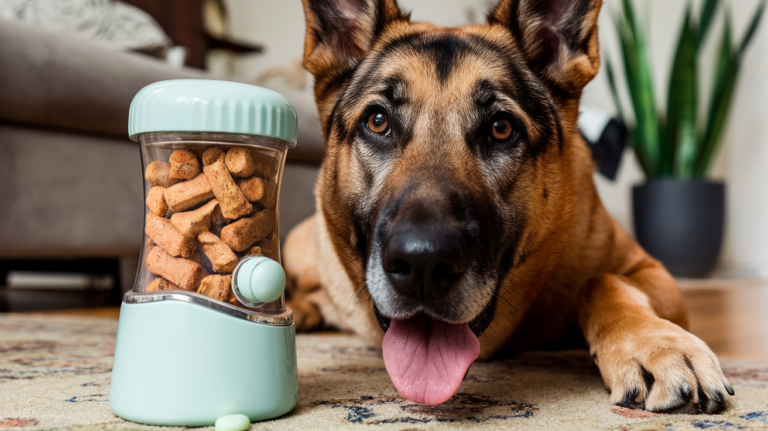
Puzzle Feeders: Not technically a game YOU play together, but rotating different puzzle feeders for meals or treats provides excellent mental stimulation. Many German Shepherds can work through a puzzle feeder in about five minutes.
Creating Your Own Games
Once you understand the principle (engage brain, provide challenge, reward success), you can create unlimited variations. The goal is always the same: make your German Shepherd think.
Use your dog’s natural instincts. GSDs were bred to track, search, and problem solve. Any game that taps into these drives will be incredibly satisfying for them.
Why This Works When Other Things Don’t
German Shepherds are working dogs at their core. They were developed to have stamina, intelligence, and drive. When you don’t give them a “job,” they’ll create their own, and you probably won’t approve of their career choices.
These five minute games provide what every GSD craves: a sense of purpose. Even though it’s just a game to you, your dog experiences it as meaningful work. They’re solving problems, using their senses, and earning rewards through effort. This is what they were born to do.
The difference between a well stimulated German Shepherd and an understimulated one isn’t subtle. It’s the difference between a focused, calm companion and a neurotic, destructive tornado.
Physical exercise is still important, absolutely. But mental exercise is the missing piece most owners don’t realize they need. When you combine both, you unlock your German Shepherd’s full potential as the amazing companion they’re meant to be.
The bottom line? Five minutes a day. That’s the investment. The return? A happier dog, a cleaner house, better behavior, and a stronger bond between you and your German Shepherd. Thousands of owners swear by it. Maybe it’s time to see what all the fuss is about.