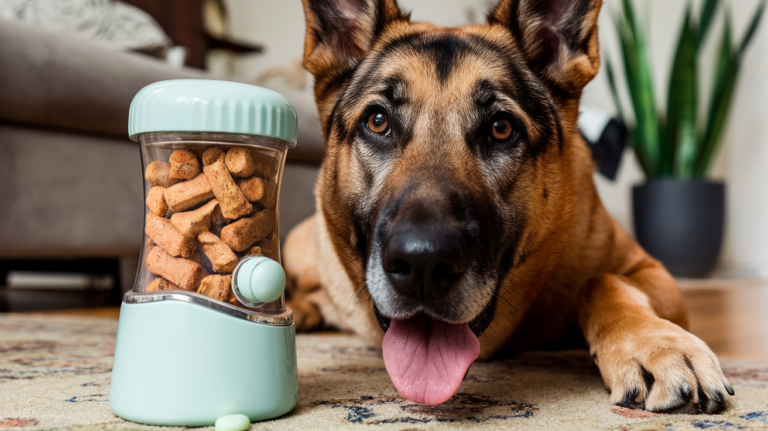
Teaching manners doesn’t have to be stressful. These simple tips make training easier, faster, and way more fun for both you and your German Shepherd.
Bringing home a German Shepherd puppy is like adopting a adorable tornado with teeth. One minute they’re angelic bundles of fluff, and the next they’re testing every boundary you didn’t even know existed. Your shoes? Fair game. Your personal space? What’s that? The concept of “inside voice”? Never heard of it.
But here’s the thing about German Shepherds that makes them absolutely incredible: they’re hardwired to learn. This breed was literally designed to work alongside humans, which means training isn’t just possible; it’s practically in their DNA. You don’t need to be a professional dog trainer to teach your GSD basic manners. You just need patience, consistency, and these five straightforward tips.
1. Start With Crystal Clear Communication (And Yes, That Means You Too)
German Shepherds are incredibly perceptive, which sounds like a blessing until you realize they’re picking up on everything. Your inconsistent commands, your hesitation, even that time you let them jump up “just this once” because your hands were full. They notice it all, and they’ll absolutely use that information against you.
The foundation of teaching manners starts with getting your own communication style sorted out. Choose specific words for specific commands and stick to them like your life depends on it. “Down” should always mean the same thing, whether you say it on Monday morning or Friday night. If “down” means lie down, don’t use it when you want your dog off the couch. That’s a different command entirely (try “off” instead).
Consistency isn’t just important in dog training; it’s literally everything. Your German Shepherd can’t read your mind, but they can absolutely read patterns. Give them clear ones to follow.
Body language matters just as much as your words. German Shepherds are experts at reading human gestures, so make sure your physical cues match your verbal ones. Stand tall, make confident movements, and avoid the wishy washy energy that screams “I’m not really sure about this rule either.”
Here’s a quick reference guide for keeping your commands consistent:
| Command | What It Means | What It Doesn’t Mean | Hand Signal |
|---|---|---|---|
| Sit | Bottom on ground, facing you | Lie down or stand still | Closed fist moving upward |
| Down | Lie down completely | Get off furniture | Open palm pushing downward |
| Stay | Don’t move from that spot | Slow down or wait briefly | Open palm facing dog |
| Come | Return to me immediately | Wander in my general direction | Pat your chest or thighs |
| Off | Remove yourself from furniture/people | Lie on the ground | Pointing away from object |
2. Make Training Sessions Short, Sweet, and Ridiculously Fun
Nobody wants to sit through a boring lecture, and your German Shepherd is no exception. These dogs have impressive attention spans for dogs, but we’re still talking about creatures who find squirrels absolutely riveting. Keep your training sessions between 5 to 15 minutes, and always end on a high note.
The secret weapon? Enthusiasm. German Shepherds feed off your energy like emotional vampires (the good kind). If you’re bored, they’re bored. If you’re excited about them sitting on command, they’ll think sitting is the most thrilling thing since the invention of tennis balls. Act like every successful repetition is an Olympic gold medal performance.
Mix up your training locations too. Start in a quiet room with minimal distractions, sure, but don’t stay there forever. Your dog needs to learn that “sit” means sit whether you’re in the living room, the backyard, the park, or that one spot on your walk where the neighbor’s cat always appears. Gradually increase the difficulty level as your GSD masters each environment.
Rewards are non negotiable, but here’s where you can get creative. Yes, treats work wonderfully (and let’s be honest, German Shepherds aren’t exactly picky eaters). But also try toys, praise, play sessions, or whatever makes your individual dog lose their mind with joy. Some GSDs would do backflips for a squeaky toy. Others just want you to tell them they’re a good dog in that special voice you reserve for them.
3. Master the Art of Impulse Control Through “Wait” and “Leave It”
If there’s one thing German Shepherds excel at, it’s going from zero to sixty in approximately 0.3 seconds. They see something interesting and suddenly they’re a fur covered missile with absolutely no brakes. Teaching impulse control isn’t just about manners; it’s about safety, sanity, and not getting yanked off your feet every time a rabbit crosses your path.
Start with “wait” at doorways and mealtimes. Before you put down that food bowl, make your dog sit and wait. They don’t get to dive in until you give the release word (try “okay” or “free”). Same with doors: no charging through thresholds like they’re storming a castle. They sit, they wait, and then they get permission to proceed. This simple exercise teaches them that good things come to those who exercise self control.
“Leave it” is your emergency brake command, and it’s possibly the most valuable thing you’ll ever teach your German Shepherd. It means “stop what you’re doing and ignore that thing immediately,” whether that thing is a chicken bone on the sidewalk, the cat’s food bowl, or your favorite shoes.
Impulse control is like a muscle. The more you exercise it, the stronger it gets. A German Shepherd with solid impulse control is a German Shepherd who’s actually enjoyable to be around.
Practice “leave it” with progressively tempting items. Start with something boring, like a plain piece of kibble under your hand. When your dog stops trying to get it and looks at you instead, reward them with something even better. Gradually work up to more exciting items, always rewarding the choice to disengage. Eventually, your GSD will understand that leaving things alone actually pays off way better than grabbing them.
4. Use the “Nothing in Life is Free” Protocol
German Shepherds are working dogs at heart, which means they actually like having a job to do. The “Nothing in Life is Free” protocol (sometimes called “Learn to Earn”) taps into this natural inclination by making your dog work for everything they want. It sounds strict, but it’s actually incredibly effective at establishing boundaries and building a respectful relationship.
The concept is beautifully simple: before your dog gets anything they want, they have to do something you want first. Want to go outside? Sit first. Want dinner? Down and wait. Want that toy? Eye contact and a polite sit. Want pets and attention? Calm behavior earns that privilege.
This isn’t about being mean or withholding affection. It’s about creating a framework where your German Shepherd understands that polite behavior is the currency that buys them good things. Dogs are opportunists by nature. If jumping up gets them attention, they’ll keep jumping. But if sitting politely gets them everything they want, guess which behavior they’ll choose?
The beauty of this approach is that it works itself into your daily routine naturally. You’re not adding extra training sessions; you’re just making the interactions you already have more intentional. Every door is a training opportunity. Every meal is a chance to practice patience. Every toy becomes a reward for good behavior.
5. Socialize Like Your Dog’s Future Depends on It (Because It Does)
Here’s an uncomfortable truth: German Shepherds can become reactive, anxious, or aggressive without proper socialization. It’s not because they’re bad dogs. It’s because they’re protective dogs with strong guarding instincts, and without positive exposure to the world, they can’t distinguish between actual threats and normal everyday occurrences.
Proper socialization isn’t just about throwing your puppy into chaotic situations and hoping for the best. It’s about carefully controlled, positive experiences with different people, dogs, environments, sounds, surfaces, and situations. The goal is to build confidence and neutrality, not overwhelm your dog into shutting down.
Start young if possible (the critical socialization window is roughly 3 to 14 weeks), but don’t despair if you’ve got an older dog. It just requires more patience and possibly professional help. Introduce new experiences gradually, always at your dog’s pace. Watch their body language carefully. Tucked tail, excessive panting, whale eye (showing the whites of their eyes), or trying to hide? You’ve pushed too far too fast. Back up and go slower.
A well socialized German Shepherd isn’t a dog who loves everyone and everything. They’re a dog who can remain calm and confident in the presence of new things, even if those things aren’t their favorite.
Create positive associations with new experiences using treats, praise, and play. See another dog on a walk? Treat party while maintaining distance. Hear a scary truck? Treats rain from the sky. Meet a person wearing a hat? You guessed it: treats. You’re basically bribing your dog to think the world is a safe and generous place.
Don’t forget about handling exercises either. German Shepherds need to be comfortable with being touched everywhere: paws, ears, mouth, tail, belly. This makes vet visits, grooming, and general care so much easier. Practice gentle handling daily, always pairing it with rewards. Touch a paw, give a treat. Look in an ear, deliver praise. Eventually, your GSD will not only tolerate these interactions but might actually enjoy them.
The Real Secret? Patience and Pizza
Just kidding about the pizza (though it wouldn’t hurt). The real secret to teaching your German Shepherd basic manners is understanding that this is a marathon, not a sprint. You’re not going to transform your wild child into a perfectly behaved angel in a week, and that’s completely okay.
German Shepherds are incredible dogs with enormous potential, but they need time, consistency, and an owner who’s willing to put in the work. Every training session builds on the last one. Every boundary you enforce makes the next one easier. Every moment you invest in teaching manners pays dividends in the form of a dog who’s an absolute joy to live with.
So grab those treats, practice your happy voice, and get started. Your future self (and your intact furniture) will thank you.