Every Schnauzer owner runs into these five training issues—but each problem has a simple, proven solution you can start today.
Raise your hand if your Schnauzer has ever completely ignored a command while making direct eye contact with you. Now keep it raised if they’ve barked at literally everything that moves past your window. Still there? Then this article is definitely for you! Schnauzers are phenomenal dogs with loyal hearts and protective instincts, but they come with a unique set of training challenges that can leave even experienced dog owners scratching their heads.
The beauty of these challenges is that they’re entirely predictable and completely solvable. Schnauzers aren’t difficult because they’re unintelligent (quite the opposite!). They’re challenging because they’re too smart and need an owner who understands how to channel that brainpower effectively. Ready to transform your training struggles into victories?
1. The Barking Olympics: When Your Schnauzer Won’t Stop Vocalizing
Schnauzers were bred to be watchdogs and ratters, which means alerting their humans to everything is literally in their DNA. That squirrel? BARK. The neighbor getting their mail? BARK. A leaf falling in the distance? You better believe that’s a BARK. This excessive vocalization is probably the number one complaint from Schnauzer owners, and it can quickly become problematic in apartments or neighborhoods with noise restrictions.
The key issue here isn’t that your Schnauzer is barking, it’s that they haven’t learned the difference between appropriate alerts and unnecessary noise. These dogs are natural guardians, and they take their job very seriously. Without proper training, they’ll assume everything deserves the full alarm system treatment.
Training a Schnauzer not to bark excessively isn’t about silencing their natural instincts. It’s about teaching them discernment and giving them the tools to understand when their alert is truly needed.
The Solution: Start by acknowledging the bark. When your Schnauzer alerts to something, go look, say “thank you” or “I see it,” and then give a “quiet” command. The acknowledgment satisfies their guardian instinct because they know you’re aware. Reward silence immediately and generously. Practice the “speak” and “quiet” commands during training sessions so your Schnauzer learns both are controllable behaviors. Consistency is absolutely critical here; if you sometimes allow the barking and sometimes don’t, you’ll confuse your dog and undo your progress.
For chronic barkers, increase their physical and mental exercise. A tired Schnauzer is a quieter Schnauzer. Puzzle toys, scent work, and adequate daily walks can significantly reduce nuisance barking by channeling that energy elsewhere.
2. Selective Hearing Syndrome: The Stubborn Streak
If you’ve ever called your Schnauzer and watched them glance at you before deliberately turning away, congratulations! You’ve experienced the breed’s legendary stubbornness firsthand. Schnauzers are incredibly intelligent, which unfortunately means they’re also expert negotiators who will constantly test boundaries to see what they can get away with.
This isn’t defiance for defiance’s sake. Schnauzers are independent thinkers who were bred to work without constant human direction when hunting vermin. They’re evaluating whether your command is worth following based on what’s in it for them. If the reward isn’t motivating enough, they’ll simply opt out.
The Solution: Make yourself more interesting than whatever is distracting your Schnauzer. This requires high-value treats (think real chicken, cheese, or freeze-dried liver) and genuine enthusiasm. Your Schnauzer should believe that coming when called or following a command is the best possible thing that could happen at that moment.
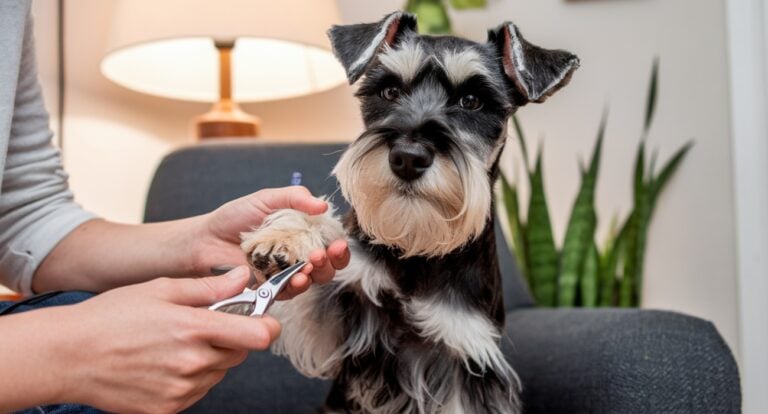
Practice recall in low-distraction environments first, gradually building up to more challenging situations. Never call your Schnauzer for something unpleasant (like bath time or nail trimming), or you’ll teach them that responding to their name has negative consequences. If you need to do something they dislike, go get them rather than calling them to you.
Here’s a comparison of effective versus ineffective training approaches:
| Ineffective Approach | Effective Approach |
|---|---|
| Repeating commands multiple times | Giving command once, then guiding the behavior |
| Using the same boring treats every time | Rotating high-value rewards to maintain interest |
| Training only during designated sessions | Incorporating training into daily life randomly |
| Showing frustration or anger | Staying calm and making it fun |
| Letting them off-leash too early | Building reliable recall over months, not weeks |
3. The Territorial Terror: Aggression Toward Other Dogs and People
Schnauzers have strong protective instincts that can manifest as territorial behavior, especially toward strangers or other dogs. This often surprises new owners who expected their friendly puppy to stay friendly forever. However, Schnauzers naturally become more protective as they mature, typically between 1 and 3 years old. Without proper socialization, this can escalate into reactive behavior that makes walks stressful and limits where you can take your dog.
The problem intensifies because Schnauzers are naturally suspicious of newcomers. This wariness served them well historically but can be problematic in modern settings where they need to peacefully coexist with neighbors, delivery people, and other pets.
Early and ongoing socialization isn’t optional for Schnauzers. It’s absolutely essential for developing a well-adjusted dog who can distinguish between genuine threats and normal everyday encounters.
The Solution: Socialize early, often, and continuously. Puppy kindergarten classes are invaluable, but socialization shouldn’t stop after adolescence. Continue exposing your Schnauzer to different people, dogs, environments, and situations throughout their life. Make these experiences positive by pairing them with treats and praise.
For dogs already displaying reactive behavior, counter-conditioning is essential. When your Schnauzer notices another dog or person, immediately begin feeding high-value treats before they react. The goal is to change the emotional response from “threat!” to “treats!” You’re rewarding the presence of the trigger, not any specific behavior. This takes time and patience, but it genuinely works.
Consider working with a certified professional dog trainer who uses positive reinforcement methods, especially if aggression has already developed. They can create a customized behavior modification plan for your specific situation.
4. The Houdini Act: Escape Artist Extraordinaire
Turn your back for one second and your Schnauzer has somehow squeezed through a gap you didn’t even know existed, scaled a fence that seemed perfectly adequate, or bolted out the door before you could react. These dogs are surprisingly athletic and incredibly determined when they want to be somewhere else. Their terrier instincts drive them to investigate, chase, and explore, often overriding their sense of self-preservation or obedience.
Many Schnauzer owners underestimate just how motivated these dogs are to follow interesting scents or pursue small animals. That prey drive, combined with their intelligence and physical capability, creates the perfect storm for escape attempts.
The Solution: Prevention is genuinely easier than cure here. Secure your yard with fencing that extends underground (Schnauzers can dig) and is tall enough that they can’t jump or climb it. Check for gaps regularly, because these clever dogs will find them.
Door training is critical. Teach your Schnauzer that an open door is not an automatic invitation to bolt. Practice the “wait” command at doorways, requiring your dog to hold position until released. Make this a non-negotiable rule that everyone in the household enforces every single time.
Work extensively on recall training, as discussed earlier. While you should never rely solely on recall to prevent escapes, having a solid recall can save your dog’s life if they do get out. Microchipping is also essential; even the best-trained dogs can escape under the right circumstances.
For dogs who are already escape artists, identify the motivation. Are they bored? Is there insufficient exercise? Are intact dogs detecting females in heat? Addressing the underlying cause is just as important as securing the physical environment.
5. Resource Guarding: Mine, All Mine!
Schnauzers can develop possessive behaviors around food, toys, sleeping spots, or even their favorite humans. This resource guarding can range from mild (a slight stiffening when approached during meals) to severe (growling, snapping, or biting). It’s rooted in survival instinct but becomes problematic in a domestic setting where your dog needs to understand that resources are abundant and nobody’s trying to steal their stuff.
This behavior often develops or worsens when owners try to address it incorrectly. Taking things away from a guarding dog or punishing the growl teaches them to skip the warning and go straight to biting. You’re not solving the problem; you’re just suppressing the communication about the problem.
Resource guarding isn’t your Schnauzer being mean or dominant. It’s a fear-based behavior that says, “I’m worried you’ll take my valuable thing, so I need to protect it.” Treatment requires building trust, not asserting authority.
The Solution: For mild guarding, practice “trade up” exercises. When your Schnauzer has something, approach calmly and offer something even better in exchange. They learn that your approach predicts good things, not theft. Never chase your dog or try to pry things from their mouth; this confirms their fear that you’re a resource thief.
With food bowl guarding, build positive associations by occasionally dropping extra tasty treats into their bowl while they’re eating. Walk by and toss in a piece of chicken. They’ll learn that humans near the food bowl make meals better, not worse.
For severe resource guarding, please work with a certified professional trainer or veterinary behaviorist. This is one area where DIY training can result in serious bites. A professional can assess the severity and create a safe behavior modification plan.
Prevention is key with resource guarding. From puppyhood, practice gentle handling, trading items, and approaching your Schnauzer during meals in positive ways. Teach children to never approach dogs who are eating or chewing on something valuable.
Training a Schnauzer requires patience, consistency, and a good sense of humor. These dogs are too smart for their own good sometimes, but that intelligence is also what makes them such rewarding companions. Every challenge has a solution, and with the right approach, your Schnauzer can become the well-behaved, delightful companion you always knew they could be.