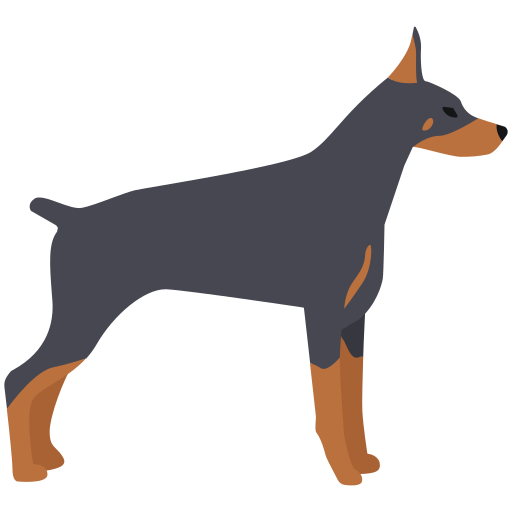
 Doberman
 Nobody warned you.
The breeder talked about shedding and loyalty and exercise requirements, then handed over a wriggling scrap of black and rust who would spend the next ten years quietly rewriting your definition of the word dog.
And here you are.
Somewhere between the first vet visit and the first time this animal leaned his full body weight against your knees in a crowded parking lot, you started noticing a pattern. The joys of this breed are enormous. The difficulties are specific, and they tend to arrive in roughly the same order for almost everyone who falls for a Doberman.
The five below come for every owner eventually. Not maybe. Eventually.
Knowing they are coming will not make them vanish. It will just mean you look a lot less blindsided when they show up at your door.
1. The Shadow Who Never Takes a Day Off
The bathroom door is now purely decorative
Velcro dog is the polite term for it. What actually happens is that a seventy pound animal decides your personal space belongs to both of you, permanently, and declines all further negotiation.
You will trip over him. Constantly.
He will follow you from the couch to the kitchen for a glass of water you will be gone eleven seconds getting. He will haul himself up, stretch dramatically, and come anyway.
A Doberman does not want to be near you. A Doberman wants to be with you, and the gap between those two words is the entire breed explained in one sentence.
When closeness curdles into panic
Trouble starts when that devotion turns into genuine distress the second you pick up your car keys.
Separation anxiety runs high in this breed, and it escalates quickly. Pacing, drooling, scratched door frames, a neighbor texting you about the howling at nine in the morning.
Start early and be aggressively boring about it. Step outside for two minutes, come back without ceremony, then stretch the absences a little at a time until leaving stops registering as an event worth reacting to.
Crate training helps enormously, provided the crate functions as a bedroom and never once as a punishment.
Skip the emotional goodbye. That long, sad speech at the door tells him something genuinely alarming is about to happen.
2. Adolescence Hits Like a Wrecking Ball
The month it all unravels
Around eight or nine months, the brilliant puppy who learned sit over a single weekend will look you dead in the eye, clearly hear the cue, and decide it no longer applies to him.
This is completely normal. This is also maddening.
Hormones flood the system, the brain rewires itself, and recall evaporates at precisely the moment the dog becomes large enough for that to be a real problem. A Doberman teenager is fast, strong, opinionated, and briefly convinced he has aged out of the rules.
Holding the line without losing your mind
Shorten the leash and lower your expectations for a few months. Use a long line in open areas and grant zero freedom you cannot physically back up.
Go back to paying generously for behaviors he mastered ages ago, as though they were brand new.
Household consistency matters more during this stretch than at any other point in the dog’s life; one person allowing counter surfing will cheerfully undo four people forbidding it.
The phase does end. Somewhere near the two year mark, the dog you actually trained walks back through the door and stays.
3. A Brain That Demands Employment
Boredom gets expensive
Dobermans were built to think and work shoulder to shoulder with a person, and that wiring did not politely switch itself off when the breed relocated to suburban living rooms.
An underemployed Doberman invents his own work.
The invented job usually involves your drywall, your baseboards, three sprinkler heads, or a forty pound bag of kibble he opened with the quiet confidence of a trained professional.
The destruction is never random. It is a resume, and every shredded cushion is a line item explaining that the dog applied for a position and never heard back.
Writing him an actual job description
Physical exercise alone will not solve this. A tired body attached to a bored brain still finds ways to be creative.
Give him fifteen minutes of nose work, a puzzle feeder at breakfast, a training session that ends before he gets bored rather than after.
Teach him genuinely useless tricks. Have him close cabinet doors or locate your slippers on cue, because the thinking is the whole point, not the trick.
Owners who compete in obedience, rally, agility, or protection sports almost never complain about household destruction. That is not a coincidence.
4. How Strangers React To Your Dog
The sidewalk swerve
Roughly a month into ownership, you will watch someone cross the street to avoid you.
They are not reacting to your dog specifically. They are reacting to a silhouette they have seen in movies, on warning signs, and in a hundred lazy news segments.
Meanwhile, on the same walk, a total stranger will jog toward you asking whether your Doberman is trained trained, wink included, as if you keep a weapon on a leash.
Both reactions get old fast.
Becoming the unpaid public relations department
Fair or not, your dog is evidence. Every calm sit at a crosswalk chips away at somebody’s assumptions, and every lunging, barking mess reinforces them.
You did not simply acquire a dog. You acquired a walking argument, and the way that dog behaves in public becomes proof for whichever side the observer already picked.
Train for boring public neutrality. A loose leash, an easy heel, and a dog who ignores the golden retriever losing its mind across the street.
Know your local rules, too. Some rental agreements, homeowners insurance policies, and city ordinances still name this breed outright, and finding that out during a move is a rough way to spend a Tuesday.
Advocate for your dog without apologizing for him. A friendly "he is working, thanks" handles most sidewalk situations before they start.
5. Health Worries That Show Up Sooner Than You Want
The names worth learning now
This is the hardest one, so here it is plainly: Dobermans carry a heavy load of breed specific health risks, and the median lifespan sits shorter than most owners expect.
Dilated cardiomyopathy is the big one. It affects a significant portion of the breed, often develops silently, and can present suddenly in a dog who seemed perfectly fine last week.
Von Willebrand disease, a clotting disorder, is common enough that testing before any surgery is simply standard practice.
Then there is wobbler syndrome, hypothyroidism, and bloat, that last one being a true emergency where minutes genuinely decide the outcome.
Building the plan before you need it
Screen early and screen annually. Ask your vet about echocardiograms and Holter monitoring rather than waiting for a symptom to announce itself.
Learn what bloat looks like tonight, not during it. A swollen belly, unproductive retching, restlessness, obvious distress.
Program the nearest emergency clinic into your phone and keep a second option saved, because the closest one is occasionally full.
Sort out pet insurance or a dedicated savings account while your dog is young and healthy, since coverage gets complicated the moment anything lands in his file.
Buy from breeders who health test and show you the paperwork without being asked, or adopt from a rescue that is upfront about what they know and what they do not.
None of this guarantees anything. What it buys you is time, options, and the ability to catch a problem while it is still small enough to do something about.