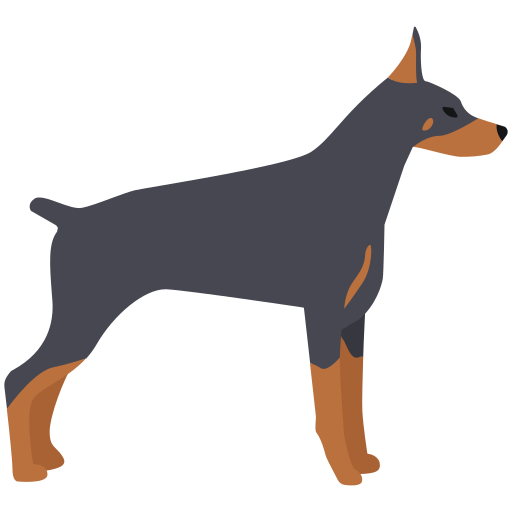
 Doberman
 A ball flies across the yard. Max, a sleek black and rust Doberman, doesn’t just chase it. He catches it, circles back, drops it at his owner’s feet, and then sits perfectly still, waiting for the next command. The neighbor watching from the fence is speechless. "How long did it take to teach him that?" she finally asks.
The answer? Less than two weeks.
Dobermans are not just beautiful dogs. They are working-class geniuses wrapped in a glossy, athletic package. Most people see those tall ears and that proud stance and assume "guard dog." What they don’t realize is that underneath all that intensity lives one of the most trainable, curious, and downright fun dogs in the world.
These five tricks are proof of that.
1. The Retrieve and Return (With Precision)
It’s More Than Fetch
Most dogs will chase a ball. Plenty will pick it up. Getting them to return it directly to your hand, every time, with zero detours? That’s where Dobermans separate themselves from the pack.
The retrieve and return is a polished version of fetch that requires your dog to bring the item back and place it specifically into your open hand or a designated spot. No drop and run. No "I’ll leave it over here, thanks."
"The moment a Doberman figures out exactly what you want, they don’t just do it. They do it like they’ve been doing it their whole life."
How to Build It
Start with a simple tug toy and reward the return, not just the retrieve. Gradually phase out the tug excitement and introduce a calm, open-palm hand signal as the target. Consistency is everything here.
Dobermans pick this up fast. Almost frustratingly fast. Within days, some owners report their dog correcting themselves mid-run if they start veering off course.
2. Scent Discrimination
Your Doberman Has a Supercomputer for a Nose
Police dogs do this. Search and rescue dogs do this. And with a little patience, your Doberman can do it too.
Scent discrimination means your dog identifies one specific object out of a group based on your scent alone. You handle a small item like a wooden block or metal rod, place it among several identical objects you haven’t touched, and ask your dog to find yours.
It sounds like a magic trick. It’s not. It’s just science and a very motivated dog.
"Scent work taps into something primal. It’s not a party trick. It’s a Doberman operating at full capacity."
The Training Breakdown
Begin with just two objects: one scented, one not. Let your dog sniff your hand, then release them to search. Mark and reward the correct choice immediately. Over several sessions, add more objects to the mix.
The key is not to rush it. This is a mental workout. A 10-minute scent session can tire a Doberman out more than an hour of fetch.
3. The Place Command (And Holding It Indefinitely)
Stillness Is a Skill
Sit and stay are table stakes. Real impulse control looks like a Doberman walking across the room, stepping onto a specific mat or raised platform, and holding that position calmly while the world happens around them.
Guests arrive? Place. Dinner is being prepared? Place. Someone’s at the door? Place.
It is one of the most practical and impressive things a Doberman can learn, and it makes daily life dramatically smoother for everyone in the household.
Building Duration Without Breaking
Start with a very short duration, like five seconds, and build slowly. The mistake most people make is adding too much too fast. A Doberman who breaks the place command isn’t being stubborn; they’ve just been pushed past what they’ve actually learned.
Add distractions after the duration is solid. Not before.
Once they’ve got it? Guests will think you’ve hired a dog trainer professionally. You don’t have to correct them.
4. Hand Signal Obedience (Voice Optional)
Silent Commands, Instant Response
Here’s one that genuinely stops people in their tracks. Call your Doberman across a crowded park using nothing but a hand signal. No voice, no whistle, just a gesture. They come sprinting back, sit perfectly in front of you, and wait.
The crowd notices.
Dobermans are extraordinarily visual. They read body language constantly, often figuring out what you’re about to ask before you’ve finished the signal. This makes them ideal candidates for building an entire vocabulary of silent commands.
"Teaching a Doberman hand signals isn’t just impressive. It deepens the communication between dog and owner in a way that verbal commands alone never quite achieve."
Where to Start
Pair each verbal command with a consistent hand signal from the very beginning of training. Over time, fade the verbal cue while keeping the signal. Test in quiet environments first, then gradually introduce more chaos.
Sit, down, come, stay, heel. All of these can be taught as purely visual commands. Once your Doberman understands the game, they’ll start reading micro-movements you don’t even realize you’re making.
5. The Figure Eight (Heelwork Precision)
This One Is Pure Showmanship
Two people stand about six feet apart. A Doberman weaves fluidly between them in a continuous figure eight pattern, staying close, adjusting their stride, never bumping a leg, never losing focus. It looks choreographed. It basically is.
Figure eight heelwork is a staple of competitive obedience for a reason. It requires your dog to manage pace, proximity, and direction all at once while staying fully tuned into you.
Breaking It Down
Use two pylons or ask two friends to stand in for the posts. Lure your Doberman through the pattern slowly using a treat at nose height. Keep sessions short at first since the curving motion and tight turns are genuinely tricky to coordinate.
The fun part? Dobermans tend to start enjoying the precision of it. Once they understand the rhythm, they lean into the pattern with this fluid athleticism that looks almost effortless.
It is not effortless. It’s the result of a brilliant dog and an owner who took the time to teach it properly. But nobody needs to know that part.
The bottom line is this: Dobermans are not just dogs who look impressive. They are impressive, and with the right training approach, they’ll do things that make even experienced dog owners do a double-take.
Start with one trick. Build it until it’s clean. Then watch how quickly your Doberman starts asking for the next challenge.
They always do.